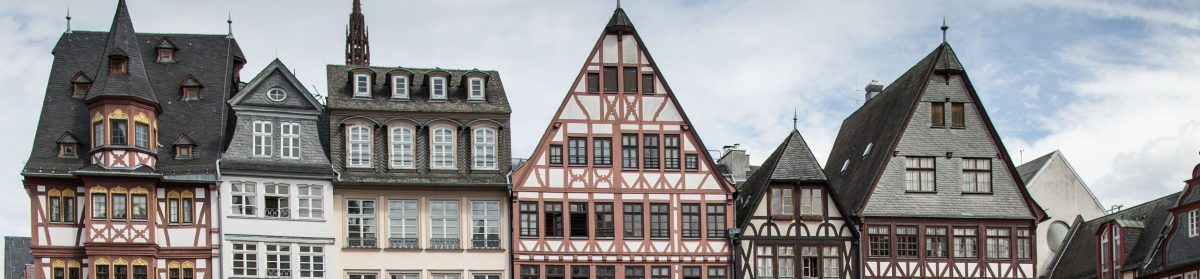

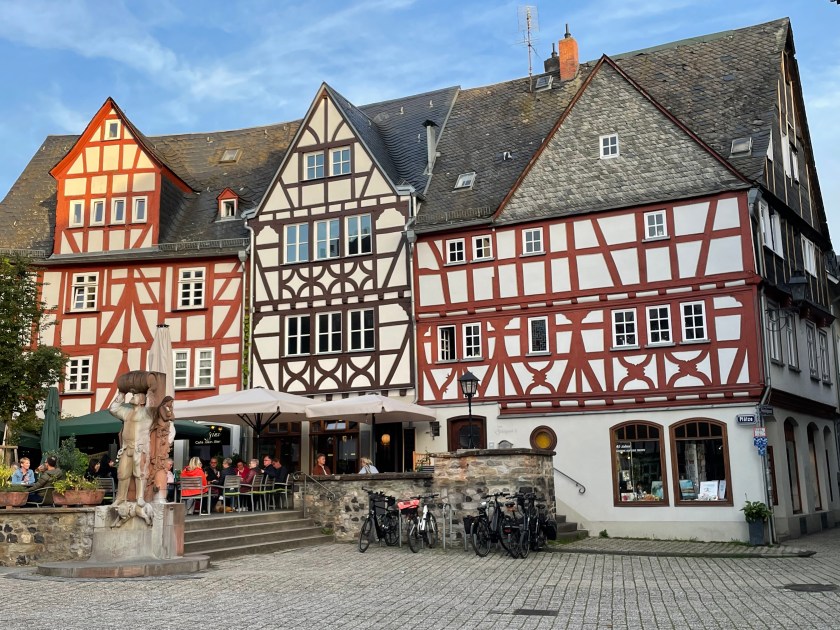
Our last stop of the day was in Limburg by the Lahn River, one of the best preserved historic sites in the area. We were told it’s a delightful shopping destination and it was on our way back to Frankfurt, so we decided to take a look.
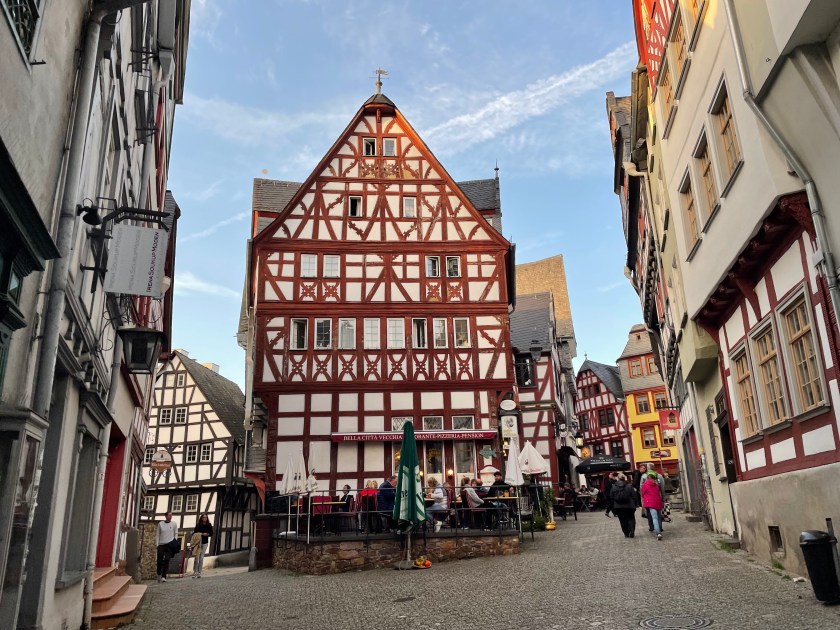
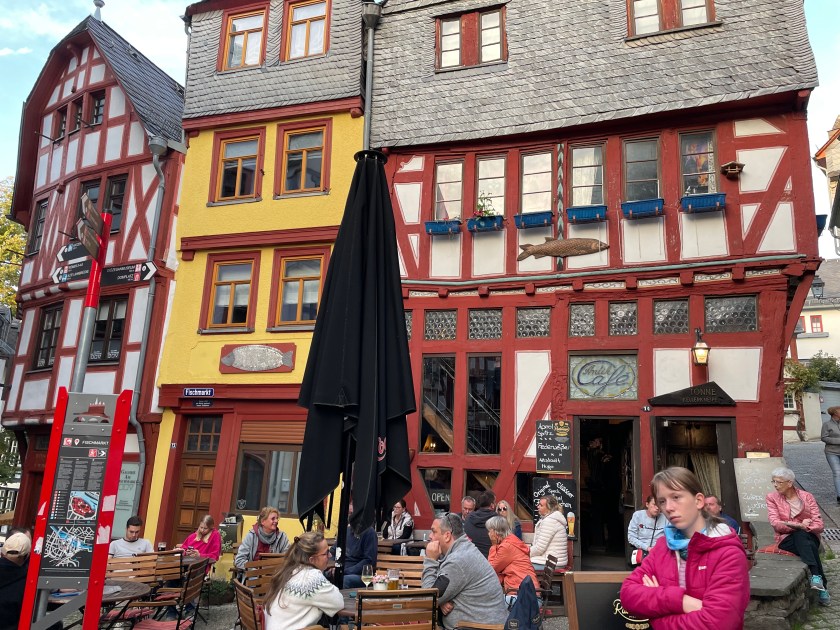
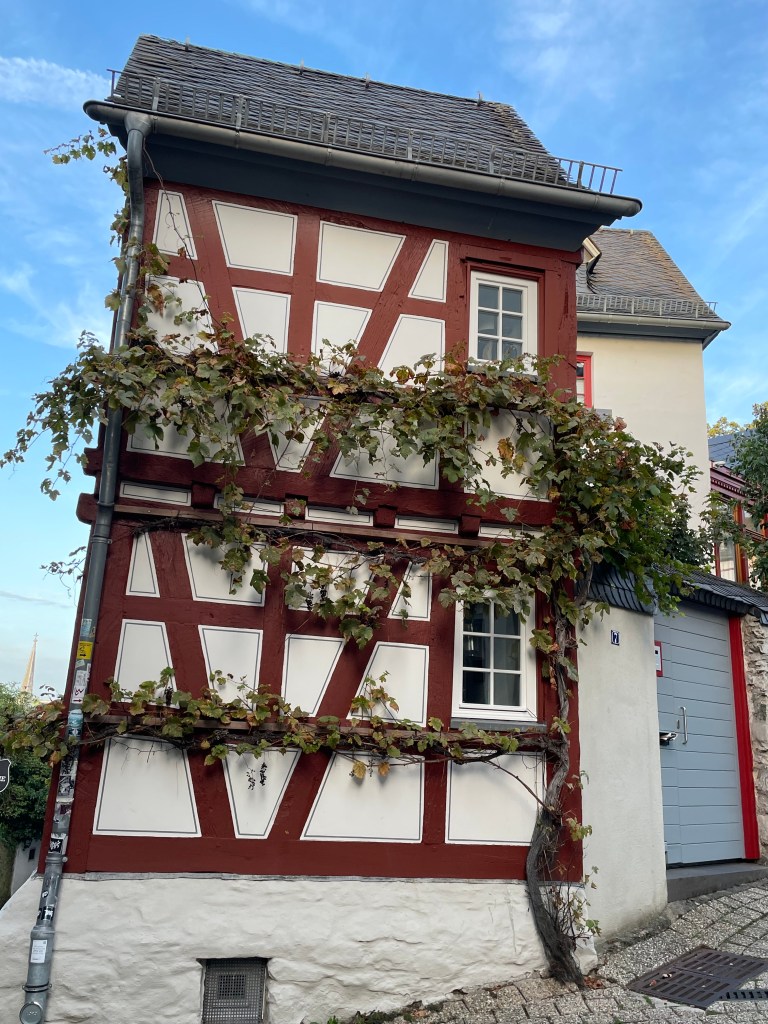
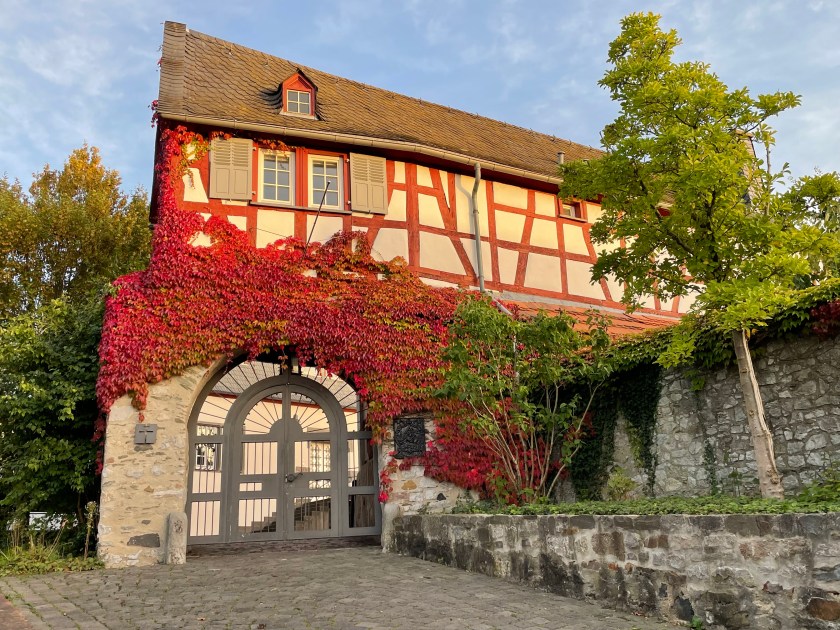
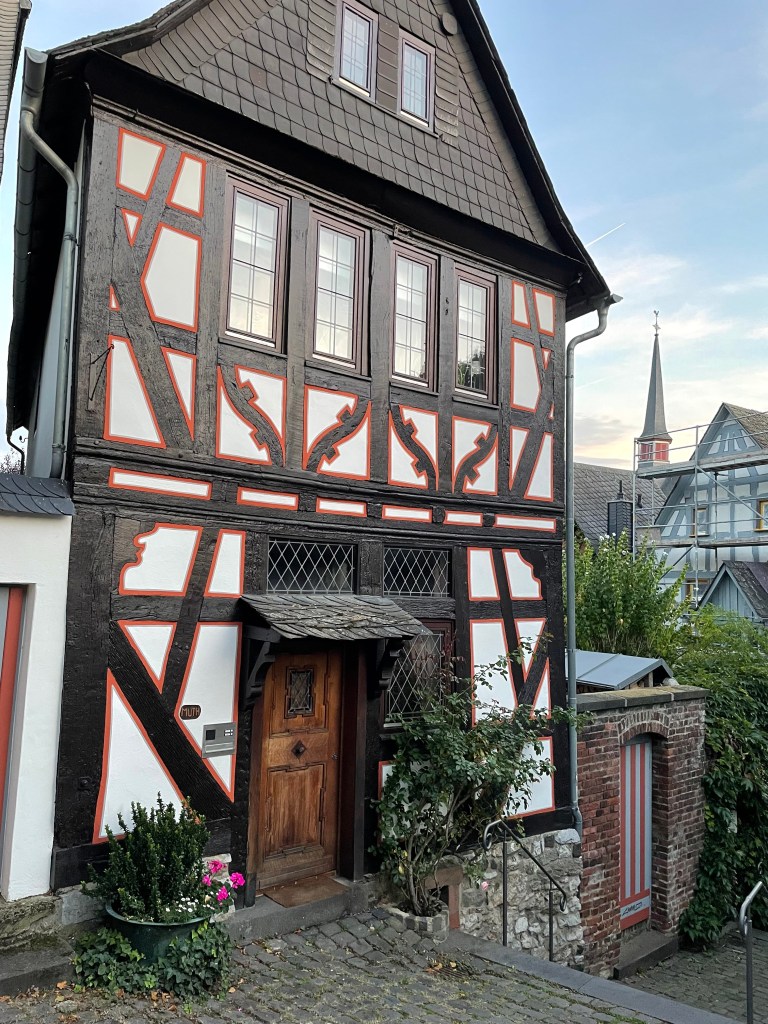
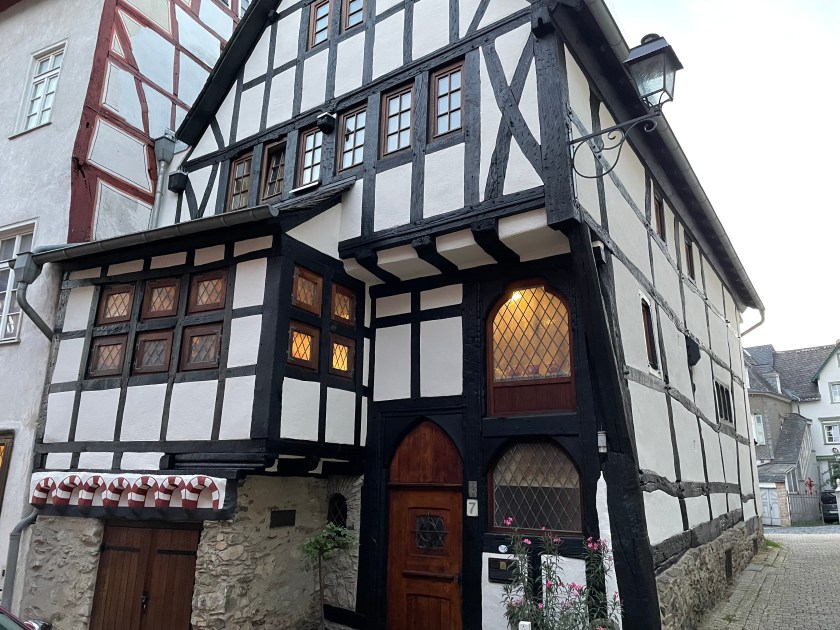
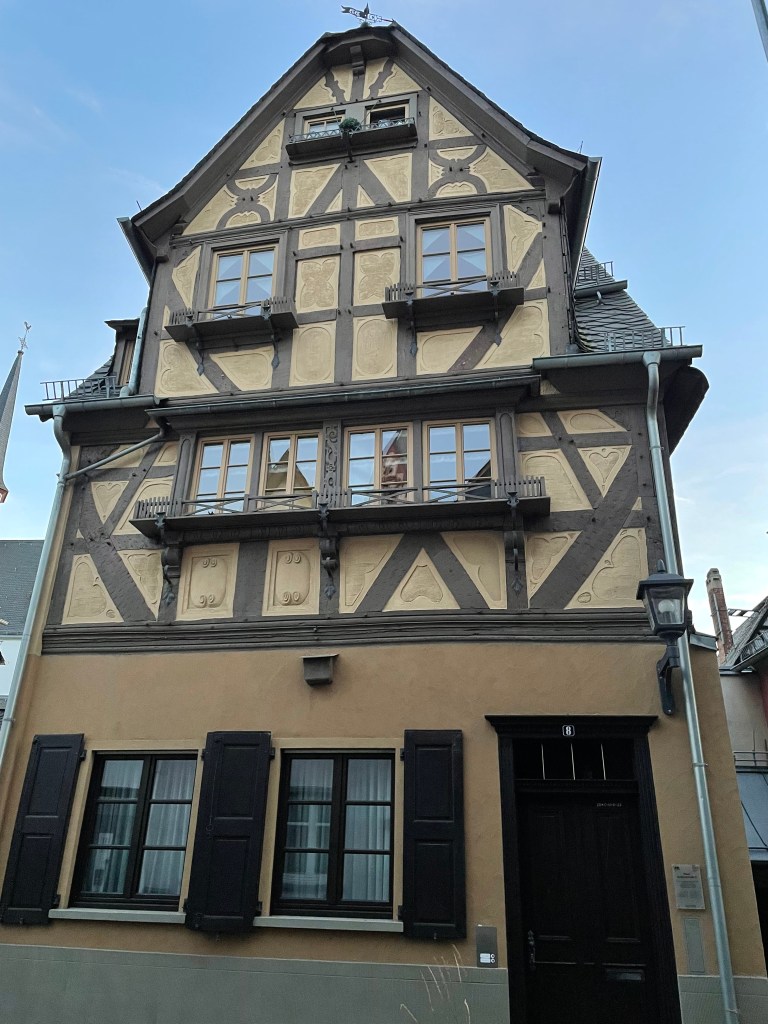
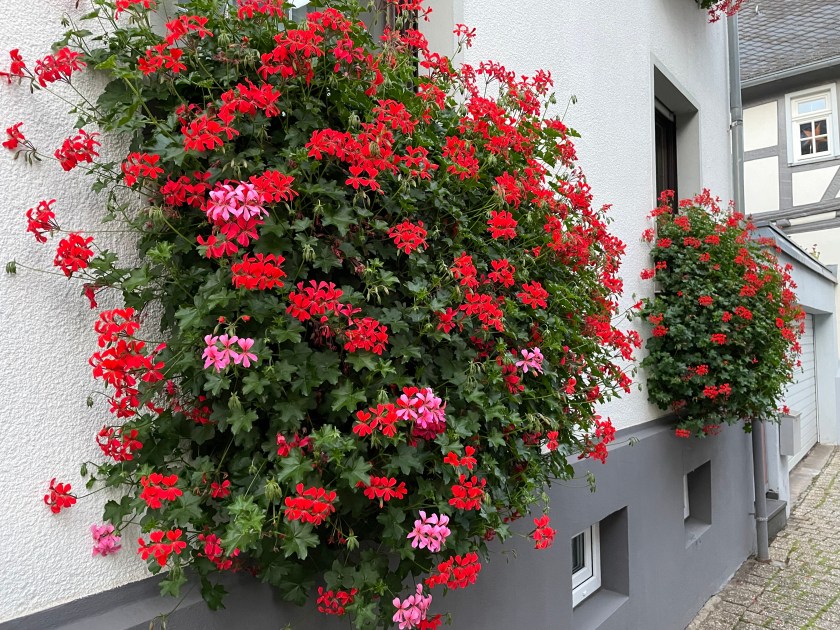
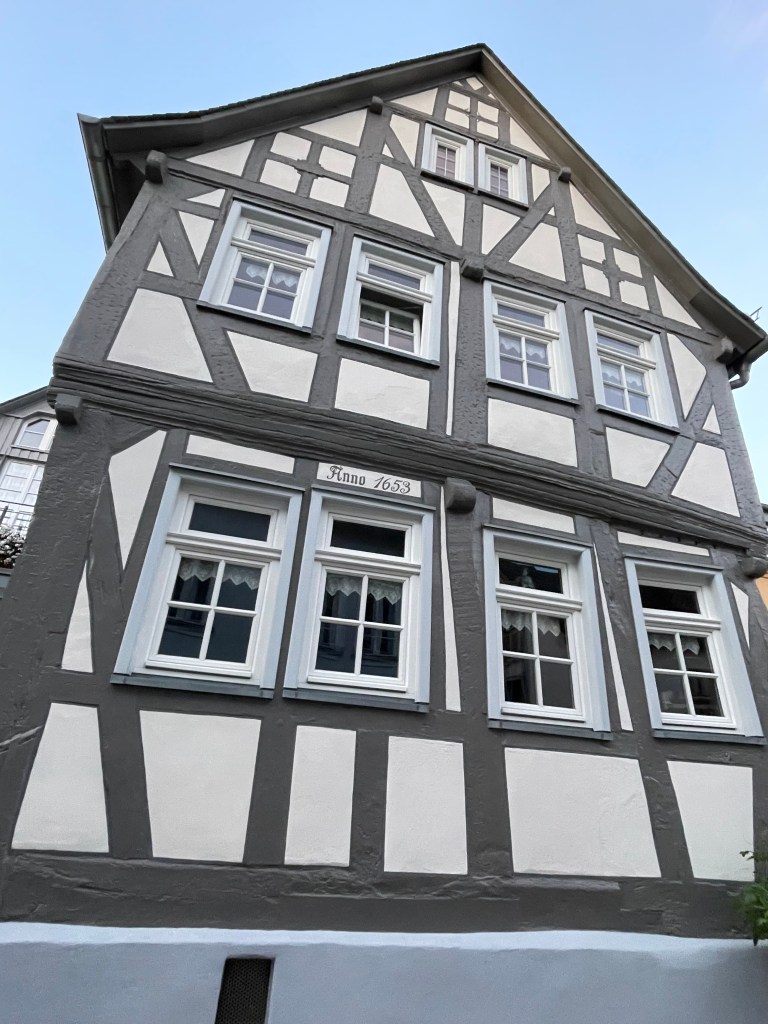
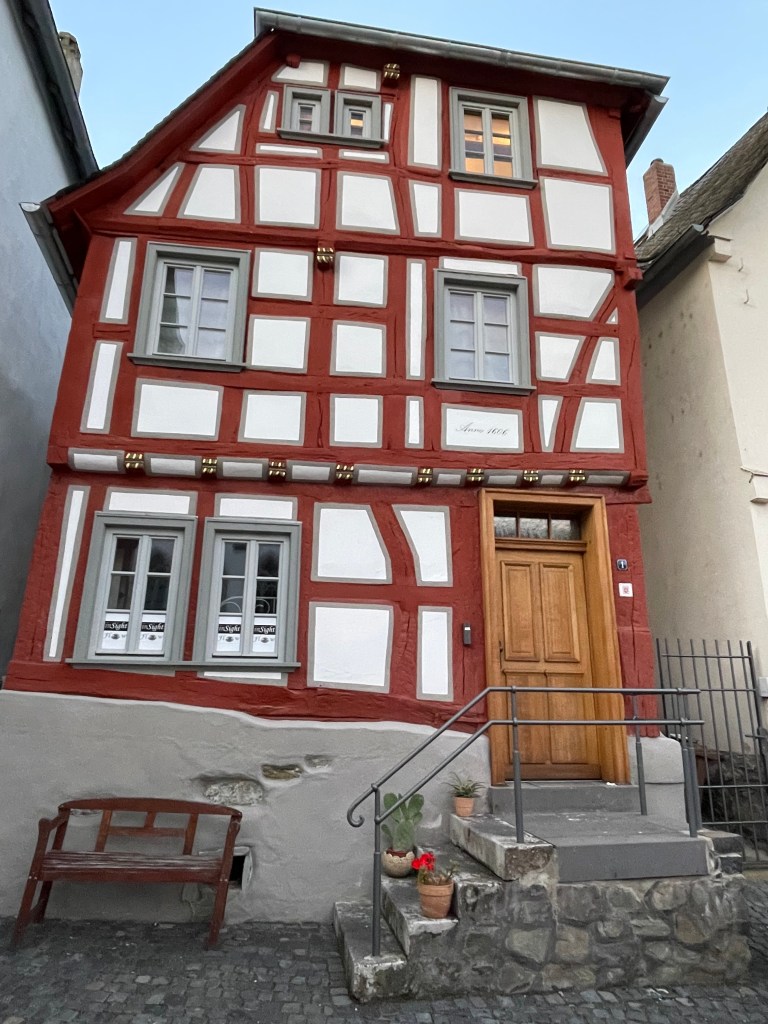
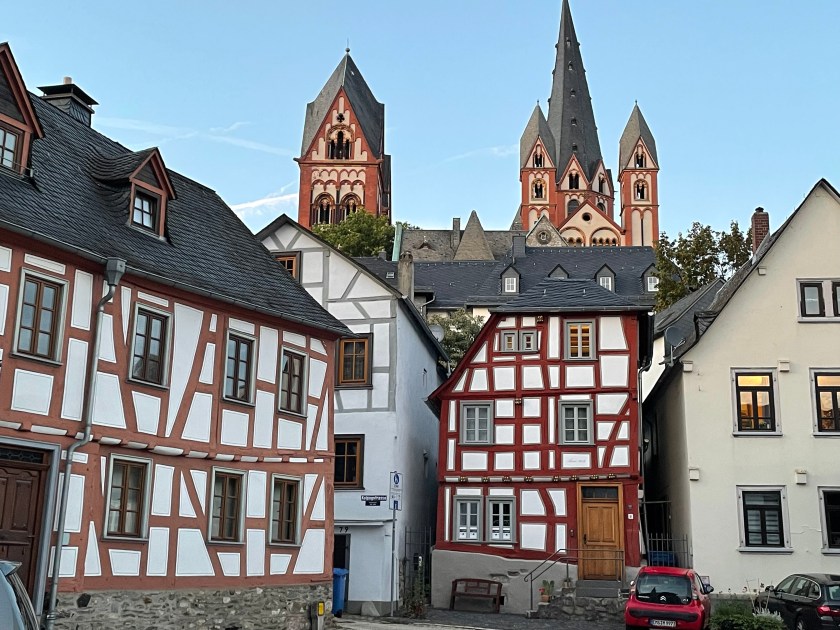
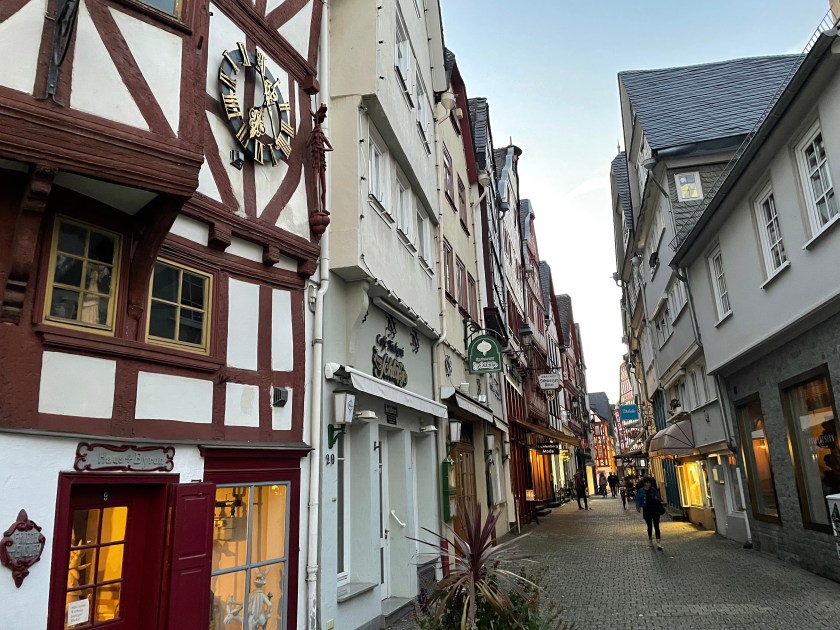
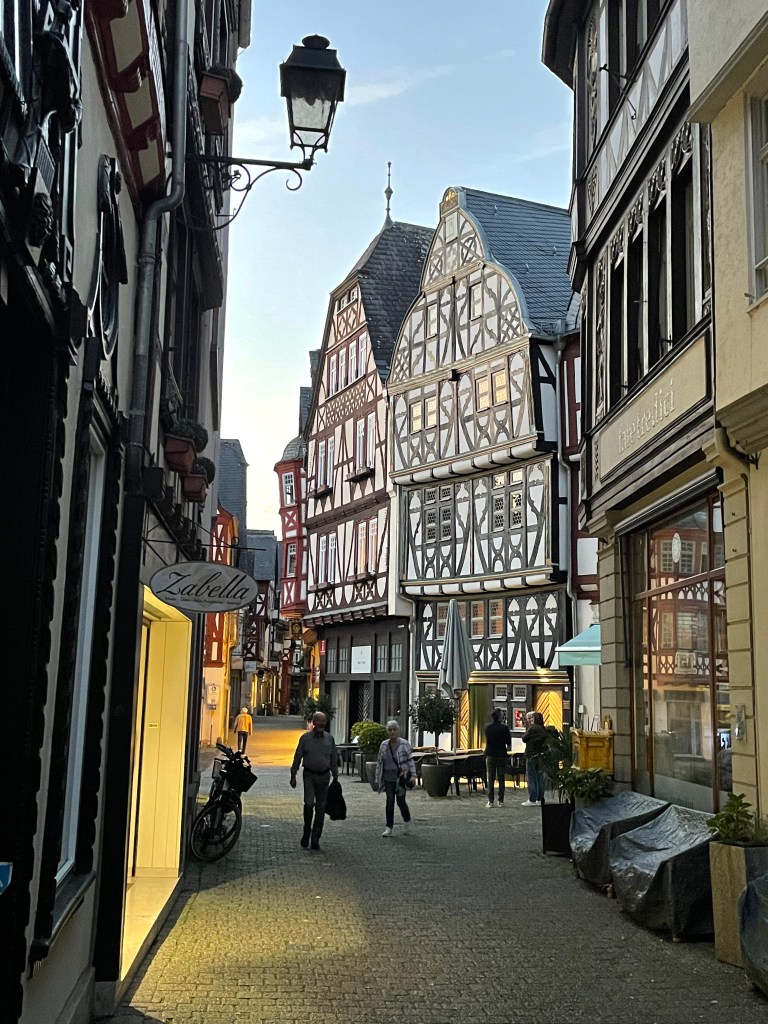
Oh, my it was beautiful! We wandered through the beautiful narrow streets around the town square. The homes there are almost all half-timbered from the 1600-1700s. Most of these old homes have been converted into interesting shops and cafes with traditional outdoor seating. Everything smelled delicious!
Limburg grew up around a 7th century castle of the same name. The first recorded mention of the town appears in documents dating back to the year 910. In the 14th century, Limburg was ravaged by several outbursts of the plague, leading to a gradual decline in the town’s population. The town was revived in the early 19th century.
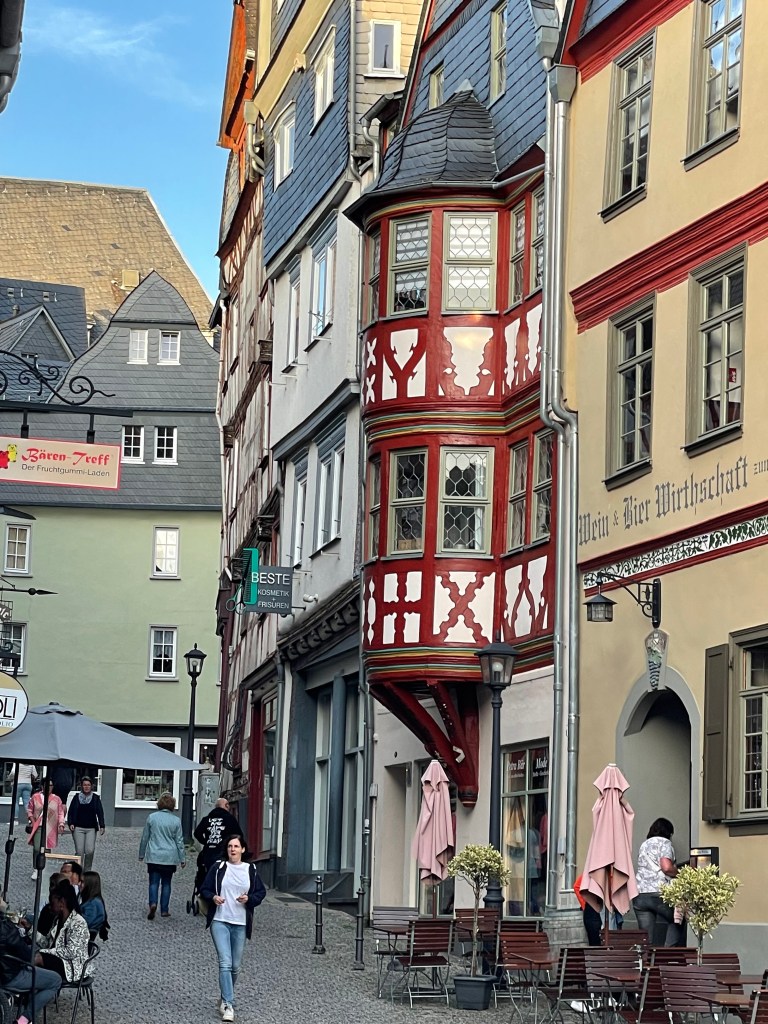
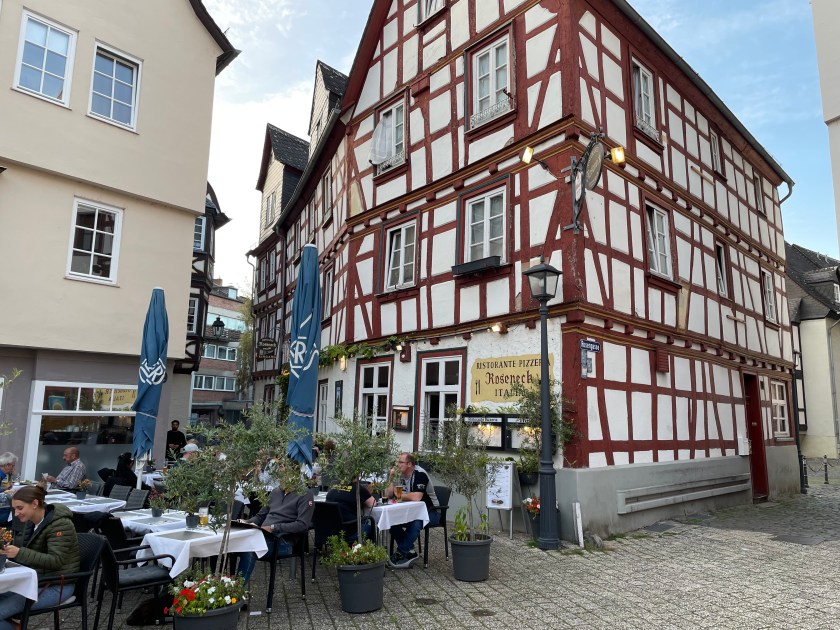
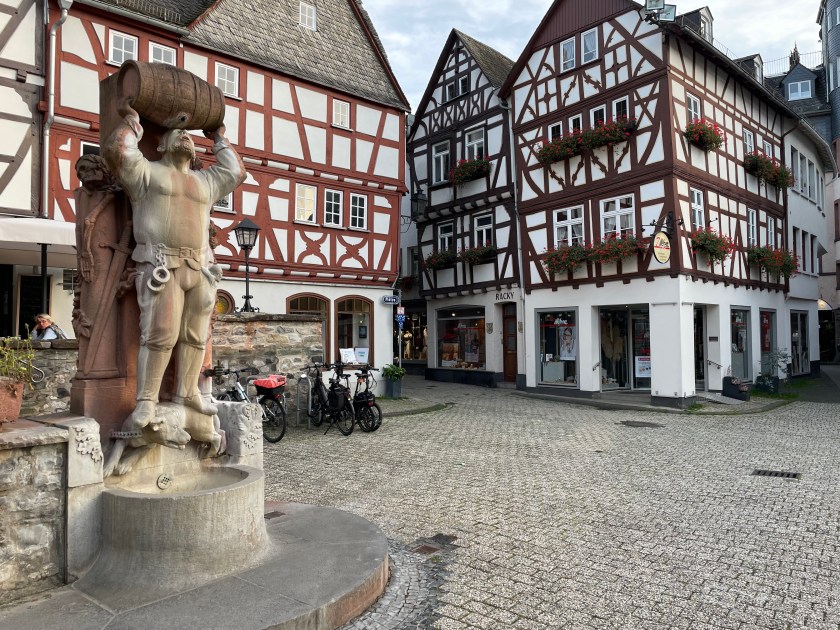
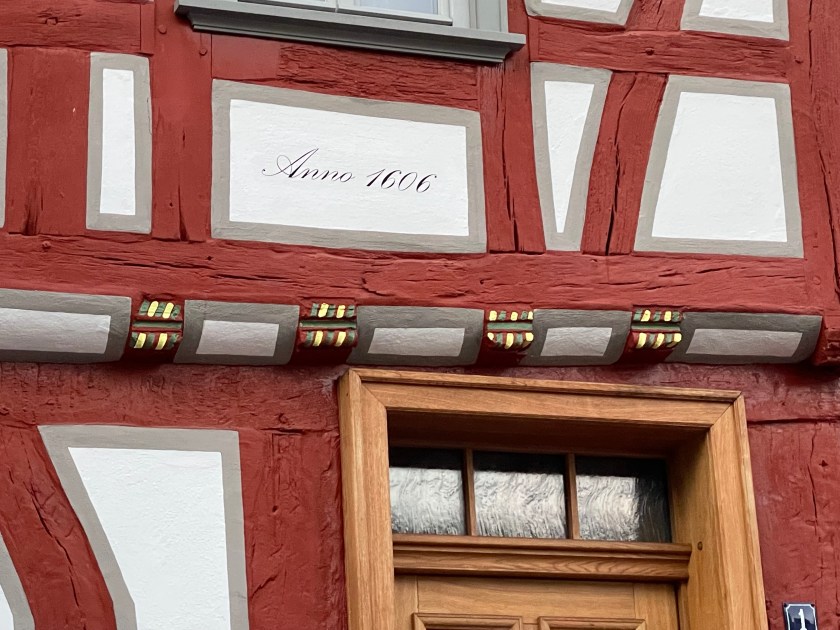
I’m always taken by the craftsmanship and details–in the building, in the embellishments, in the decoration. There is such attention to detail here. And you must remember to always look up!
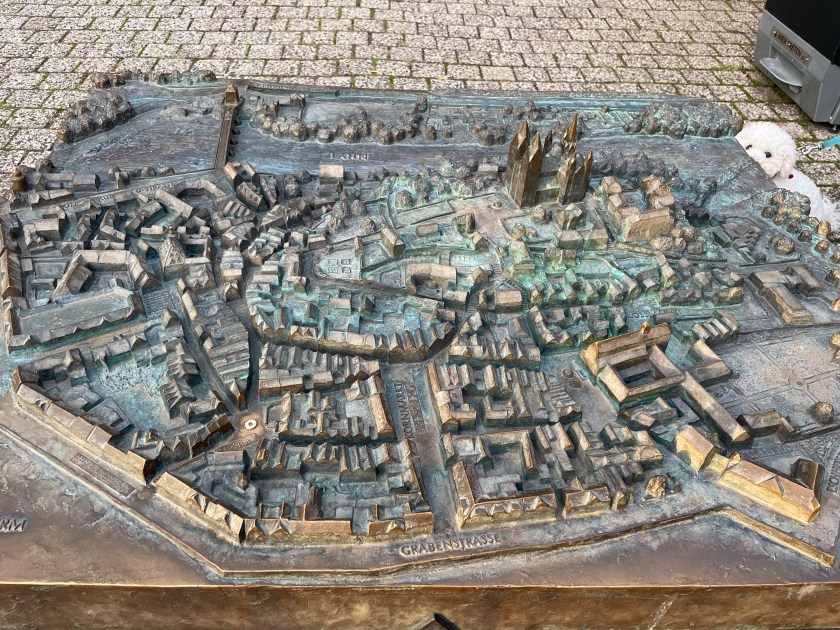
Here’s a map of the old part of town where we wandered:
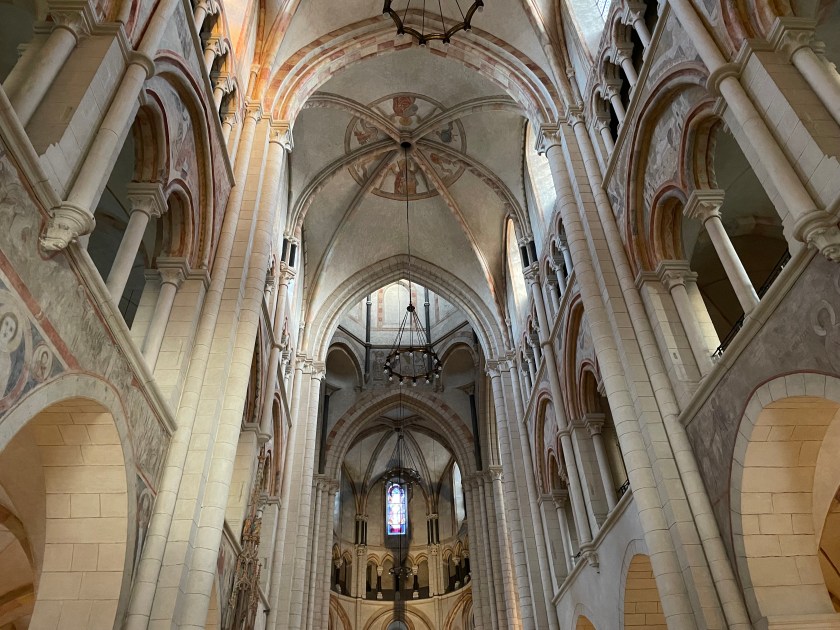
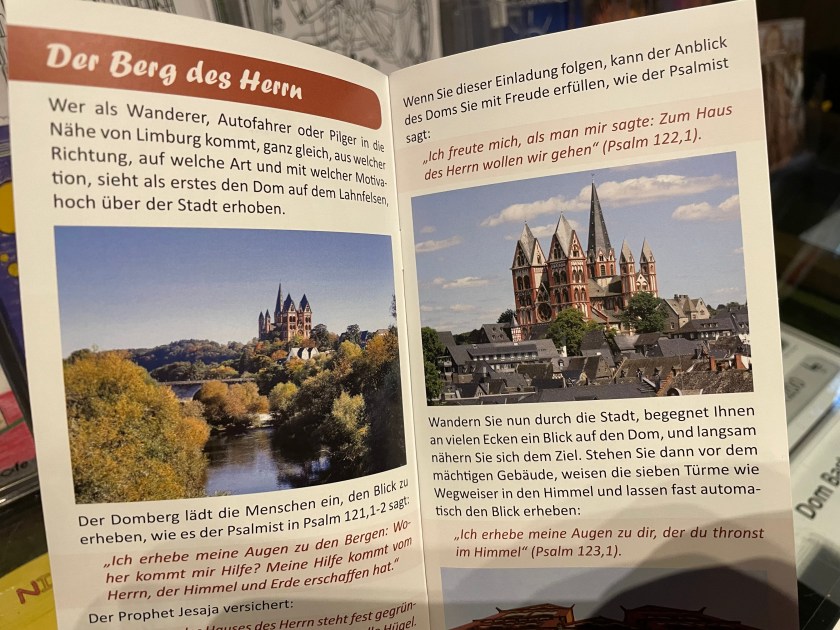
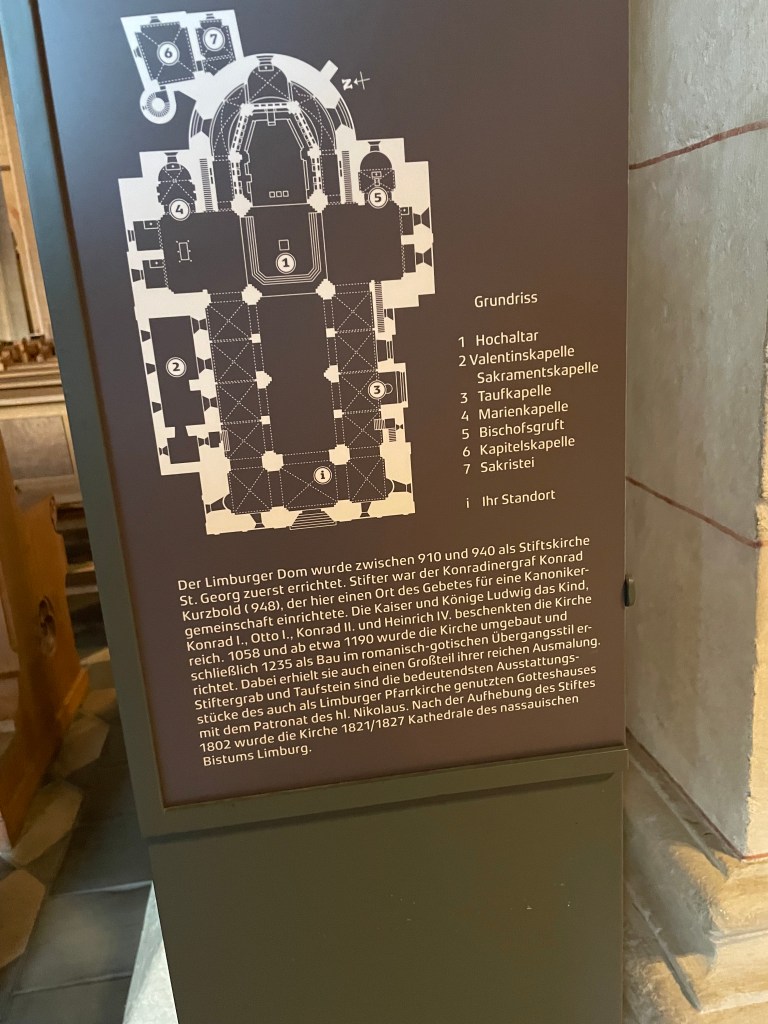
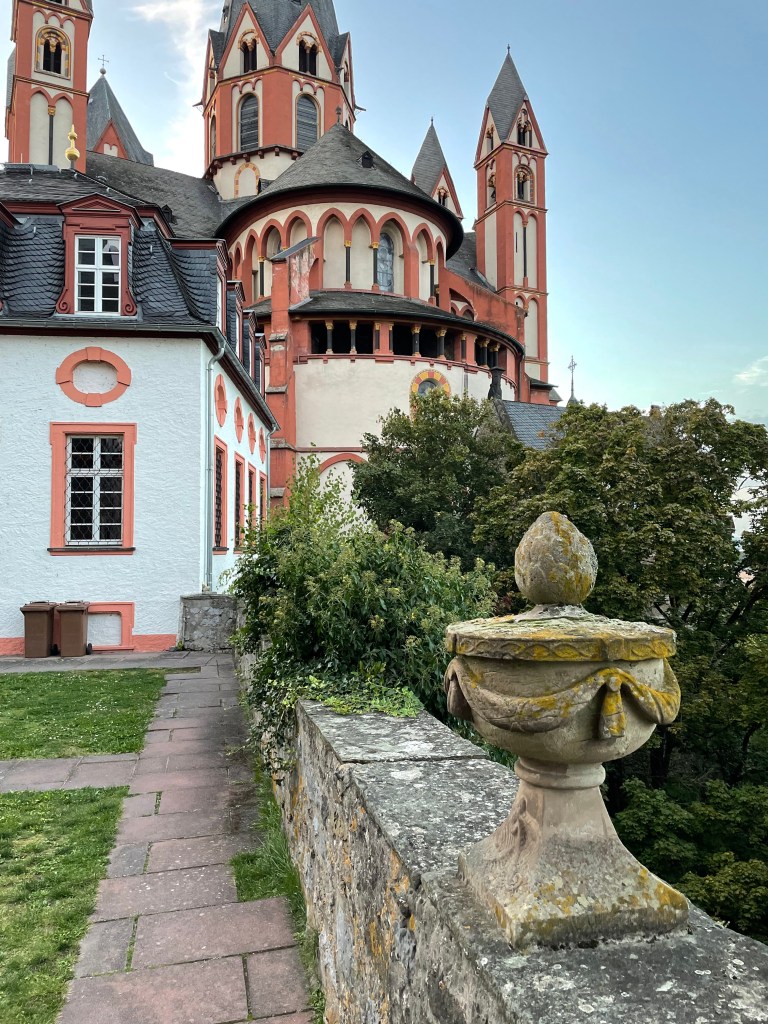
We walked up to the cathedral on the hill, which can be seen from miles around. It was magnificent.
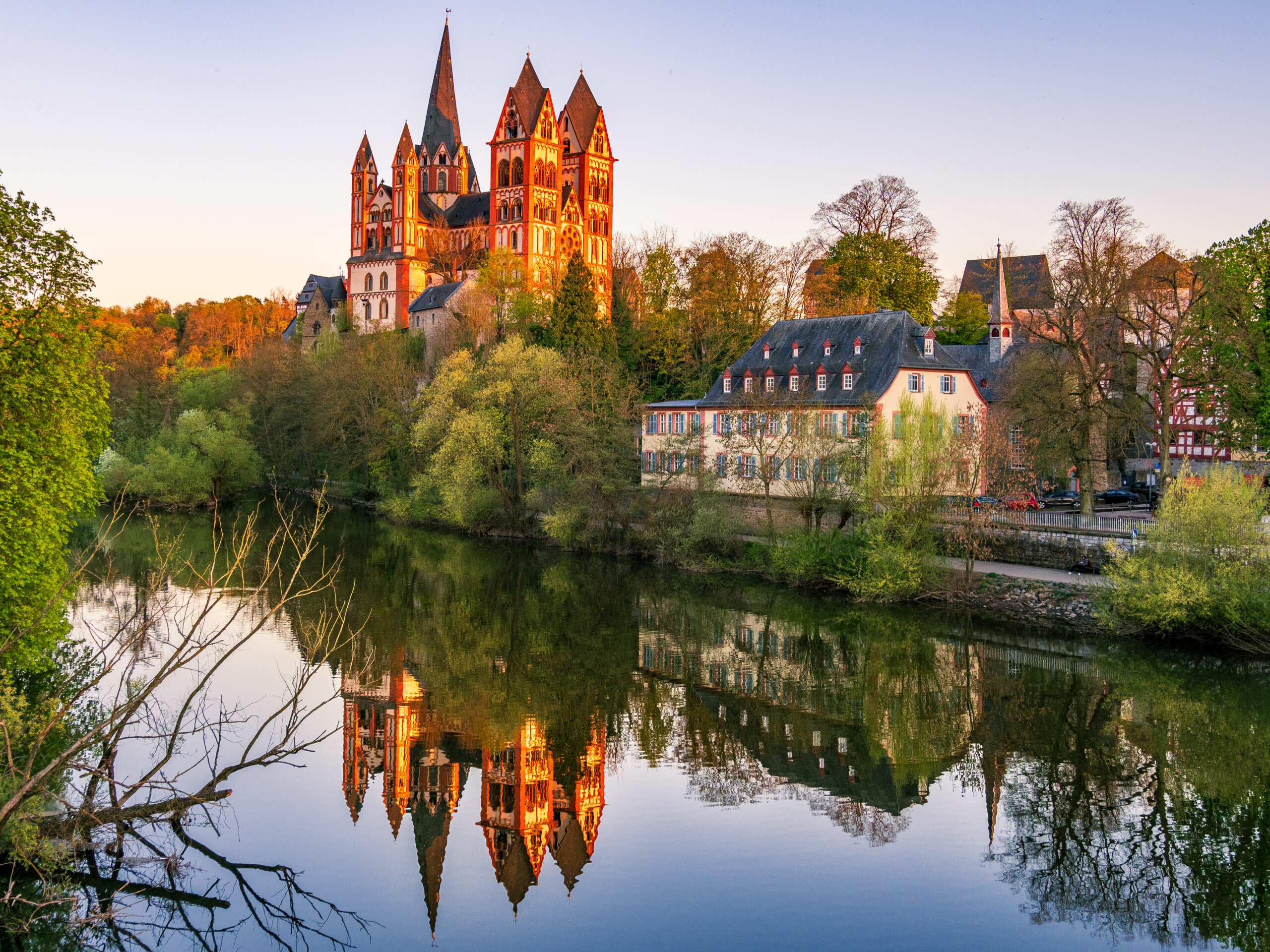
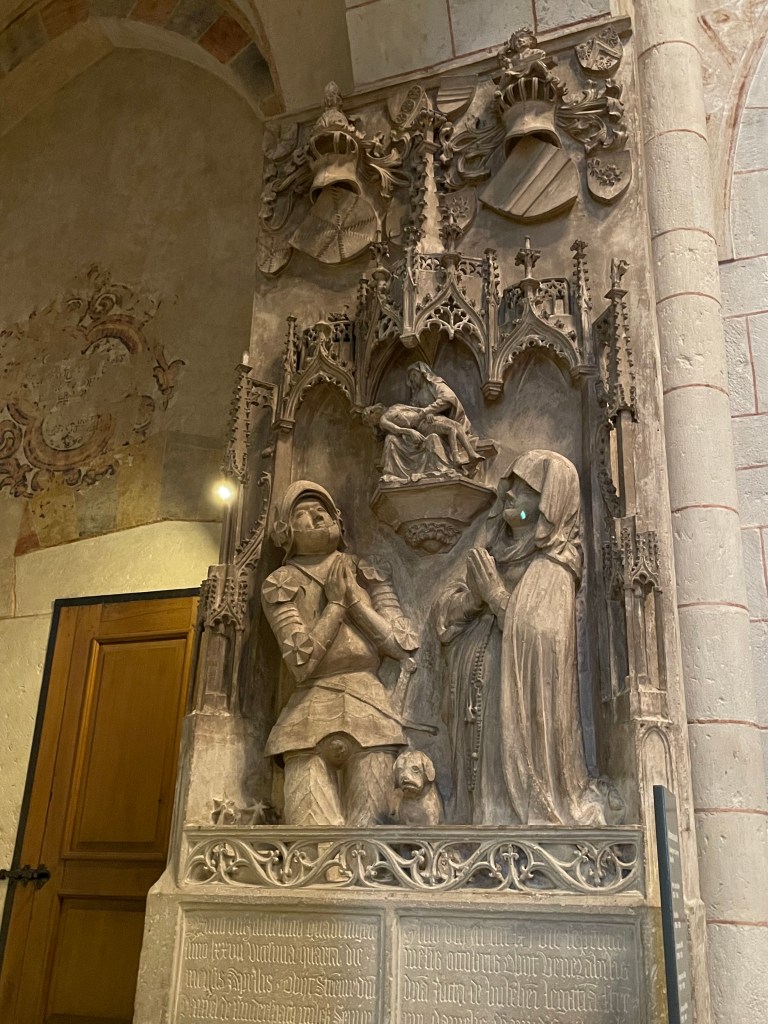
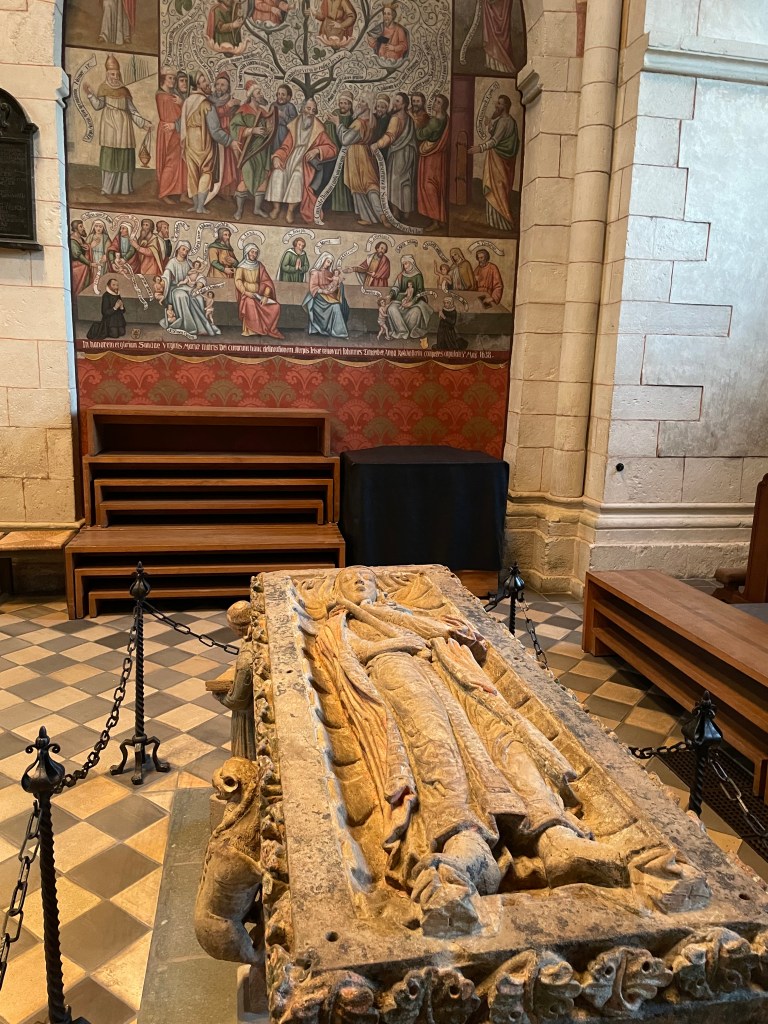
There has been a church here since the 900s. This cathedral was started in 1180, and construction has continued with revisions and improvements since then.
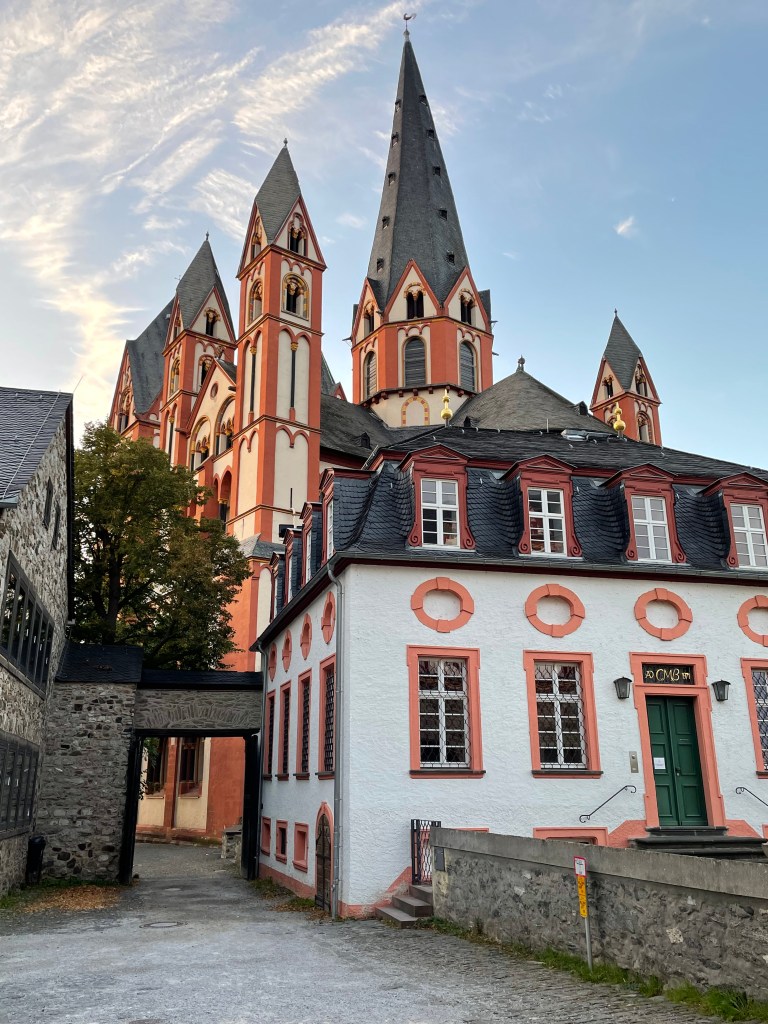
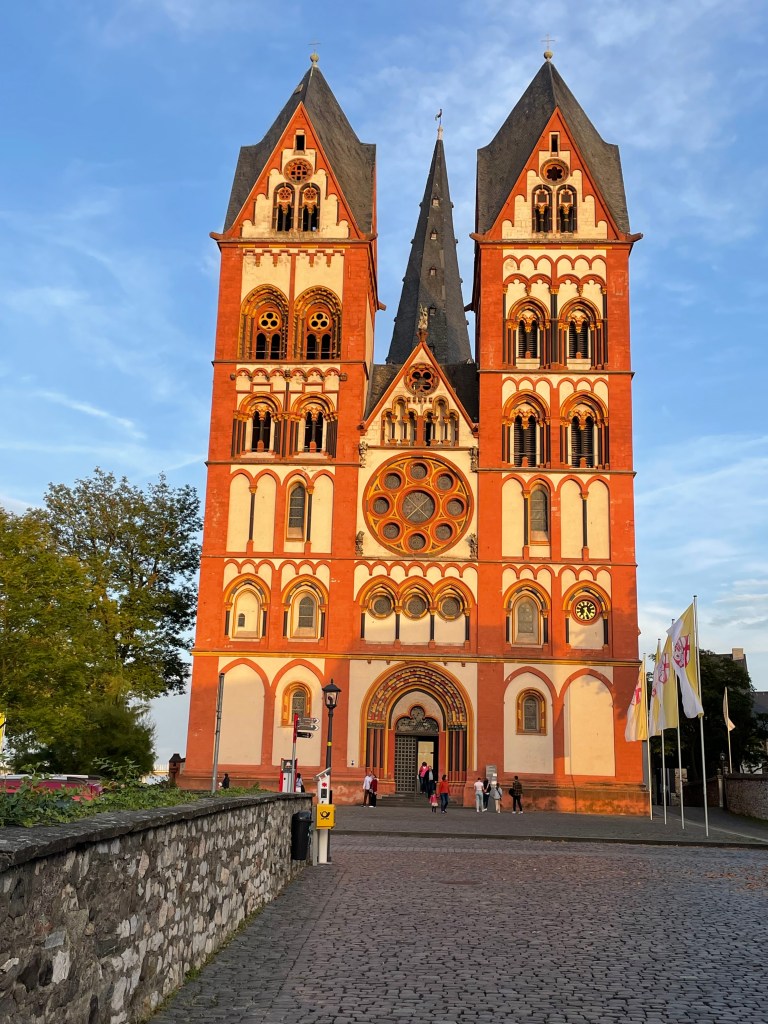
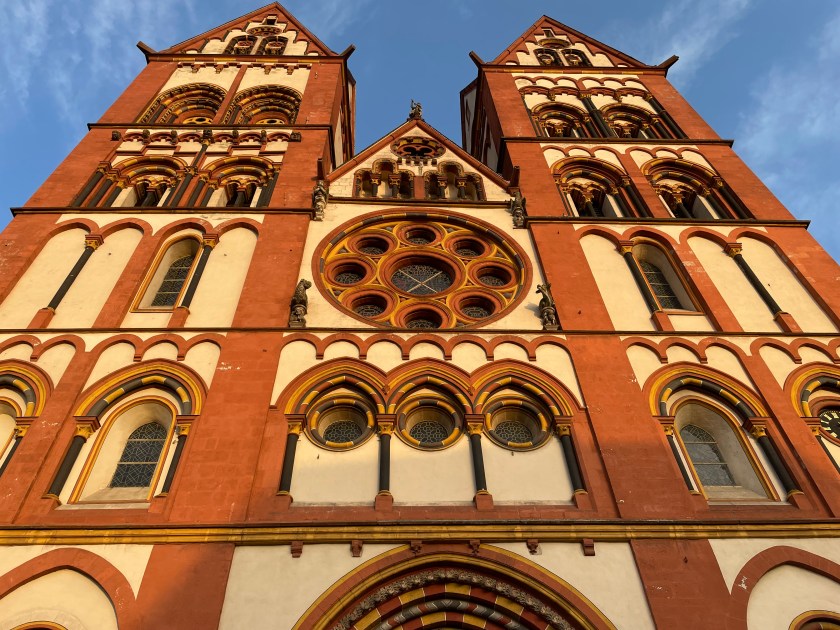
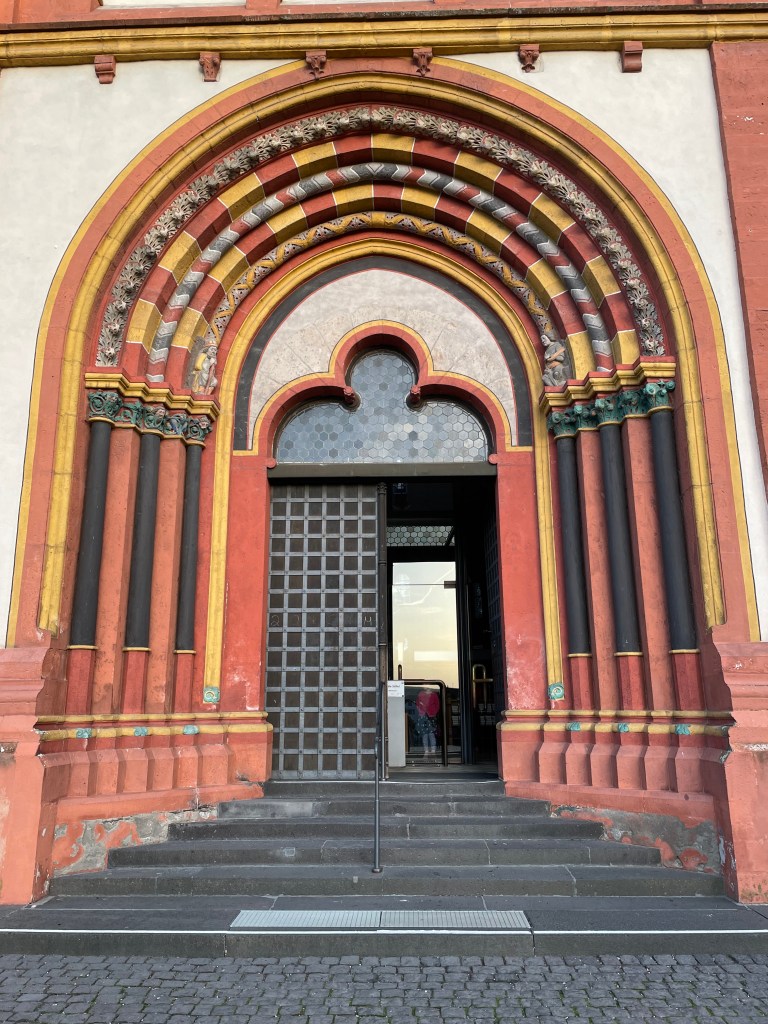
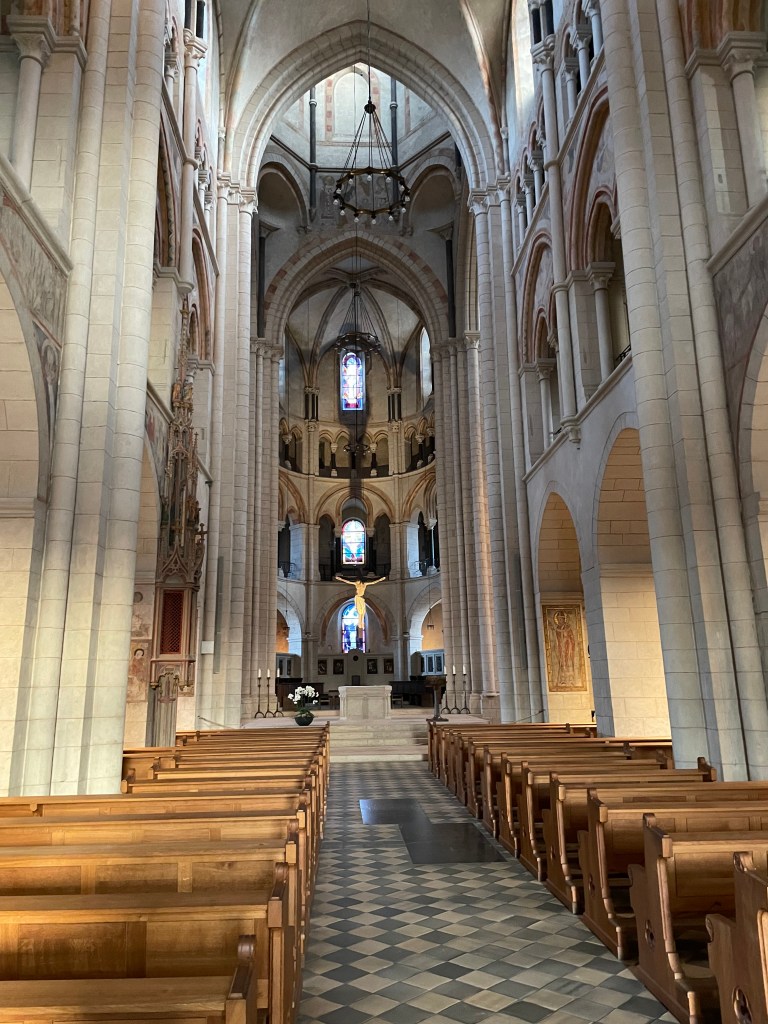
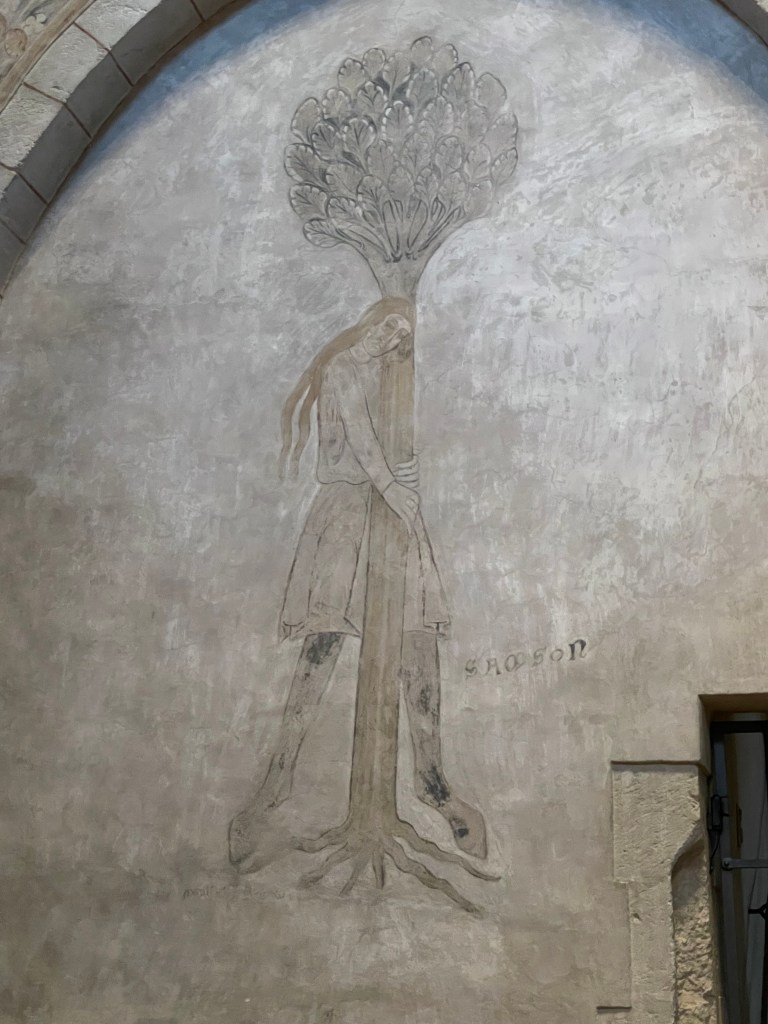
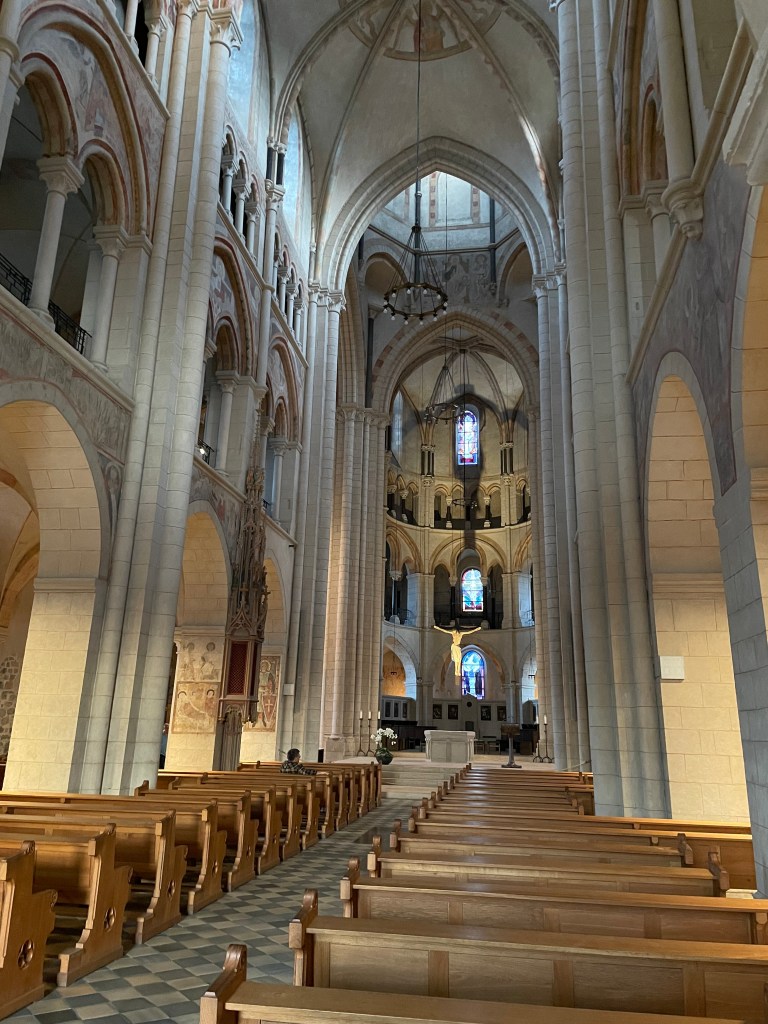
It was so colorful, with painted stonework, but inside was simple and monochromatic, ethereal and peaceful.
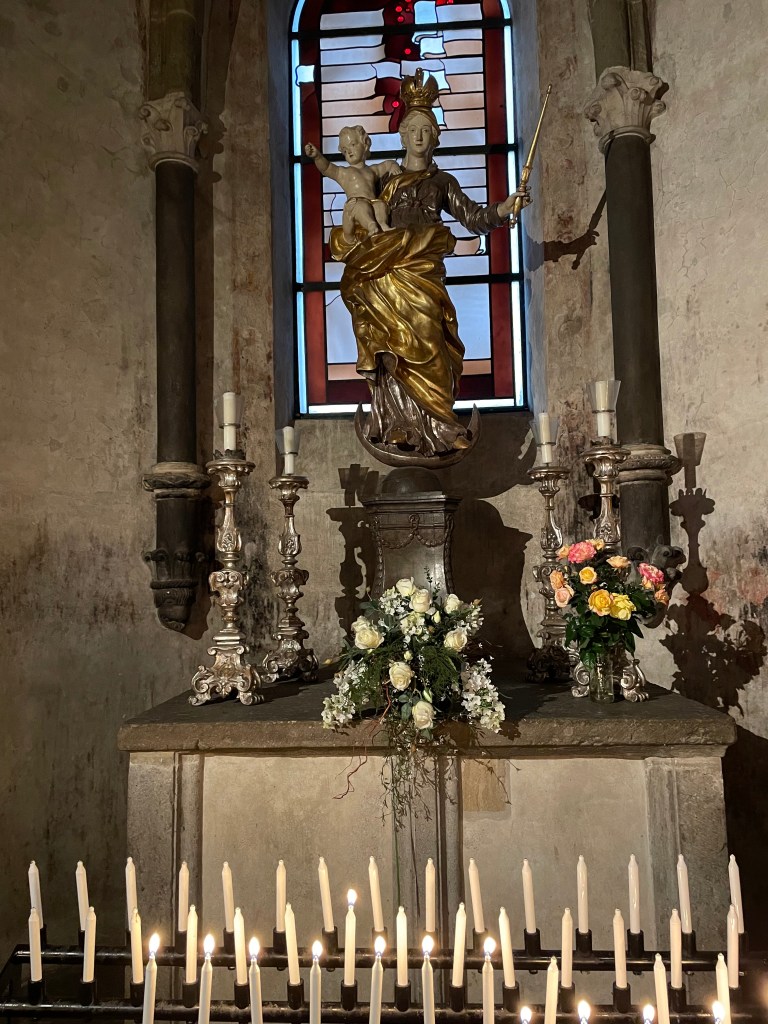
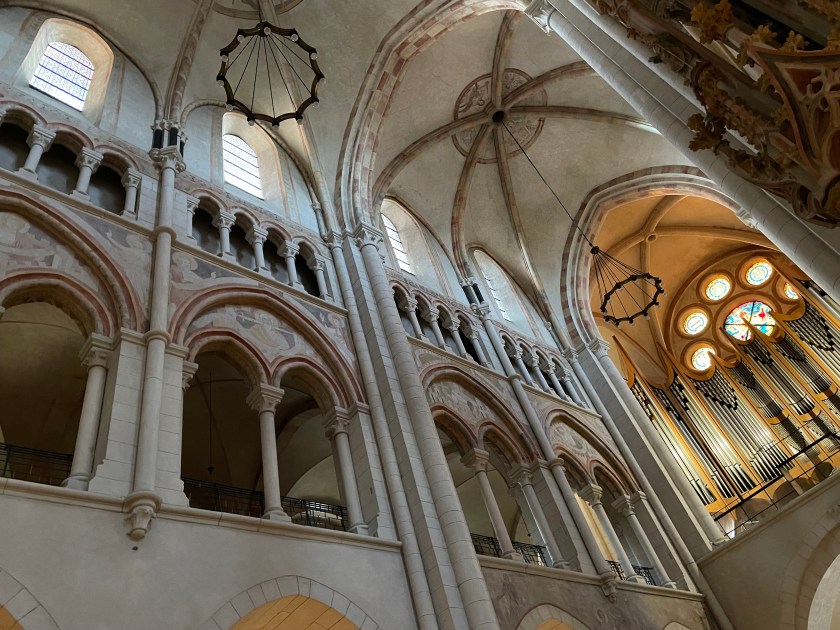
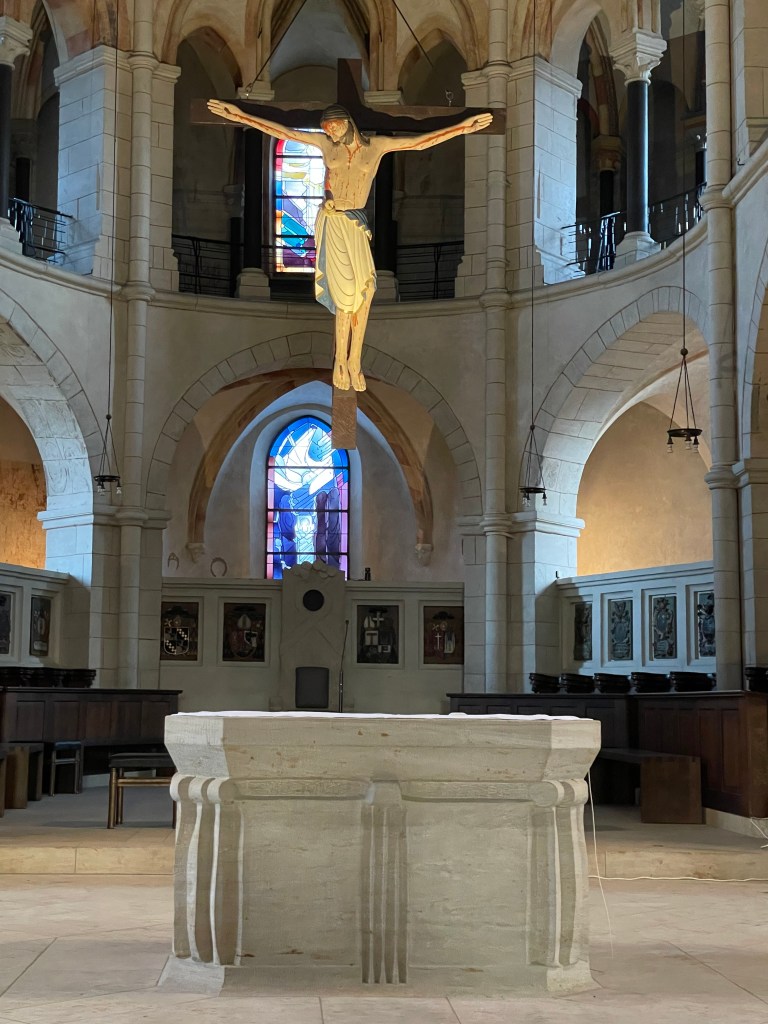
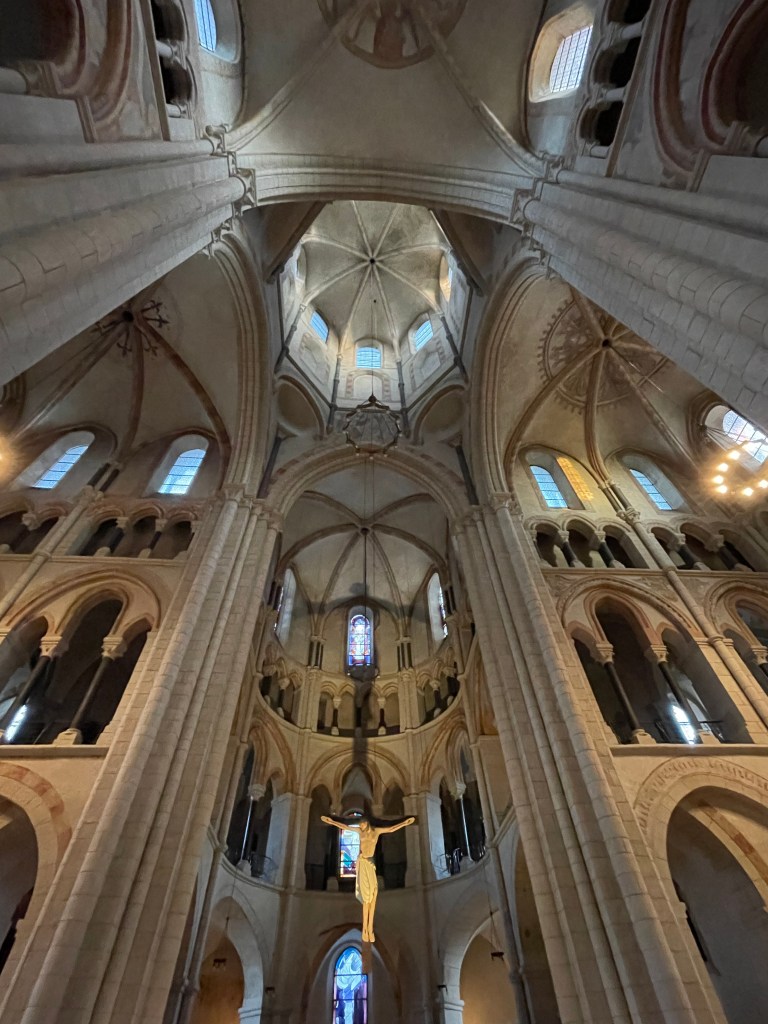
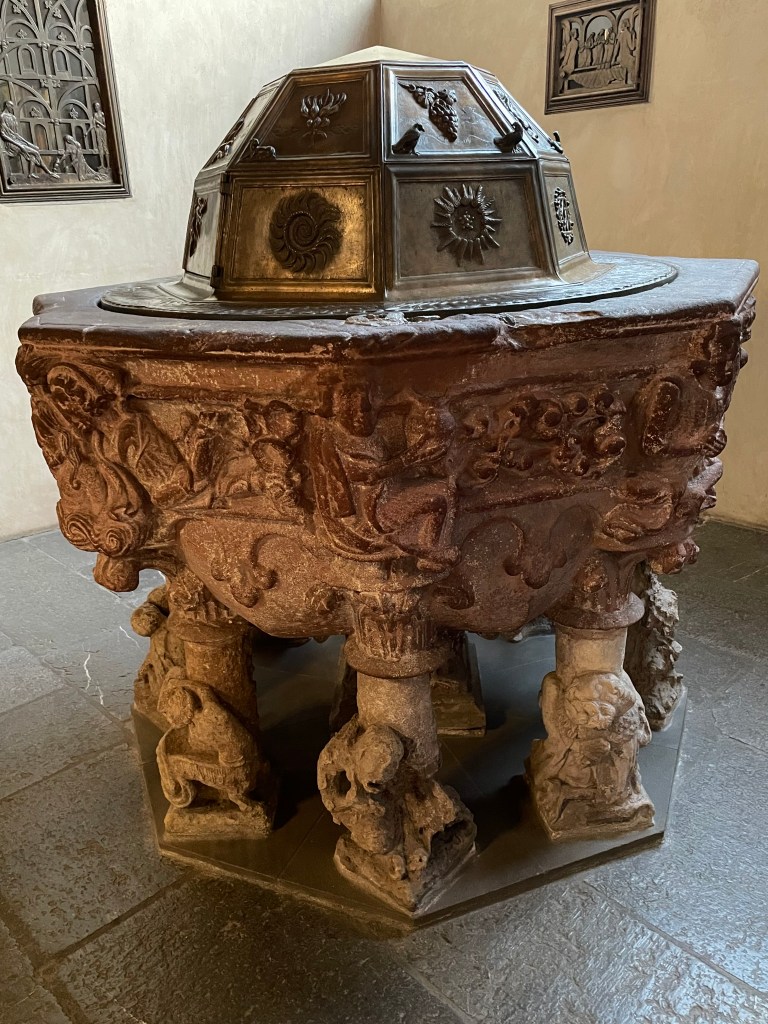
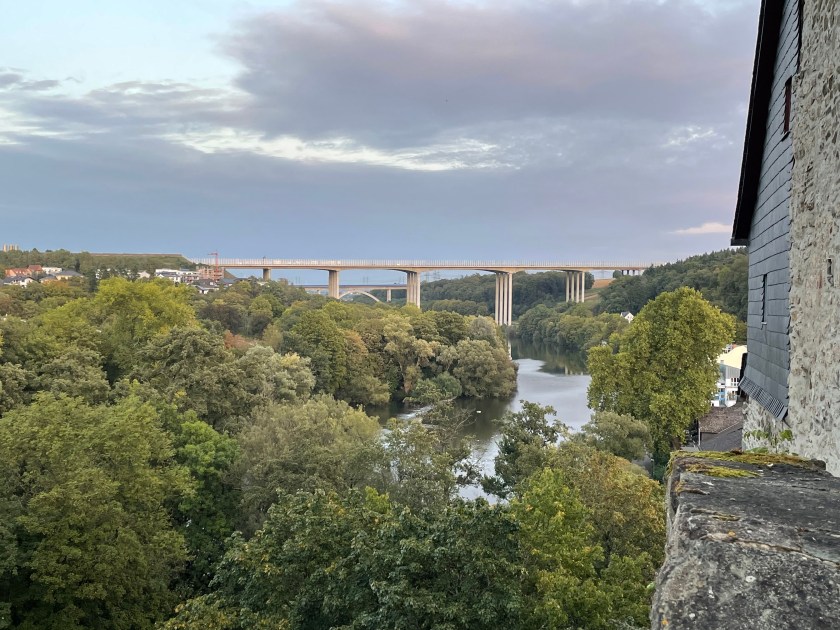
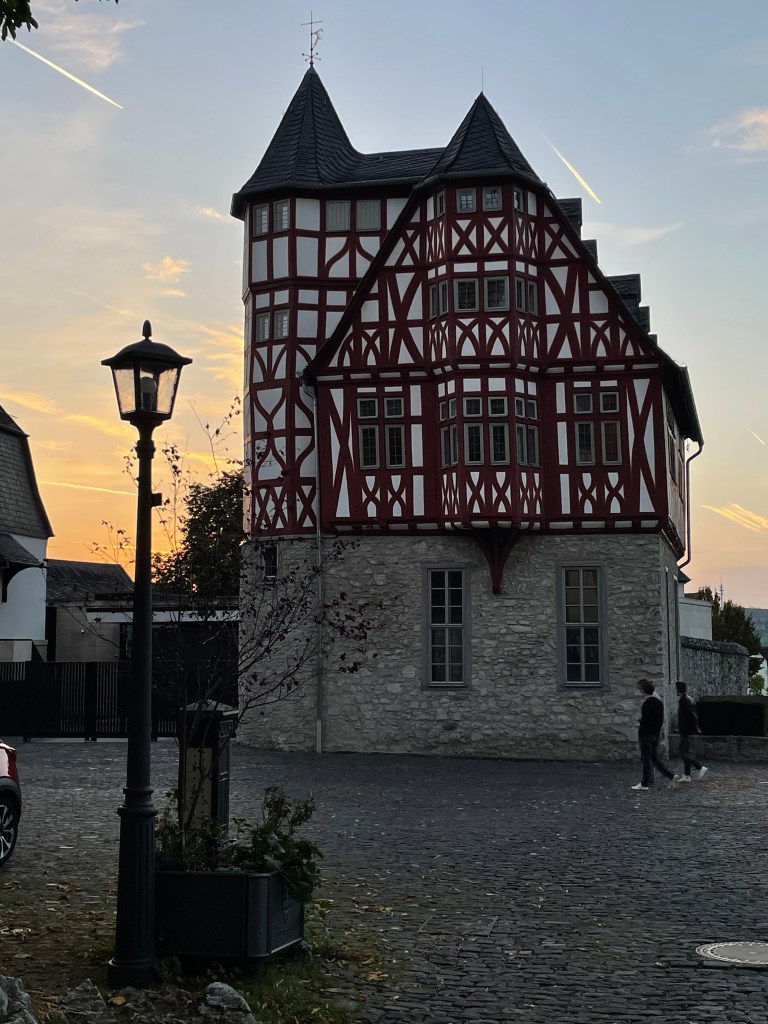
Near the cathedral were very old homes and what’s left of the old castle, being renovated now.
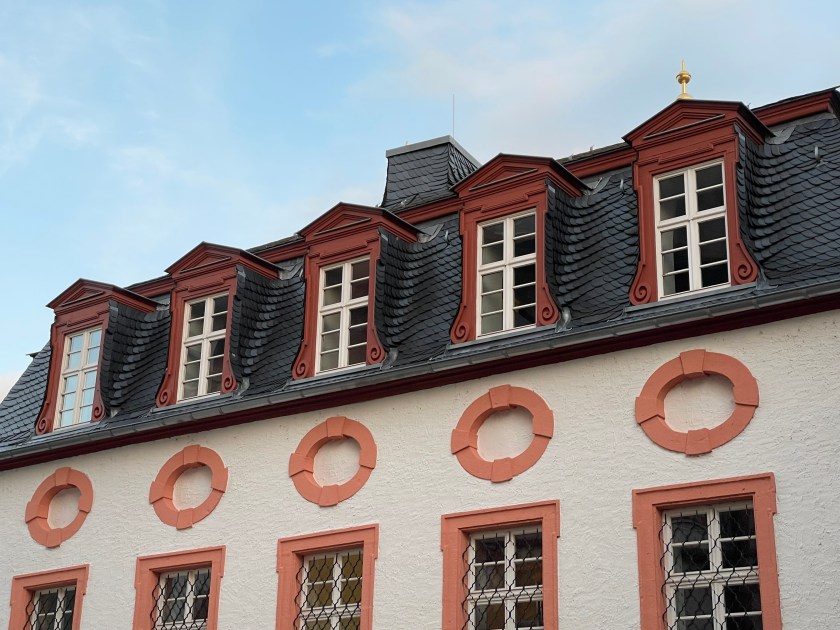
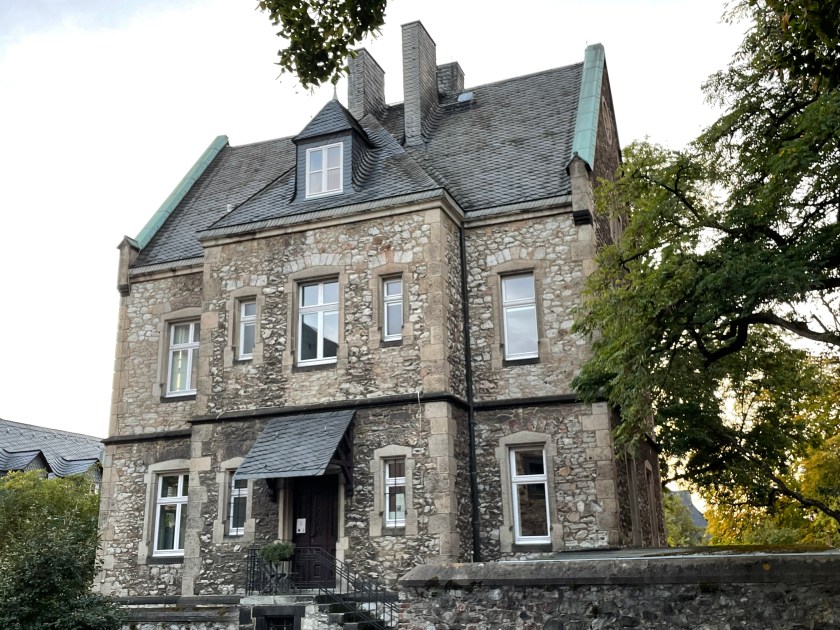

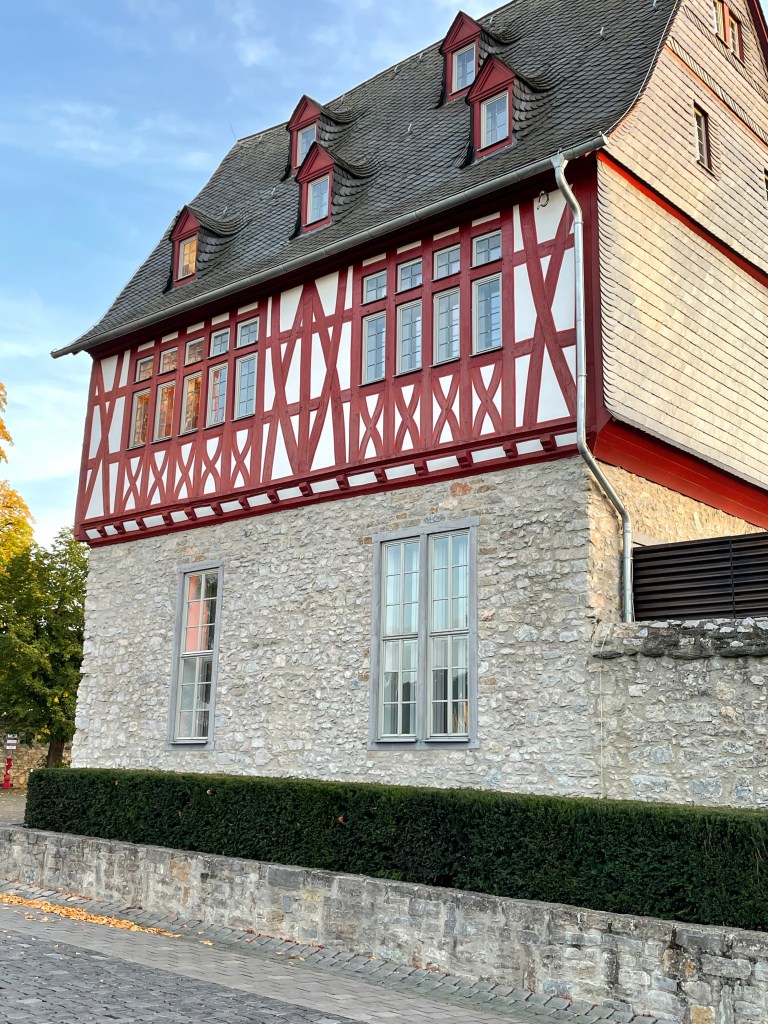
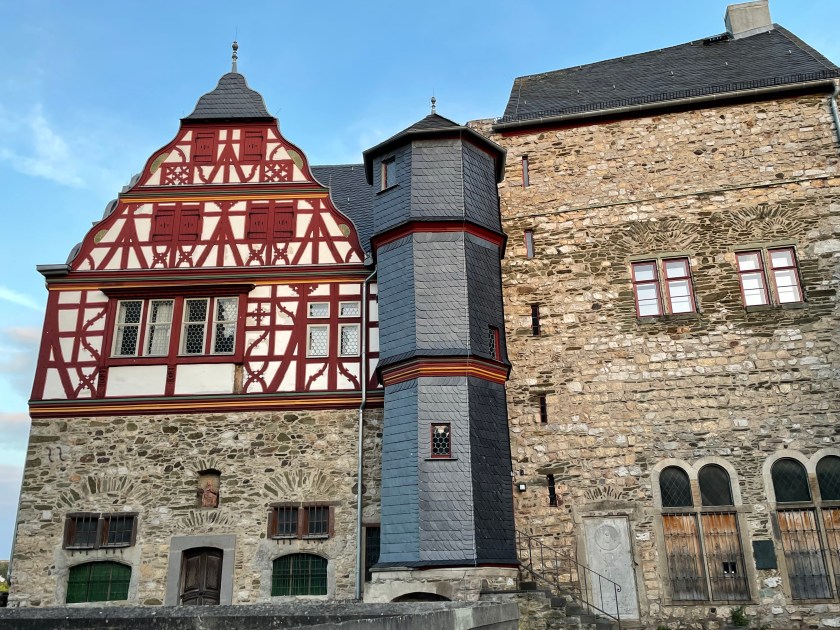
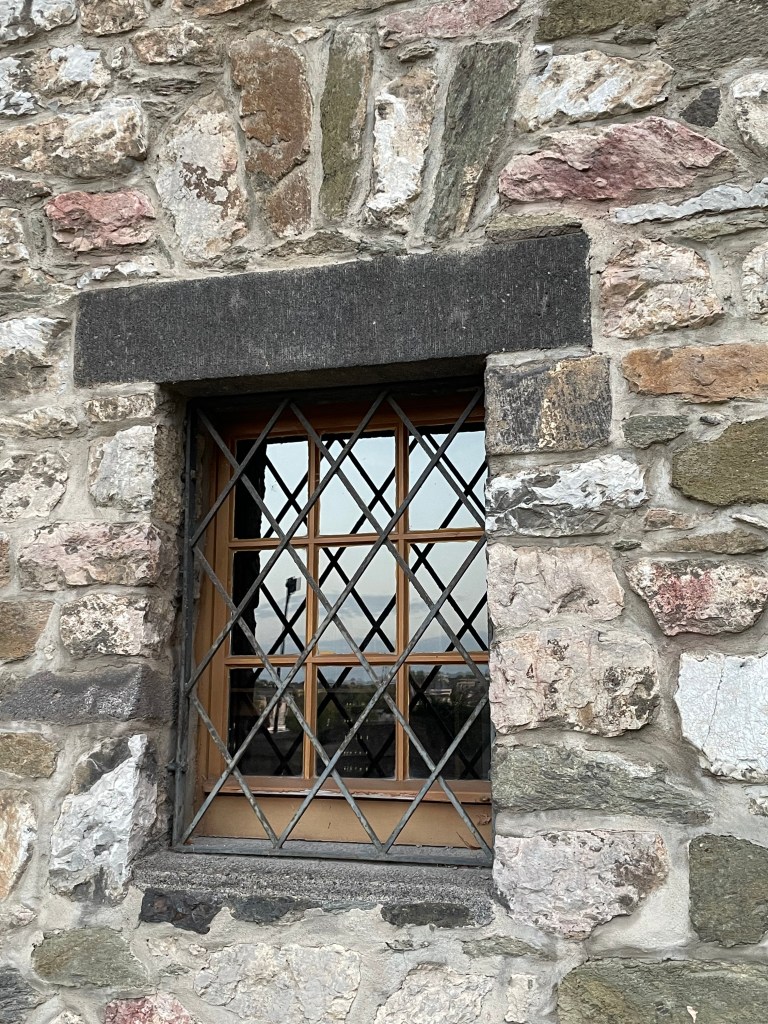
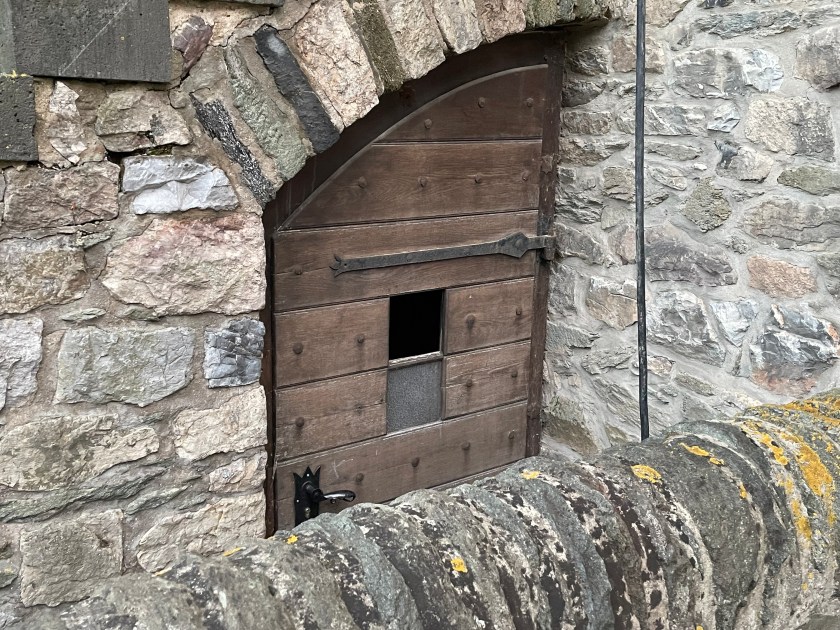
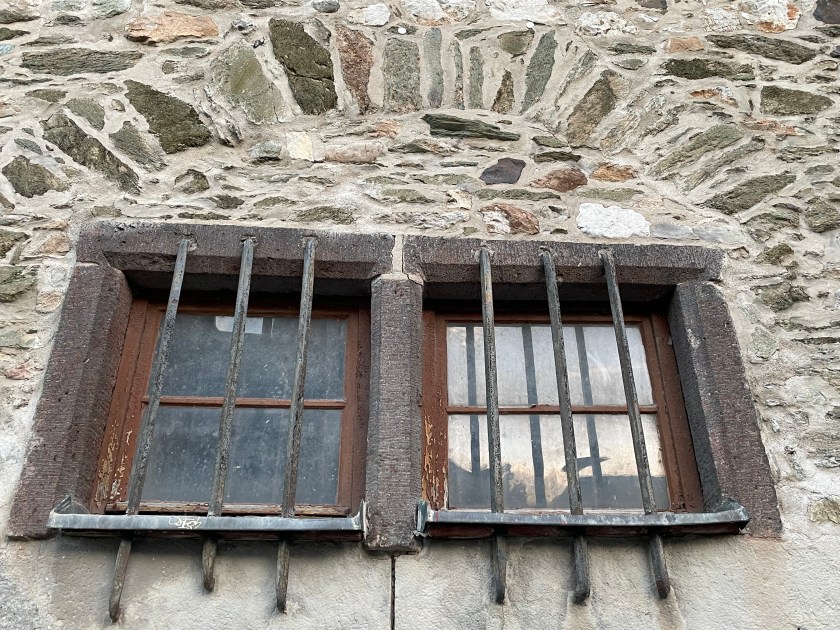
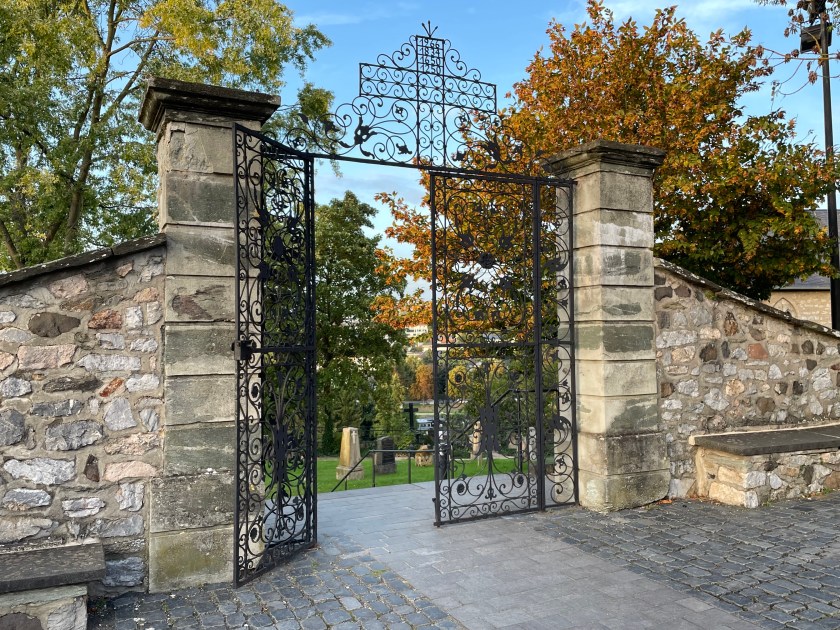
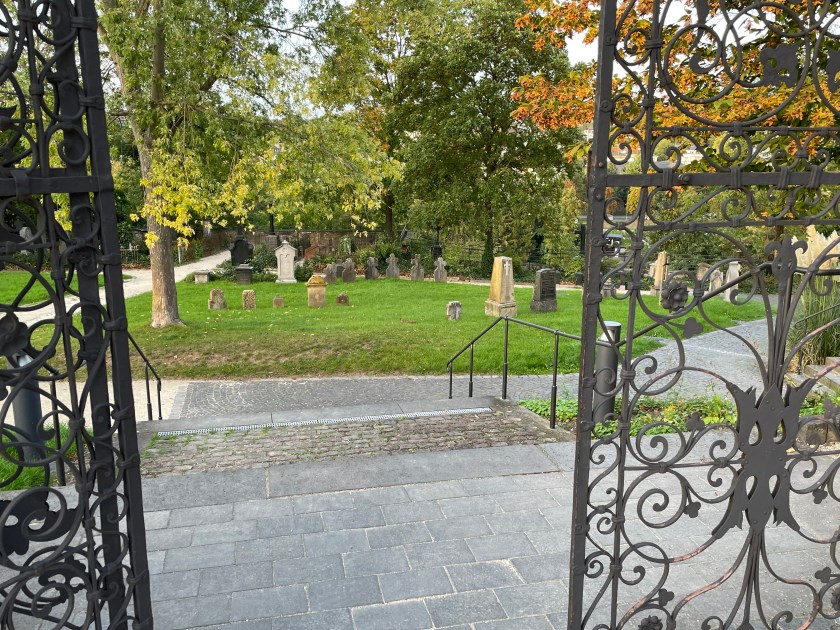
Also near the cathedral was this beautiful gate to a small cemetery. Again, the detail made me pause and just stare.
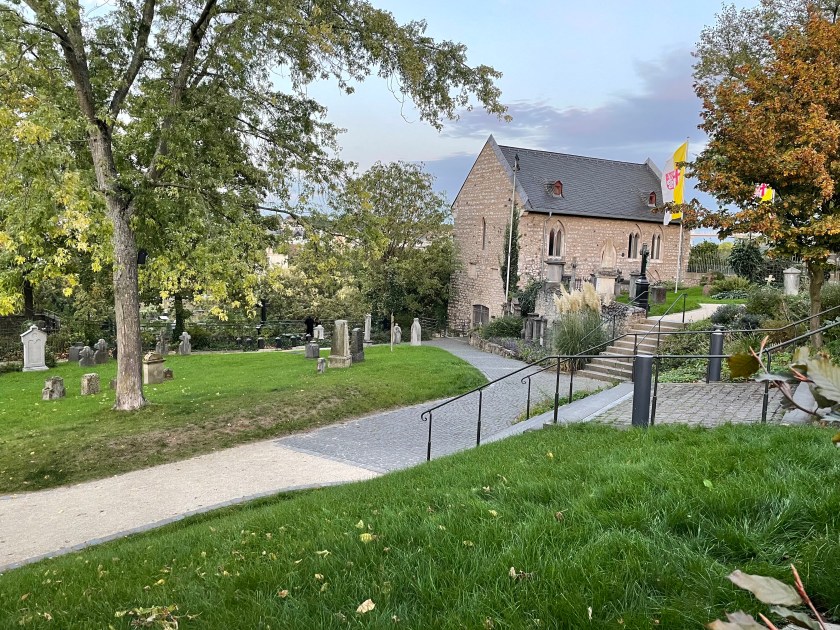
Then we wandered some more, through narrow streets and shops, enjoying very much the feeling here of fine old things.
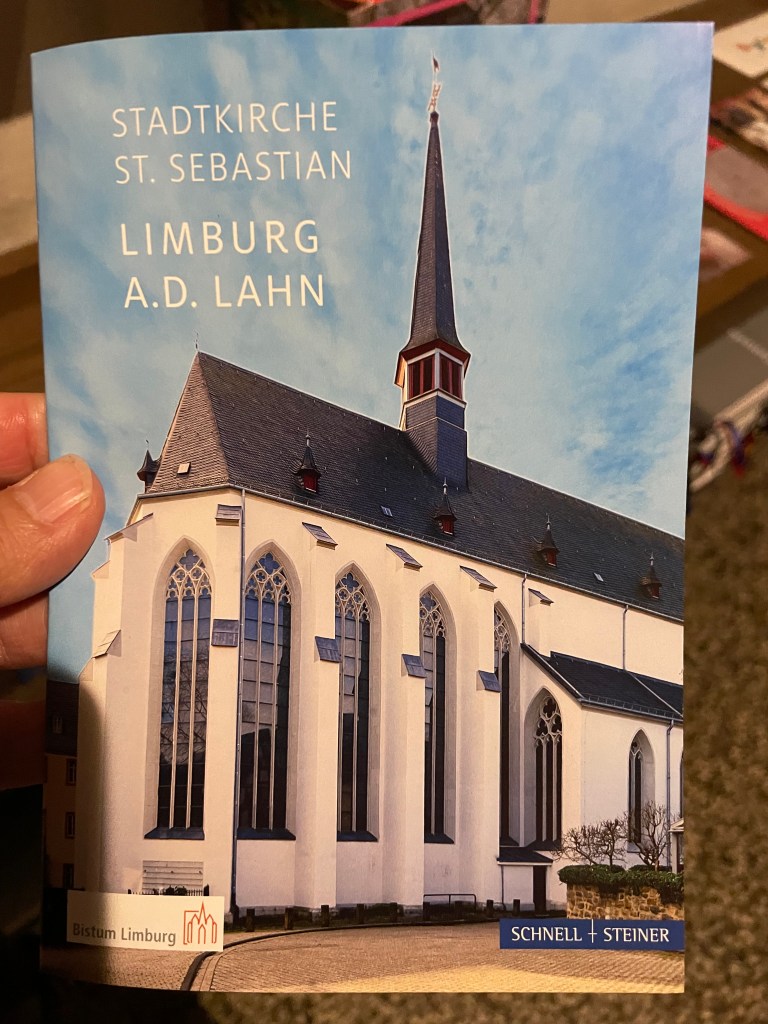
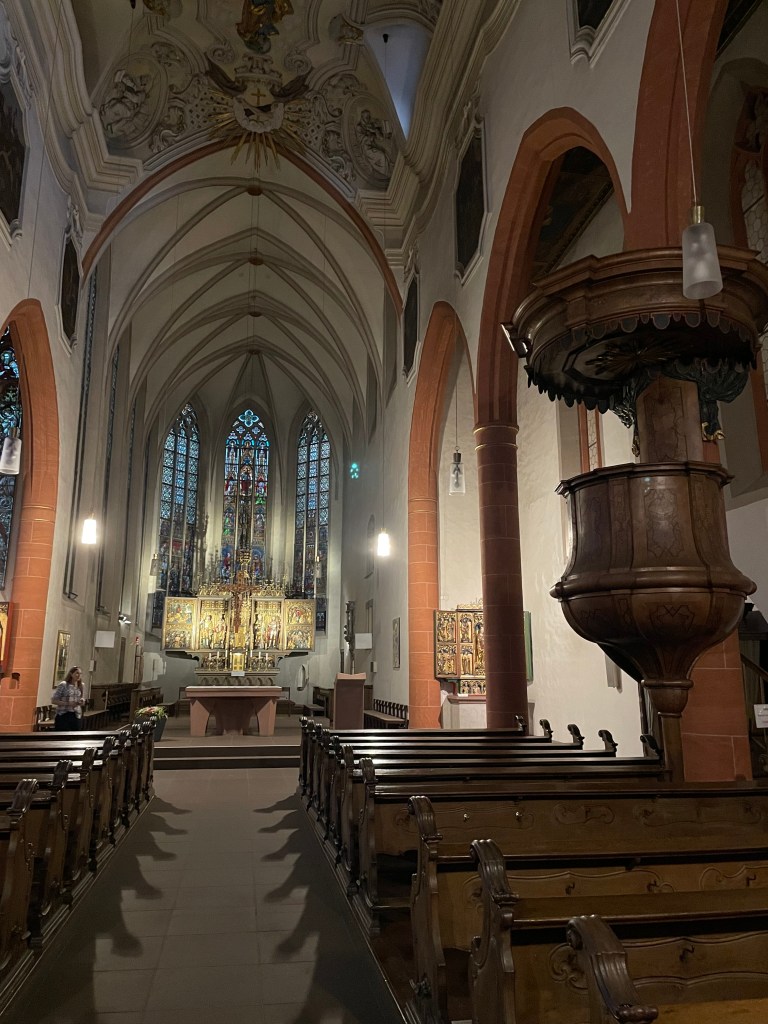
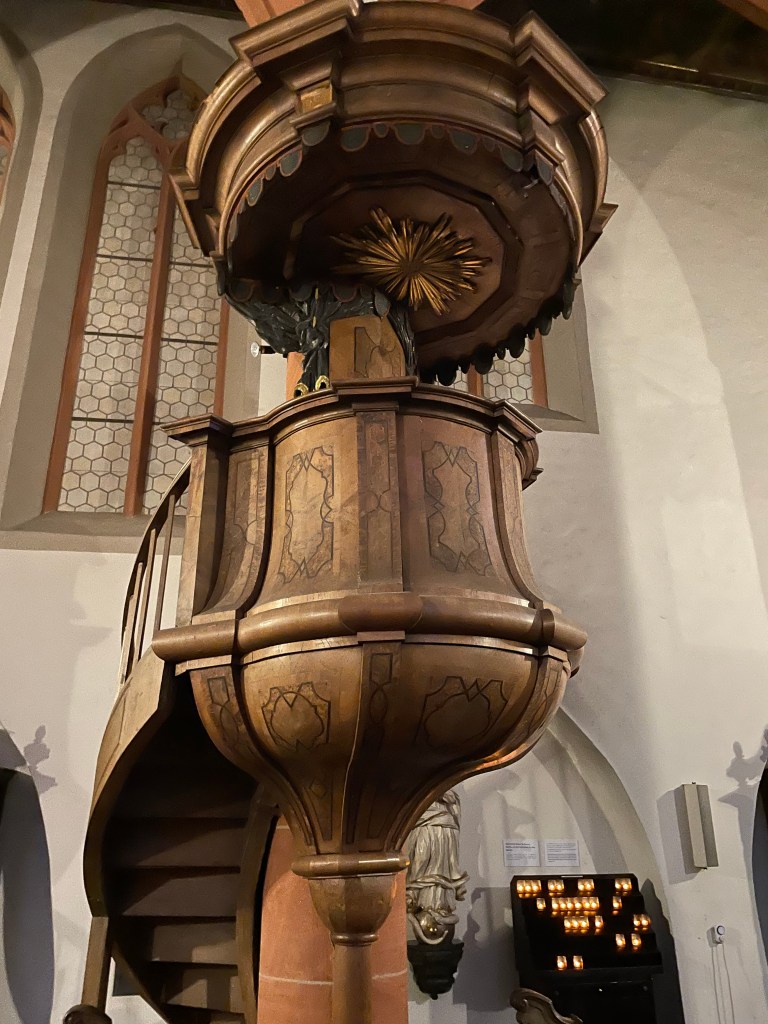
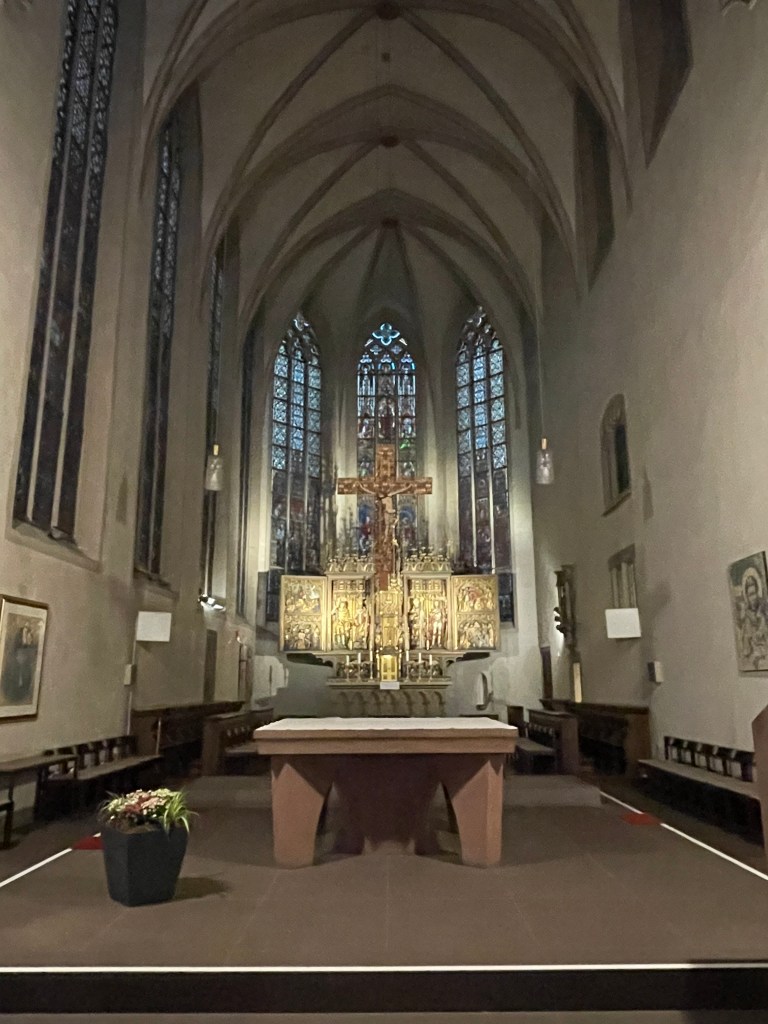
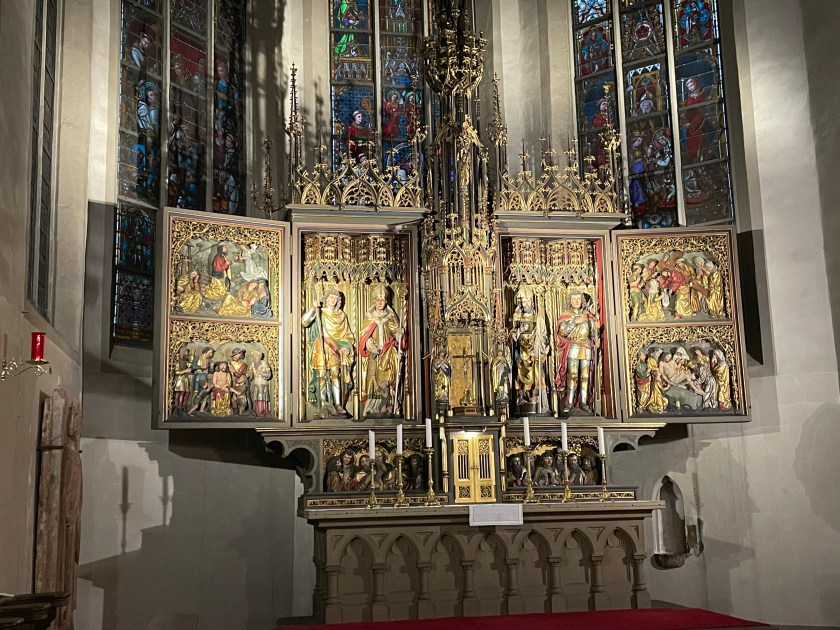
We came to another old church–St. Sebastian. This church was probably built at the beginning of the 14th century by Franciscans, rebuilt in 1742 in baroque style. The Franciscan monastery was closed in 1813 as part of secularization . The church was taken over by the state and declared a city church in 1820. Since 1827 it has belonged to the then newly established diocese of Limburg .
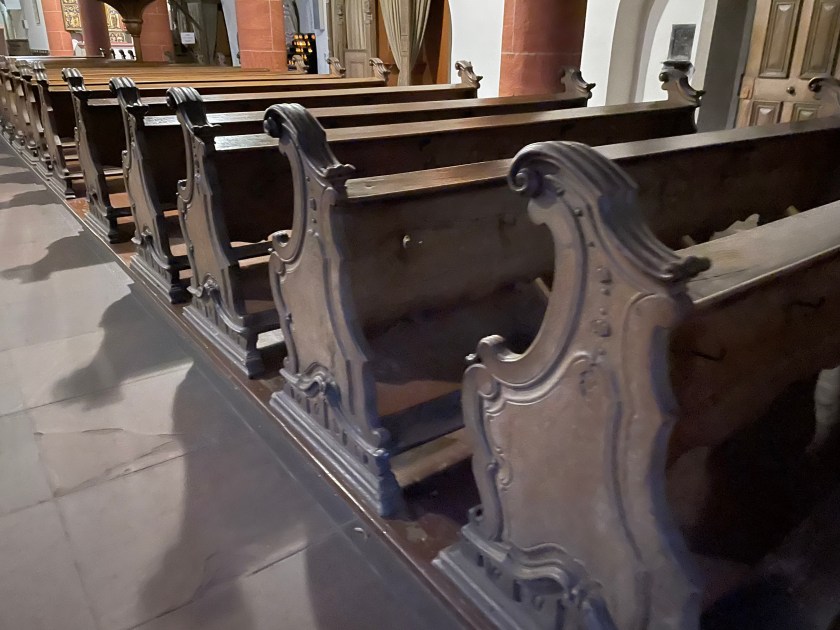
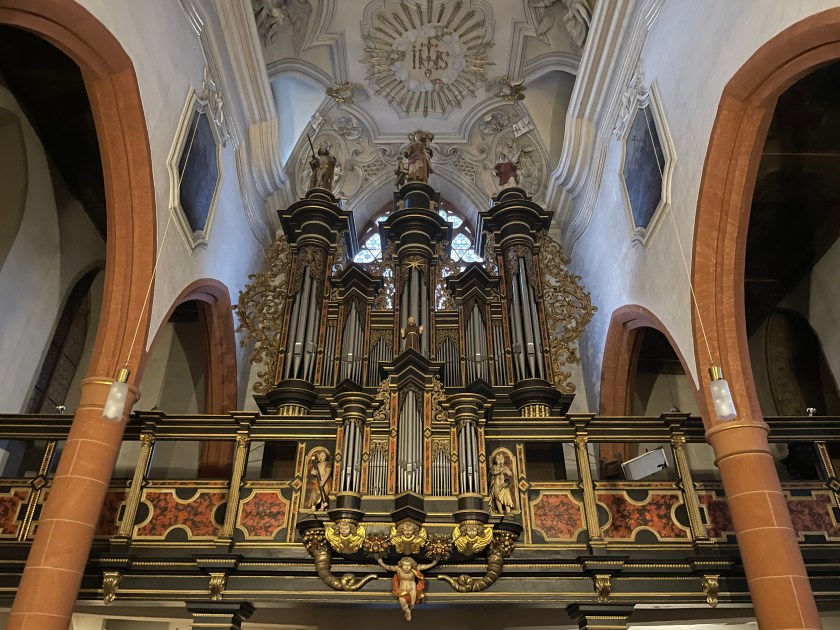
It was beautiful and peaceful inside. Calm and quiet. A nice place to sit and think about my blessings.
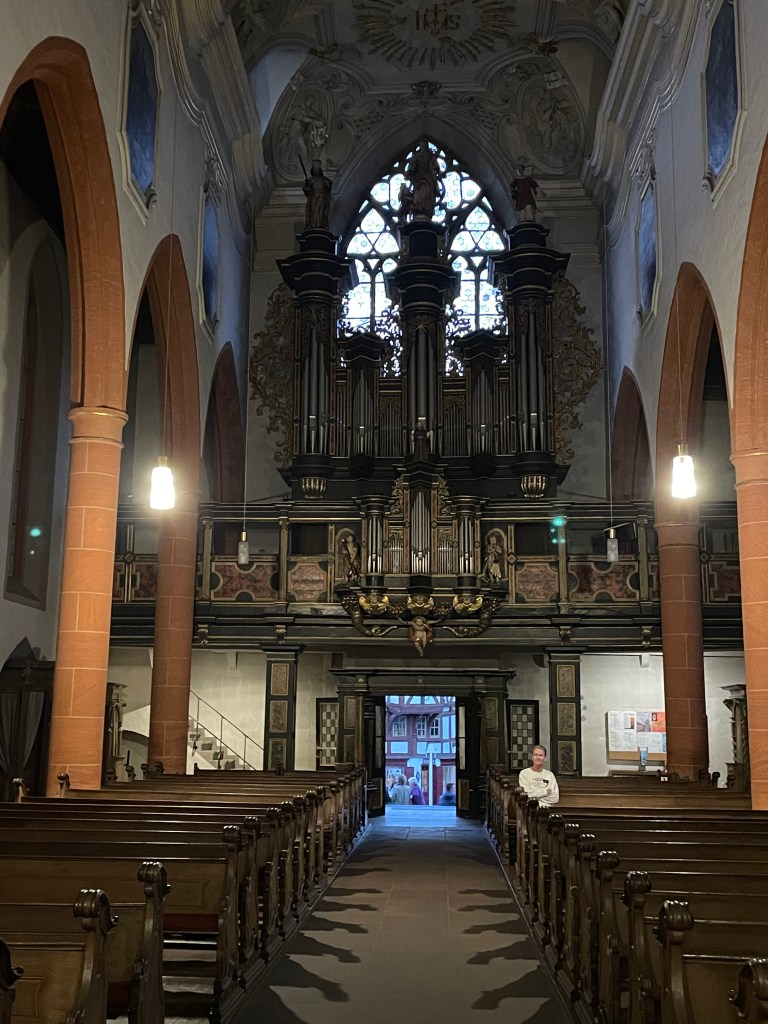
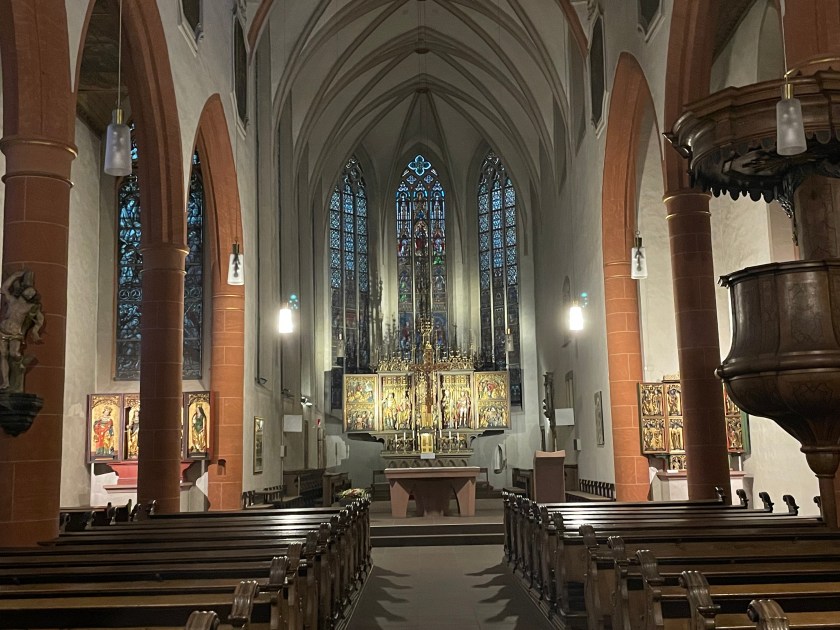
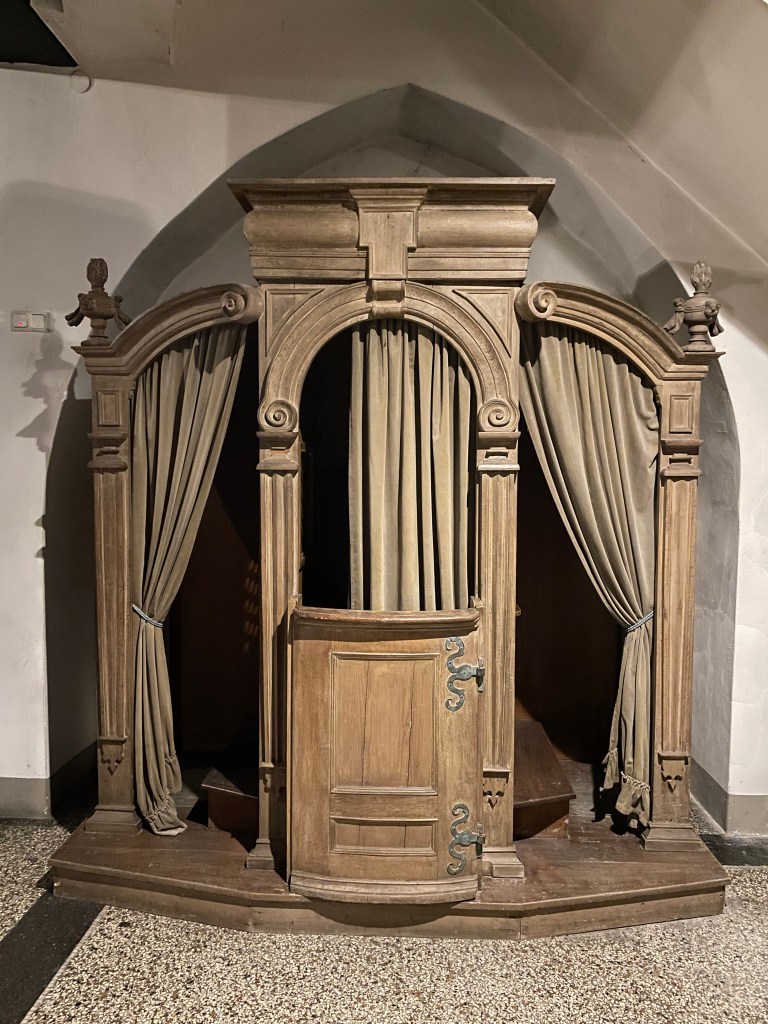
There was a social gathering in the street when we came out of the church. These kind people invited us to join them for a glass of wine. We declined, kindly, and continued on our way.
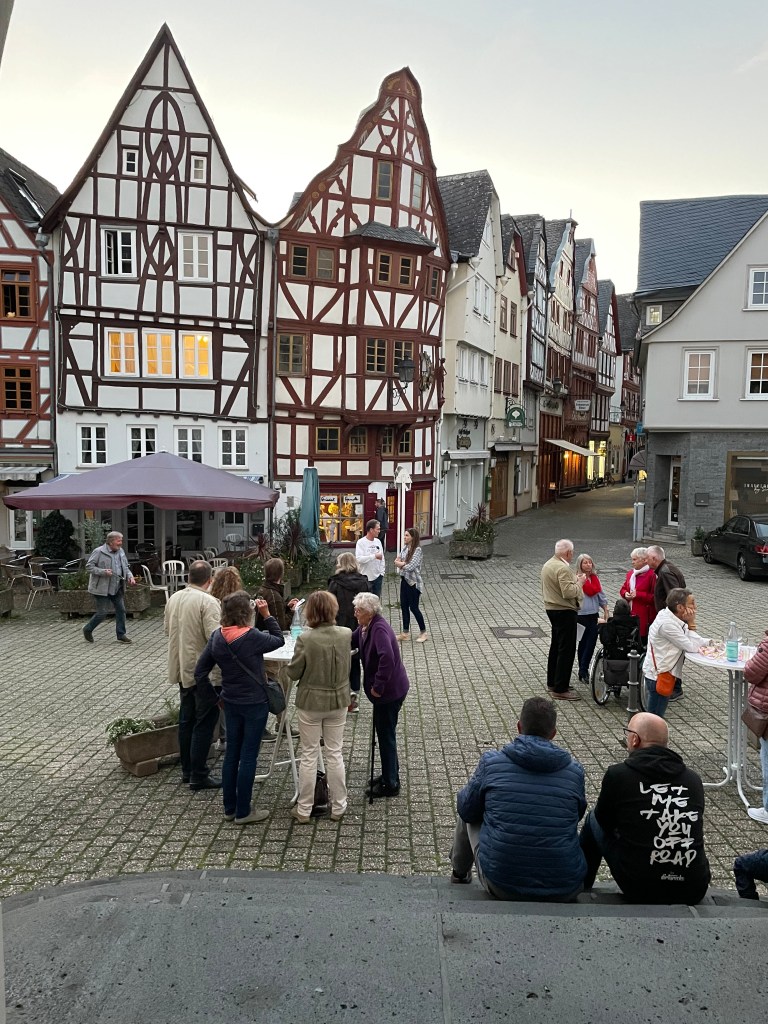

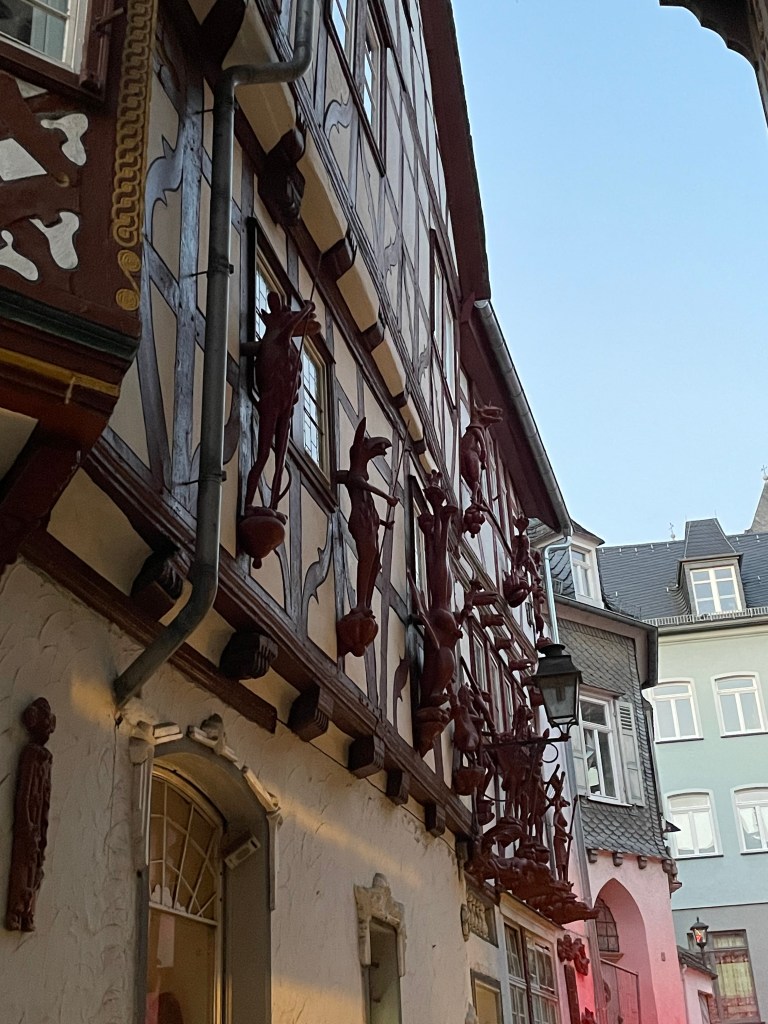
Here is the house of seven deadly sins built in 1567. It’s decorated on the outside with intricate carvings depicting the seven deadly sins.
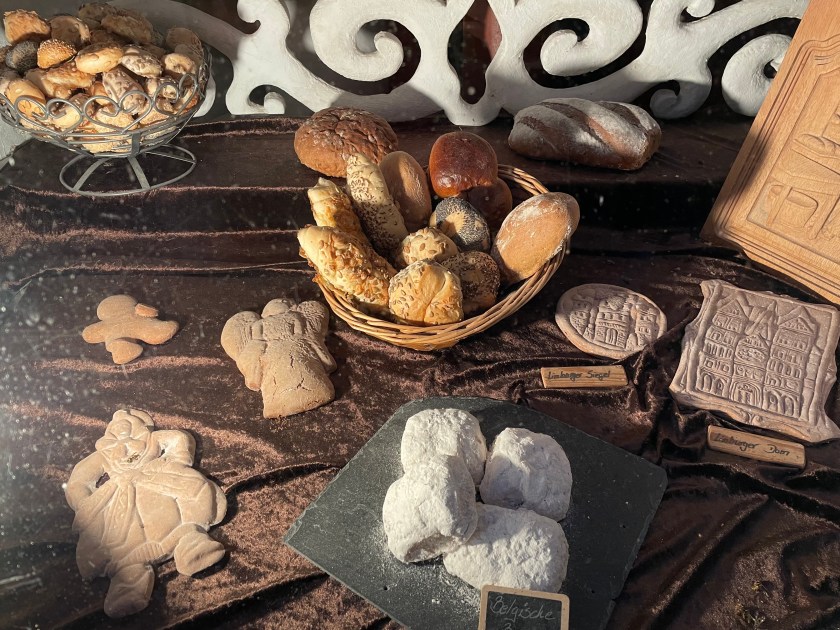
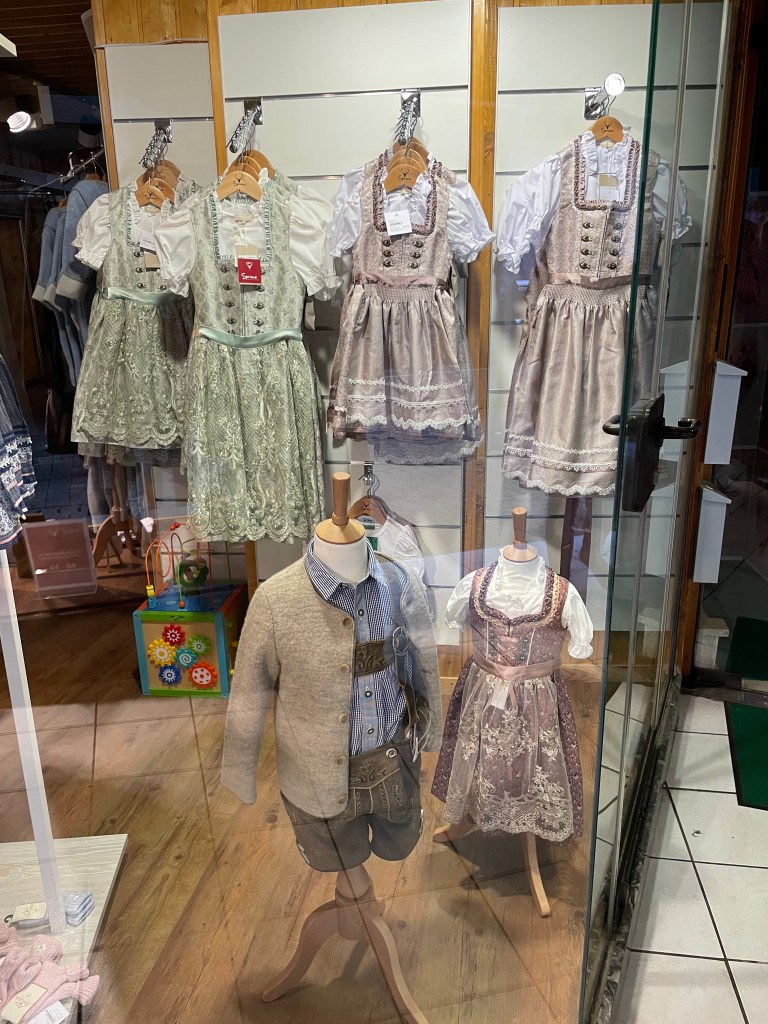
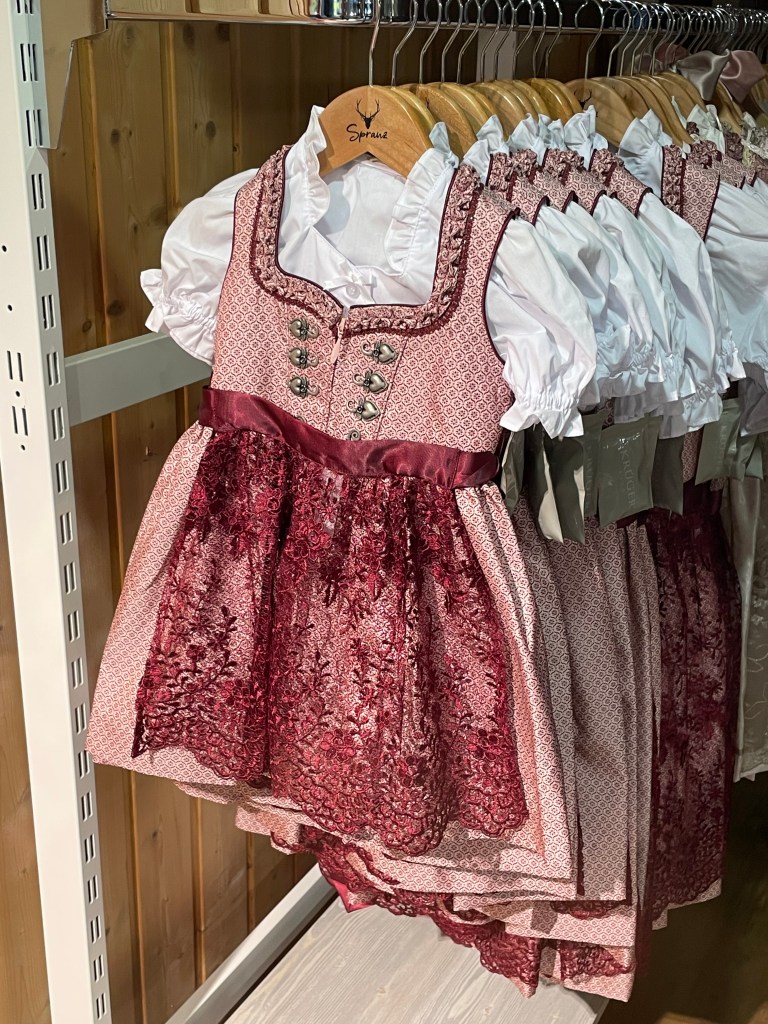
And here’s a little window shopping as we made our way back to the car:
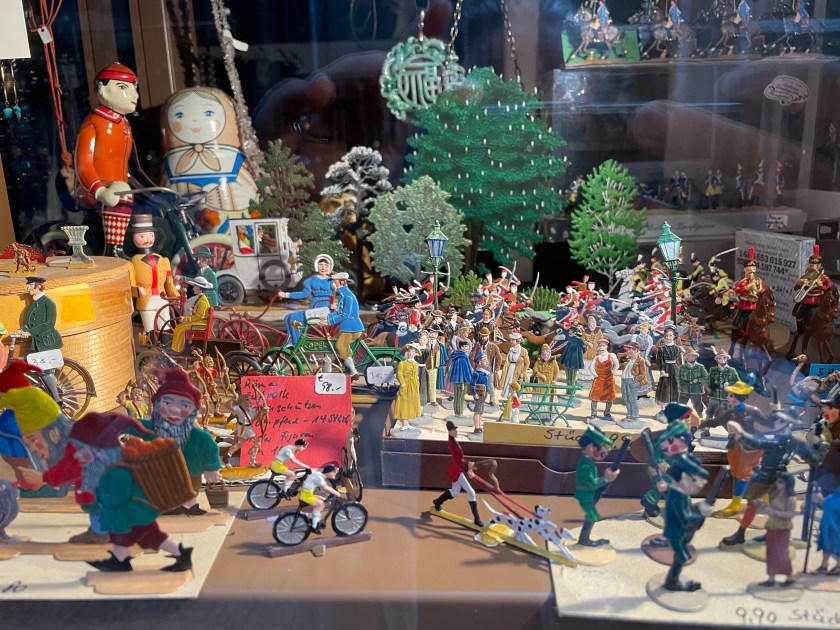
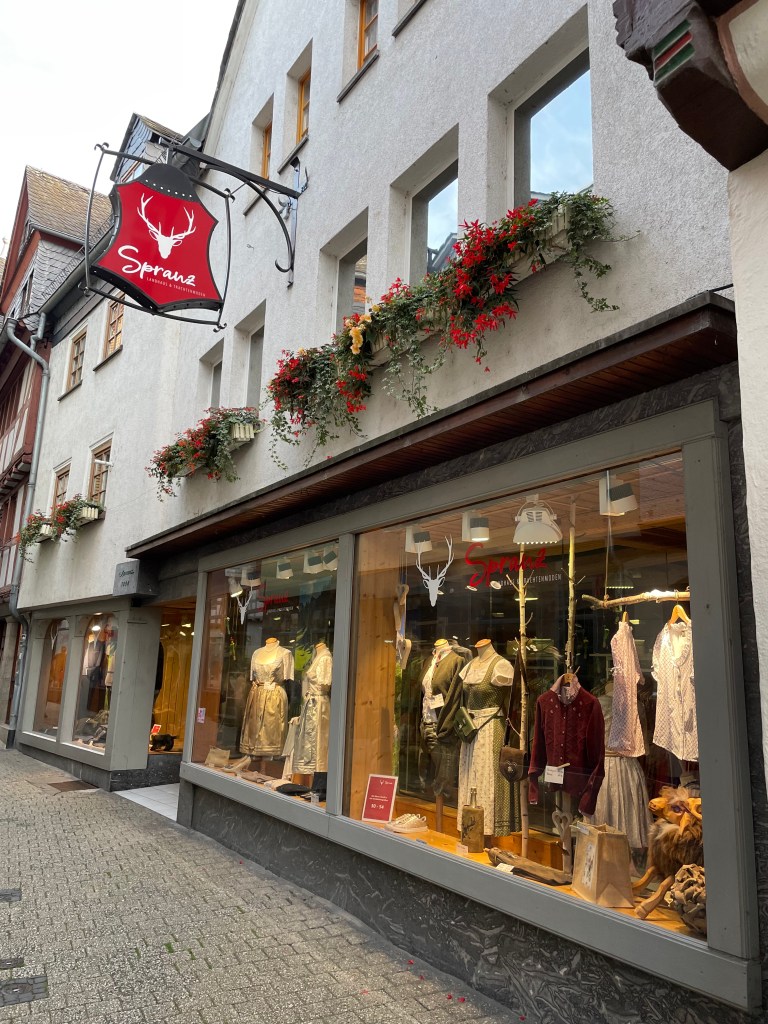
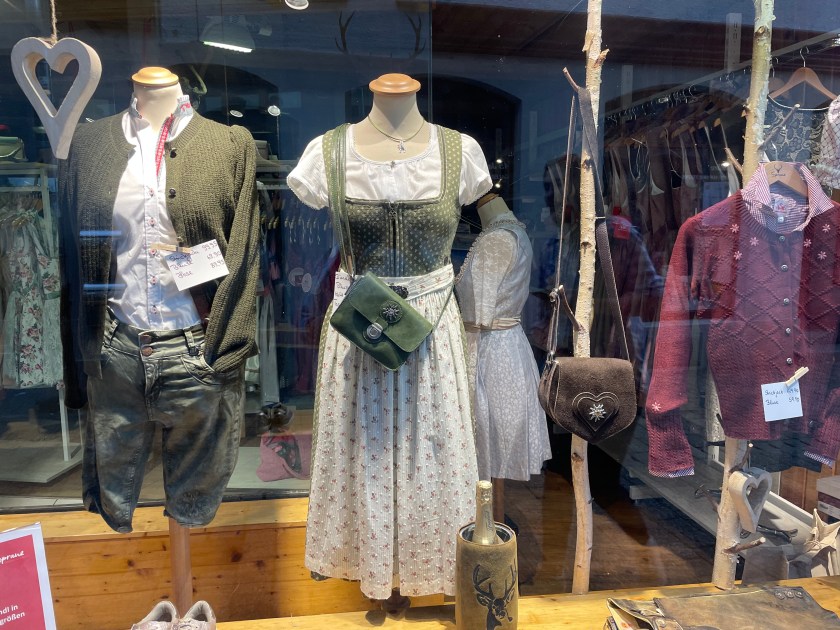
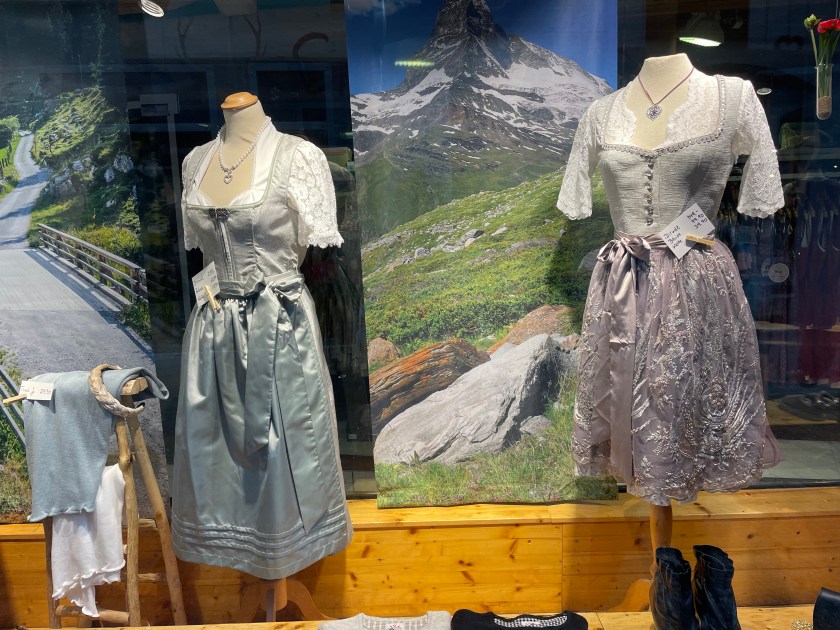


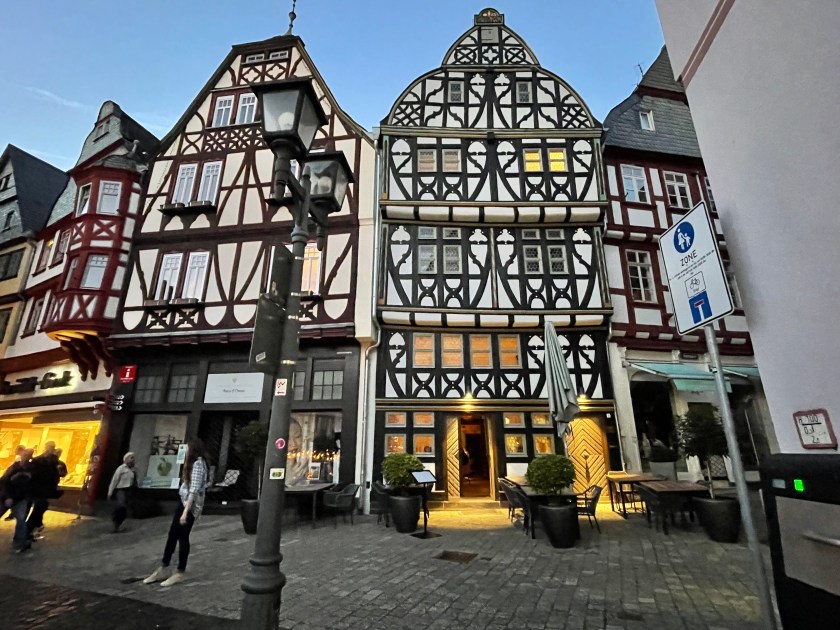
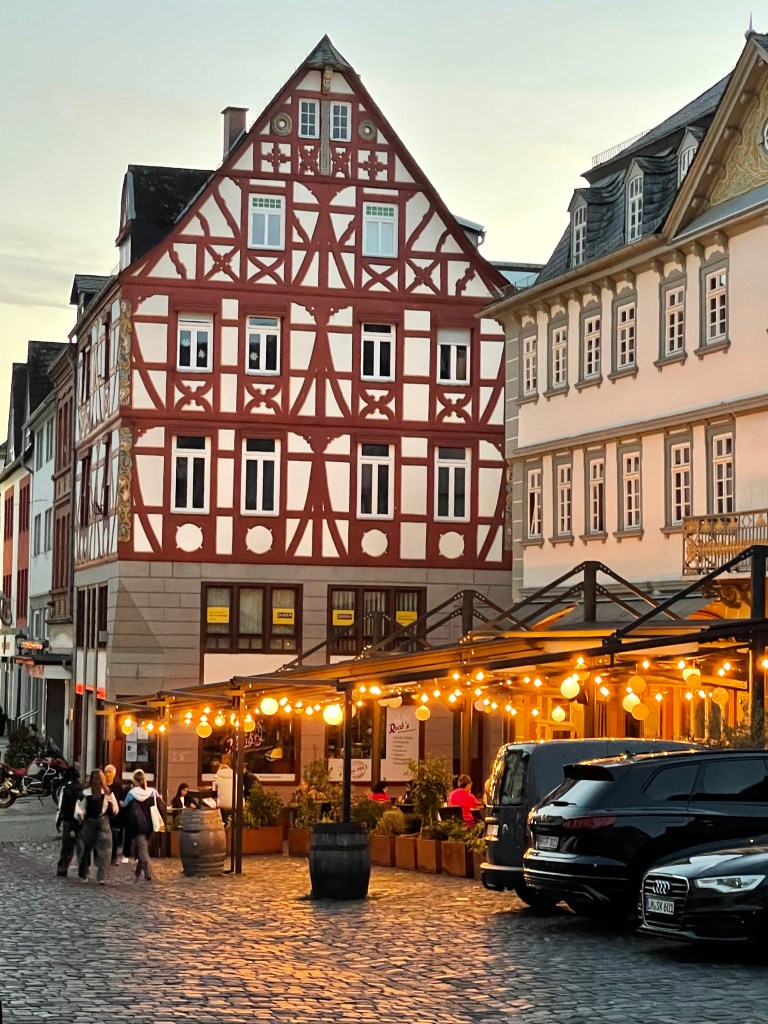
I’m not getting tired of beautiful buildings, cobblestone streets, outdoor cafes, or cathedrals. There is nothing like this in the world we come from and I love it.

 Our Frankfurt Germany Mission