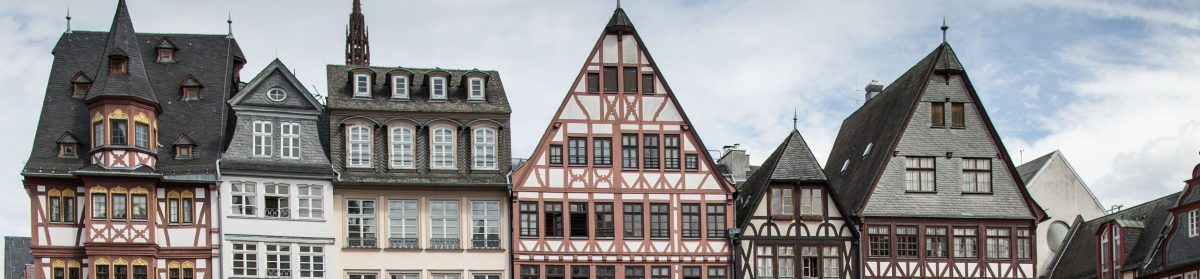
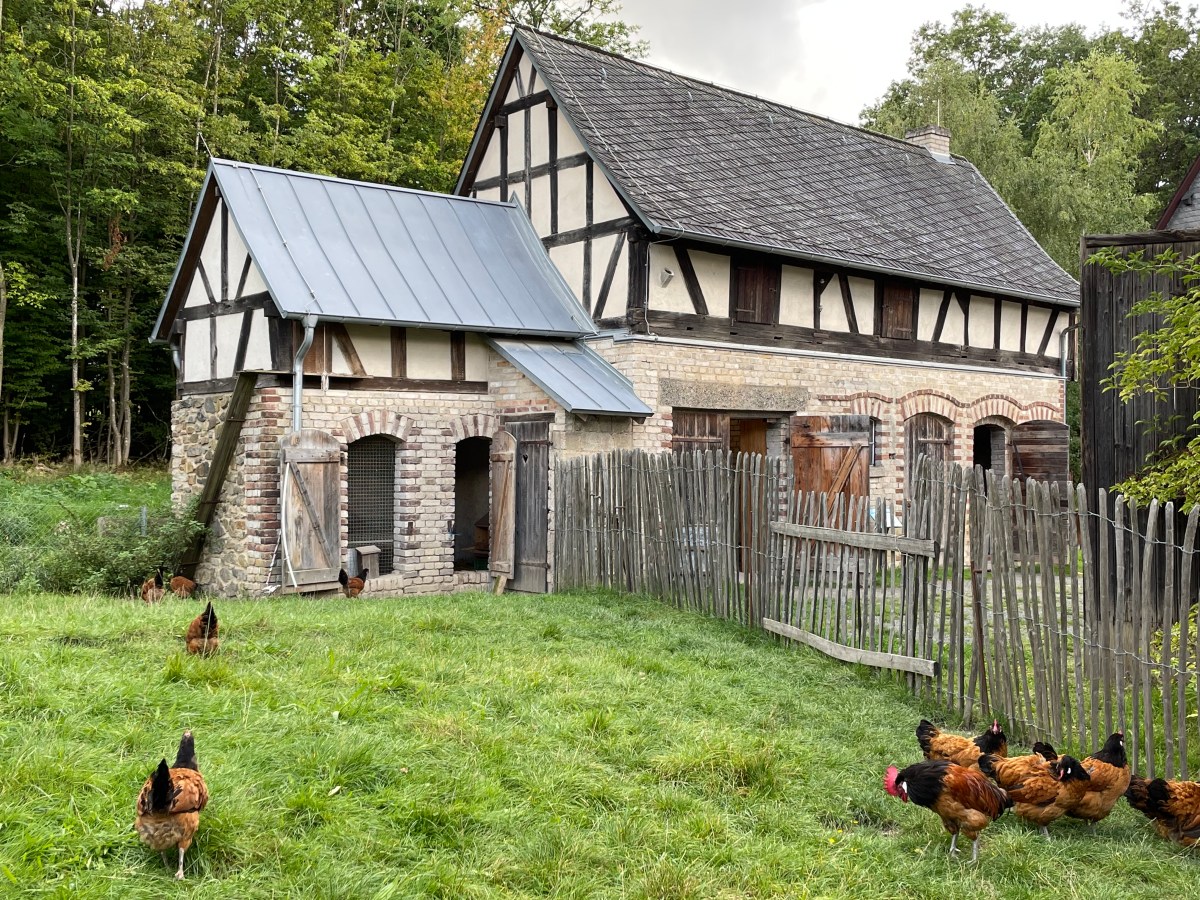
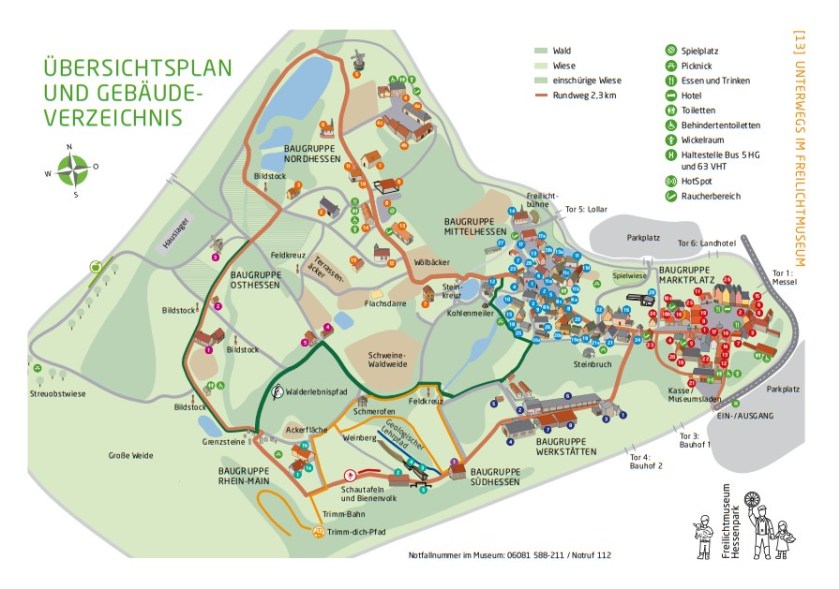
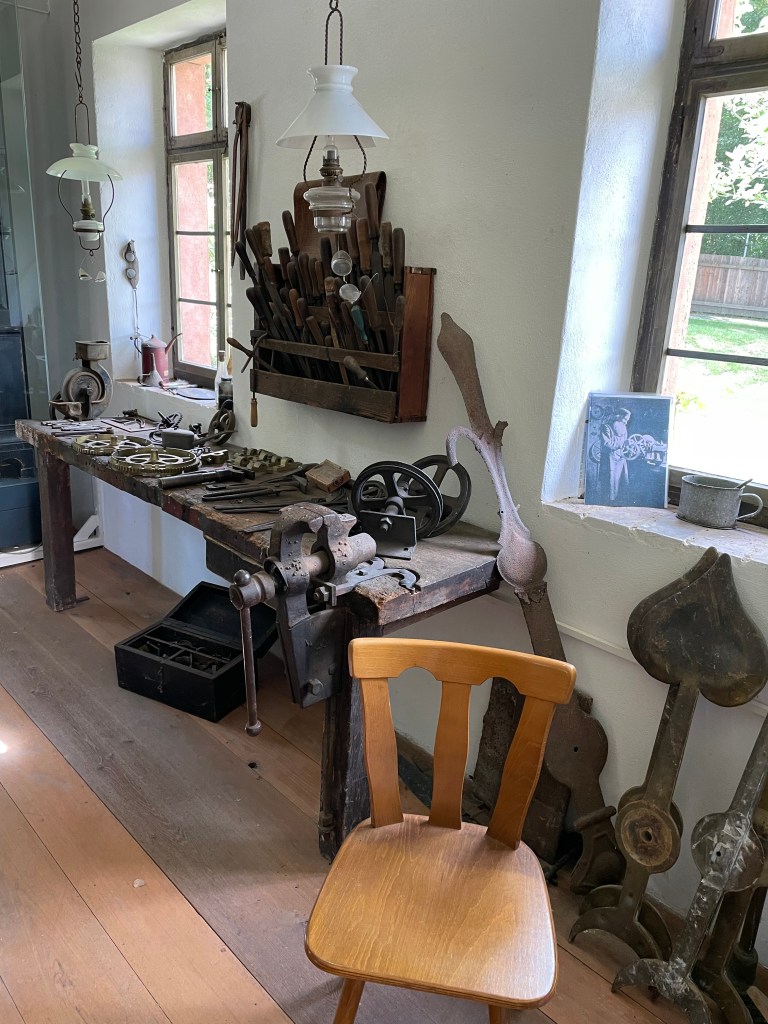
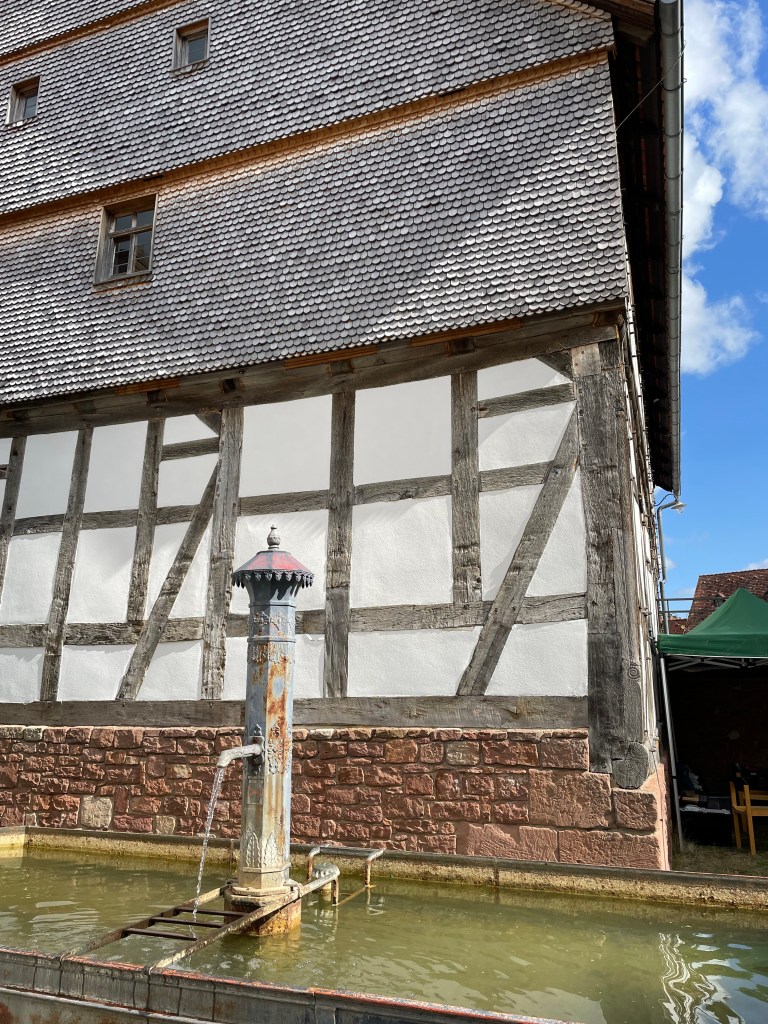
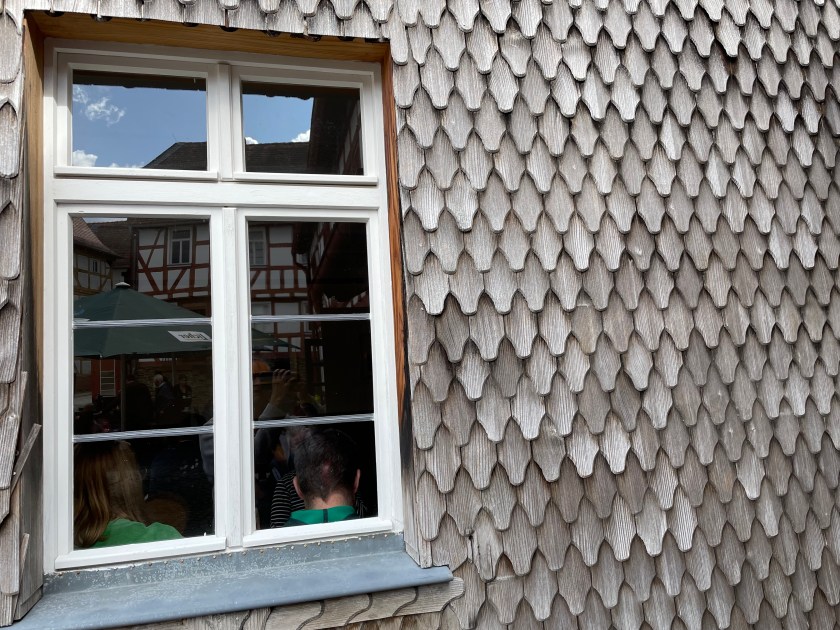
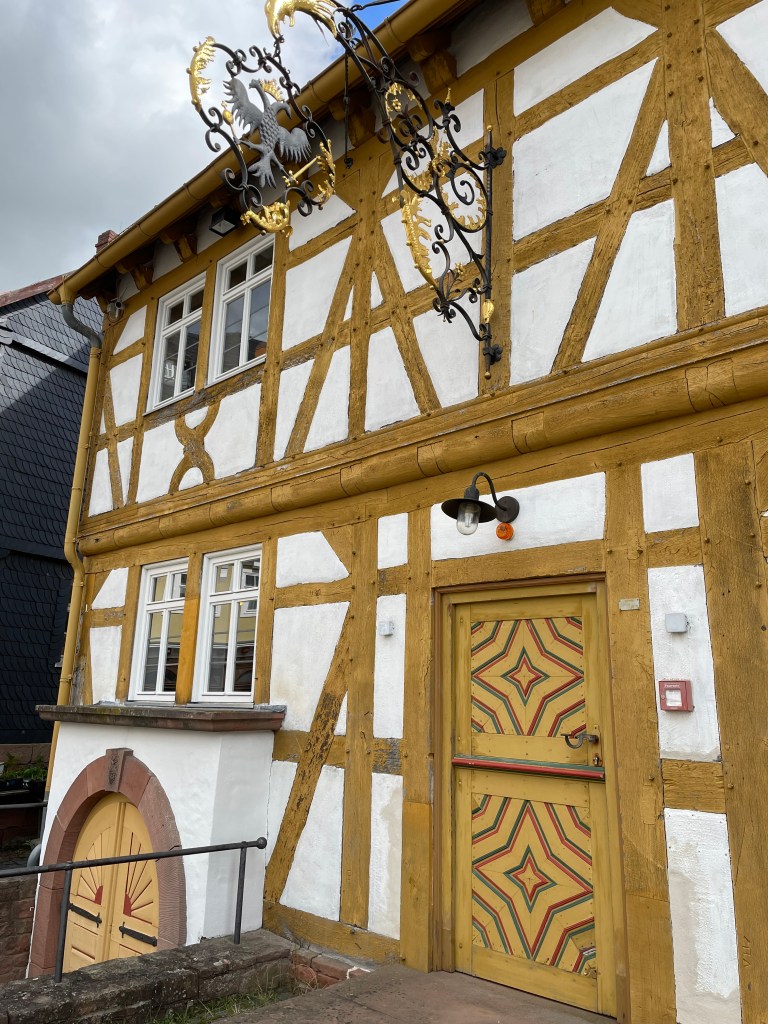
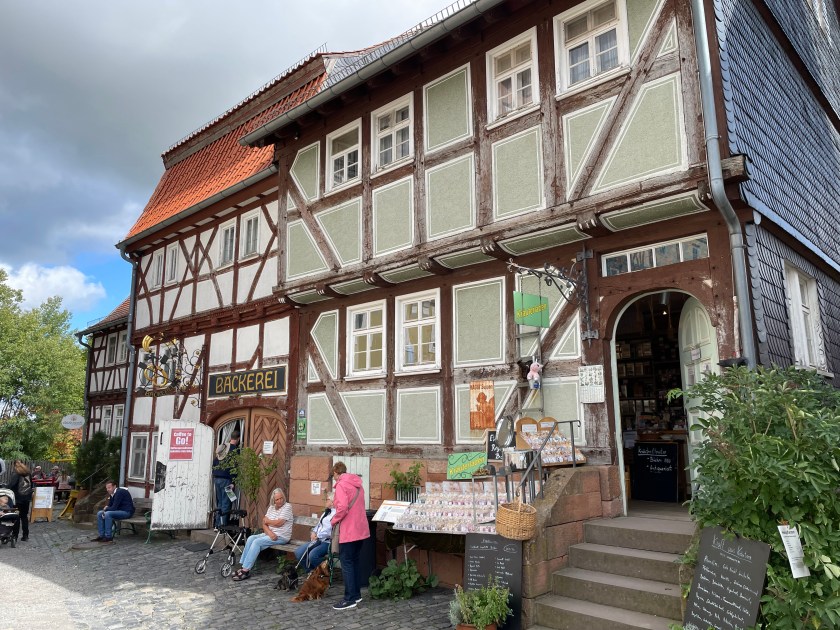
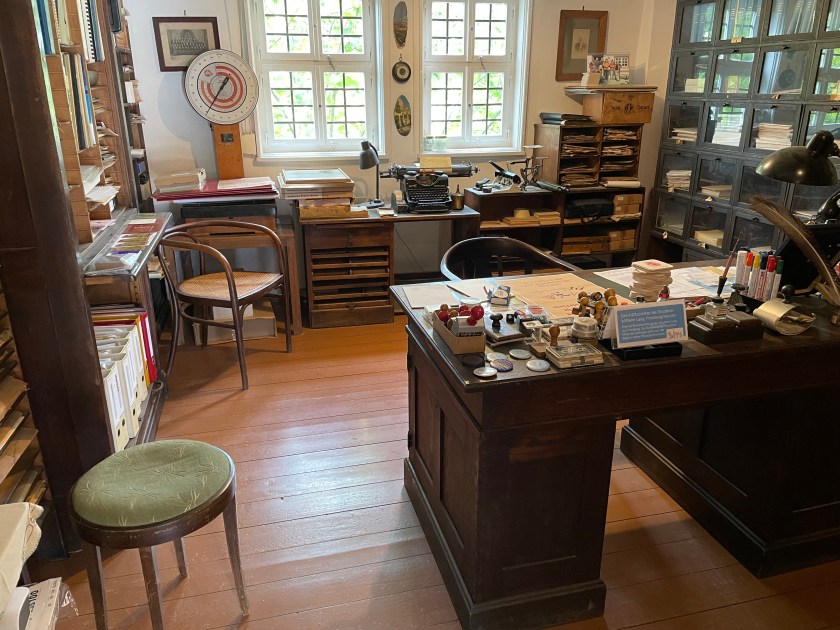
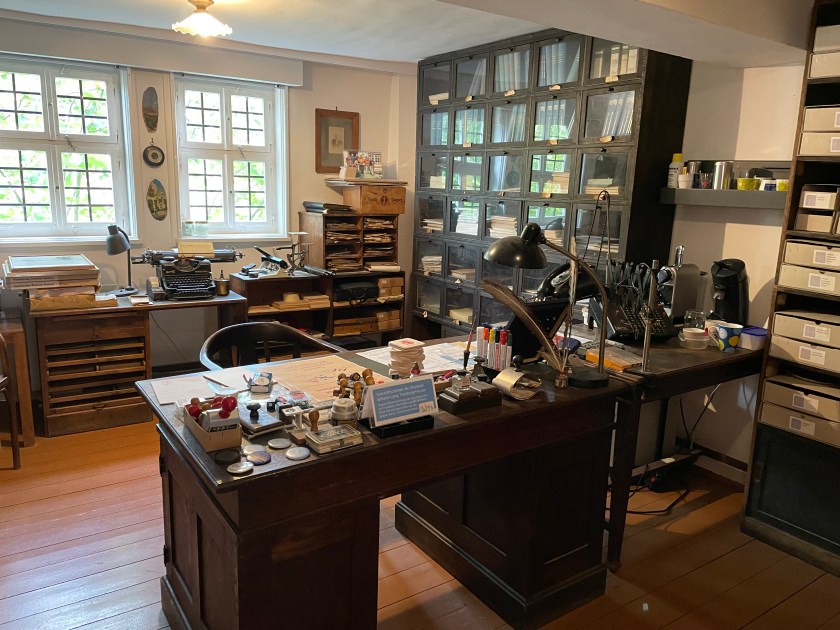
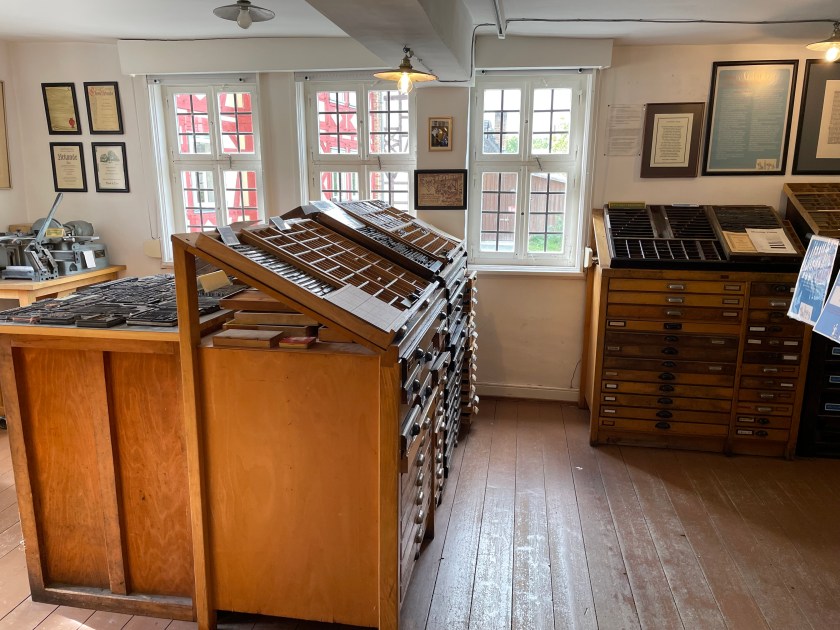
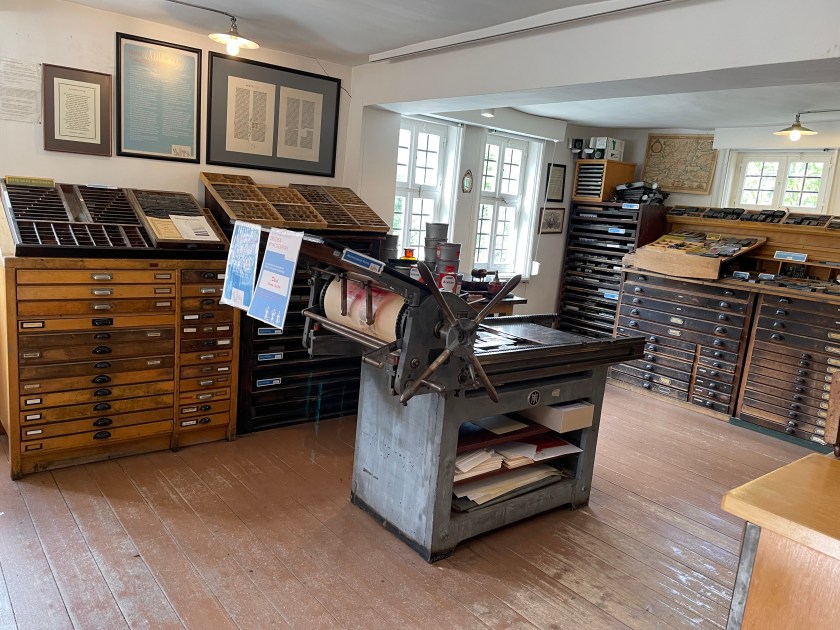
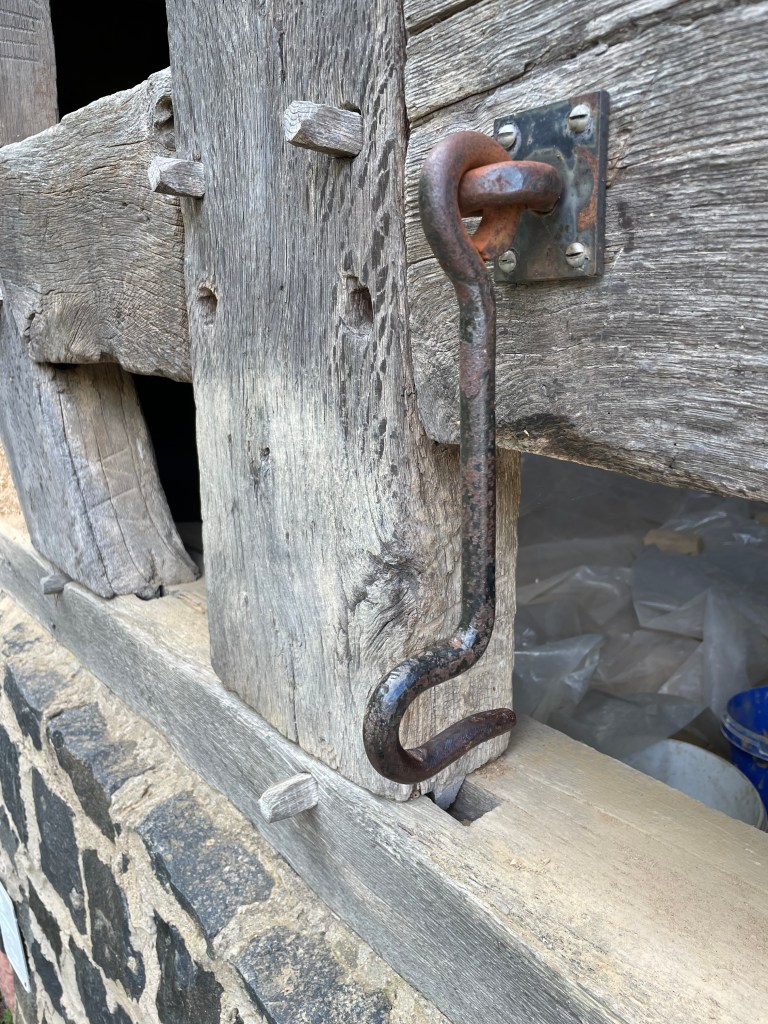
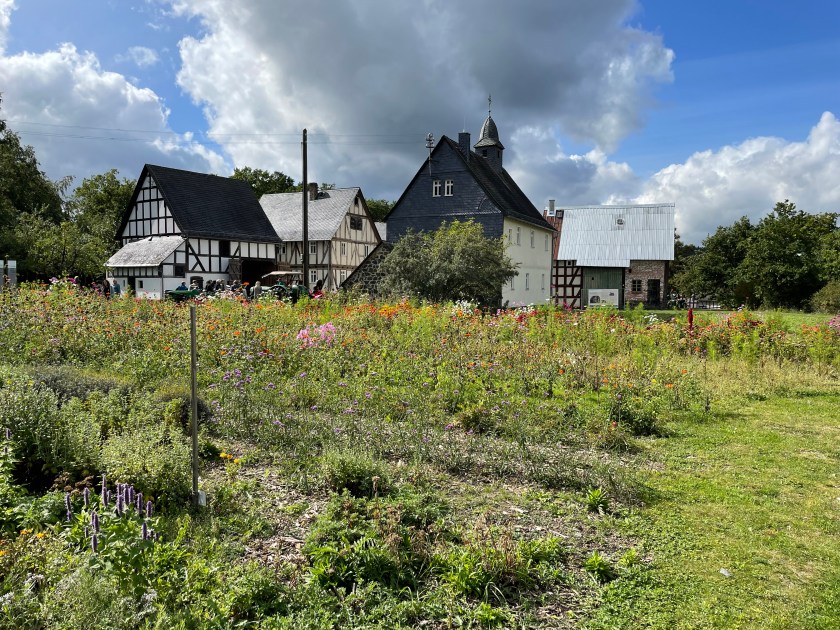
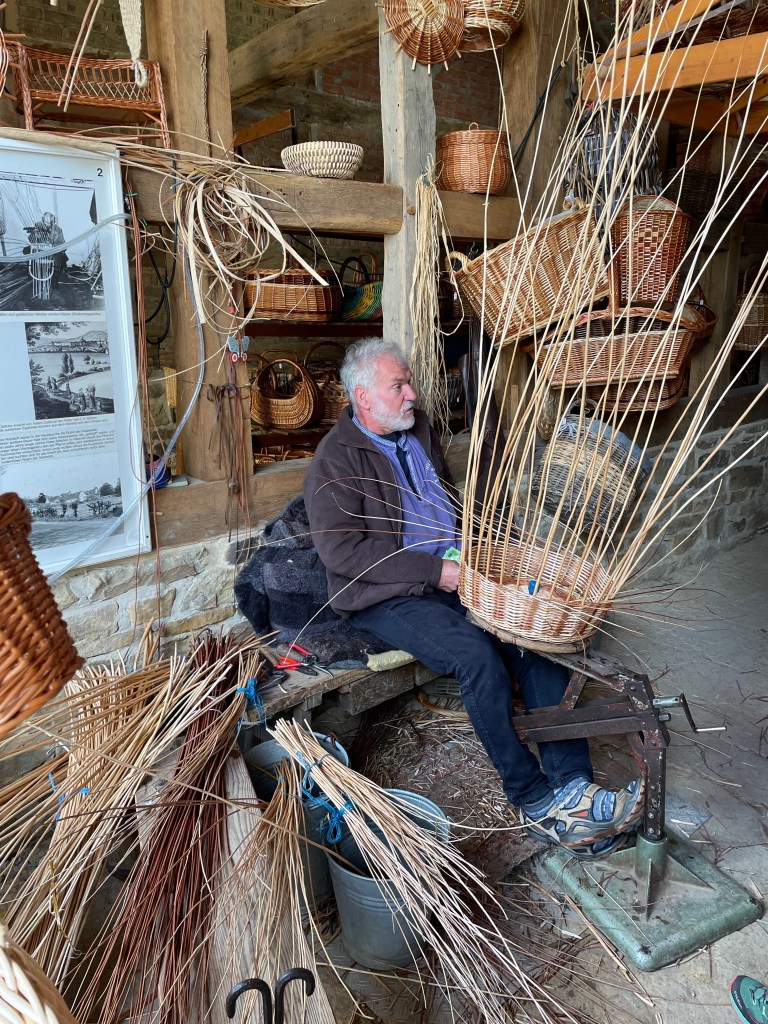
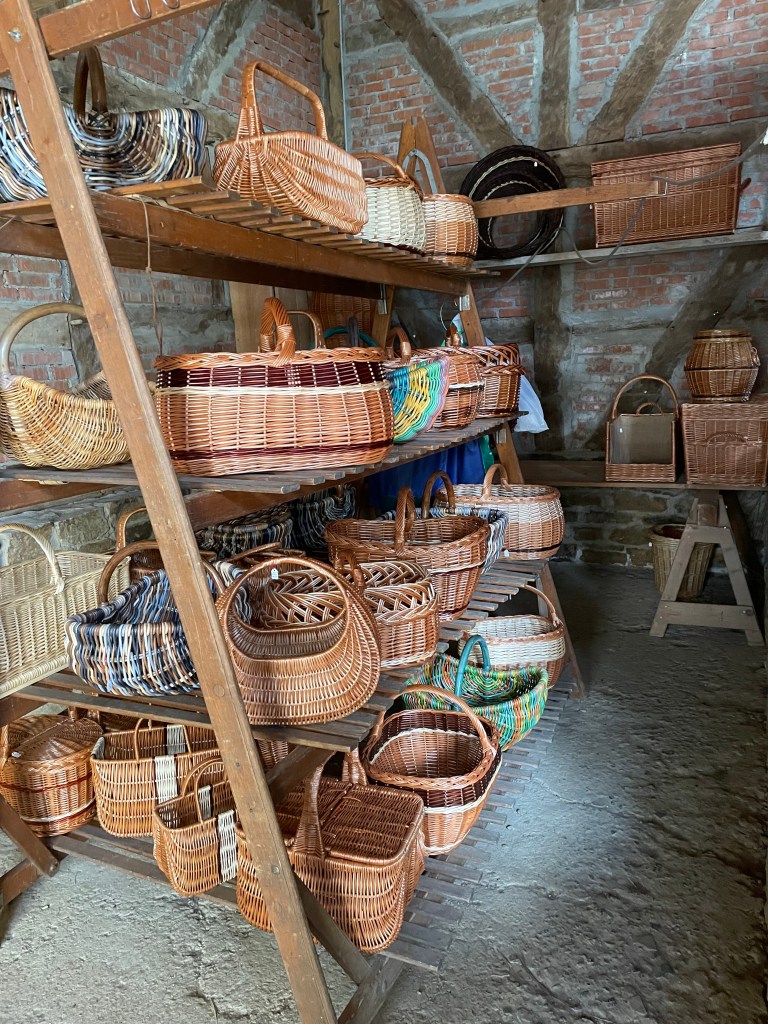
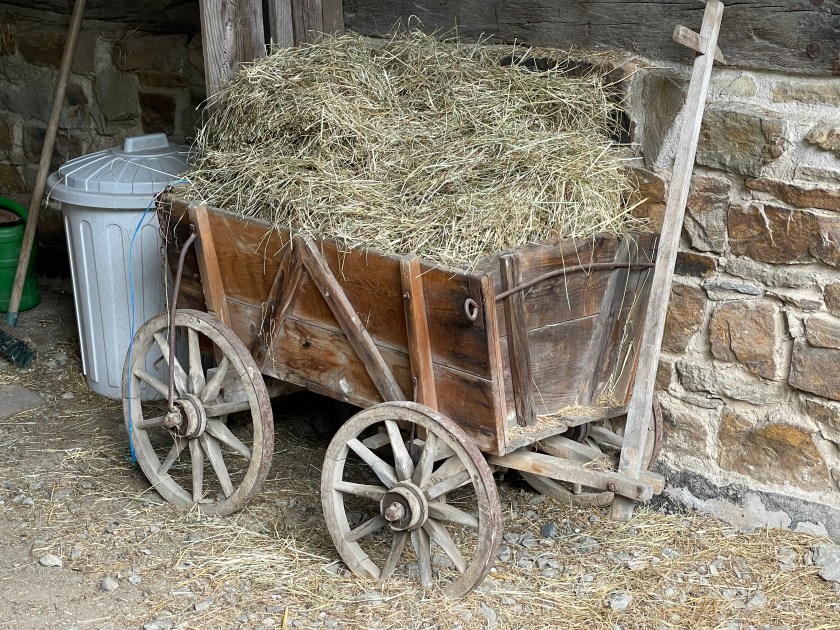
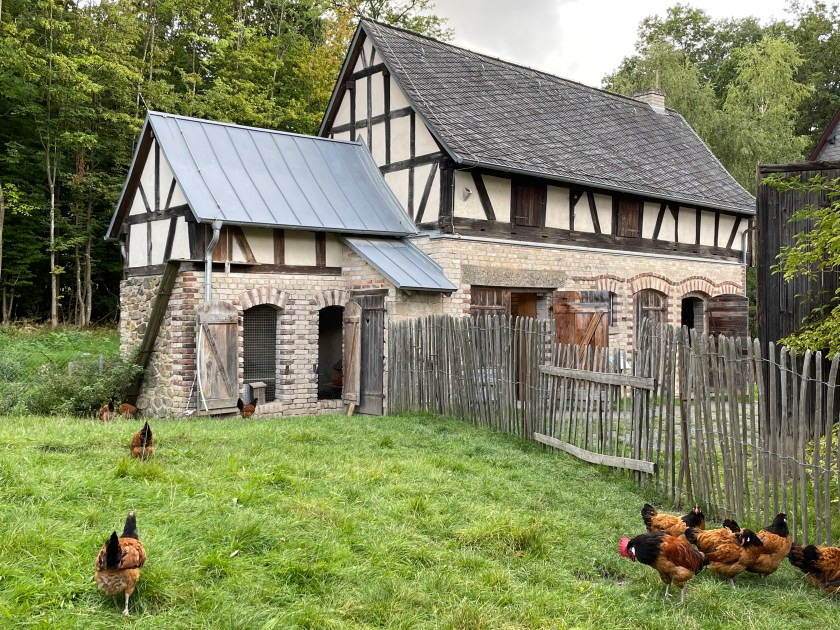
Hessenpark will probably be one of my very most favorite places to visit while we’re in Germany. I took photos of everything I wanted to remember and look at again because it’s in places like this that I get a real feel for the daily life of my ancestors, who I love. I’ve studied their lives from church books listing births, marriages, and deaths, and I know who they are, but places like this SHOW me HOW they lived. The 100+ buildings in this living museum are from this area, carefully documented, deconstructed, brought here, and reconstructed. They are put together here as if they were a village from long ago. Everything is authentic, but not in its place of origin. Visiting here gives us a good feel for the past and how people lived. Please pay attention to every detail, and you will feel as if you’ve stepped back in time.
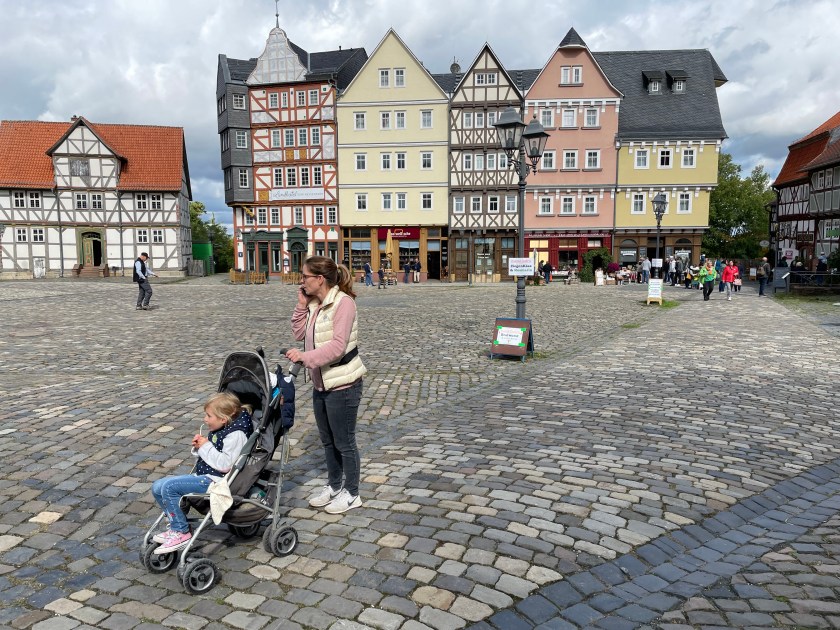
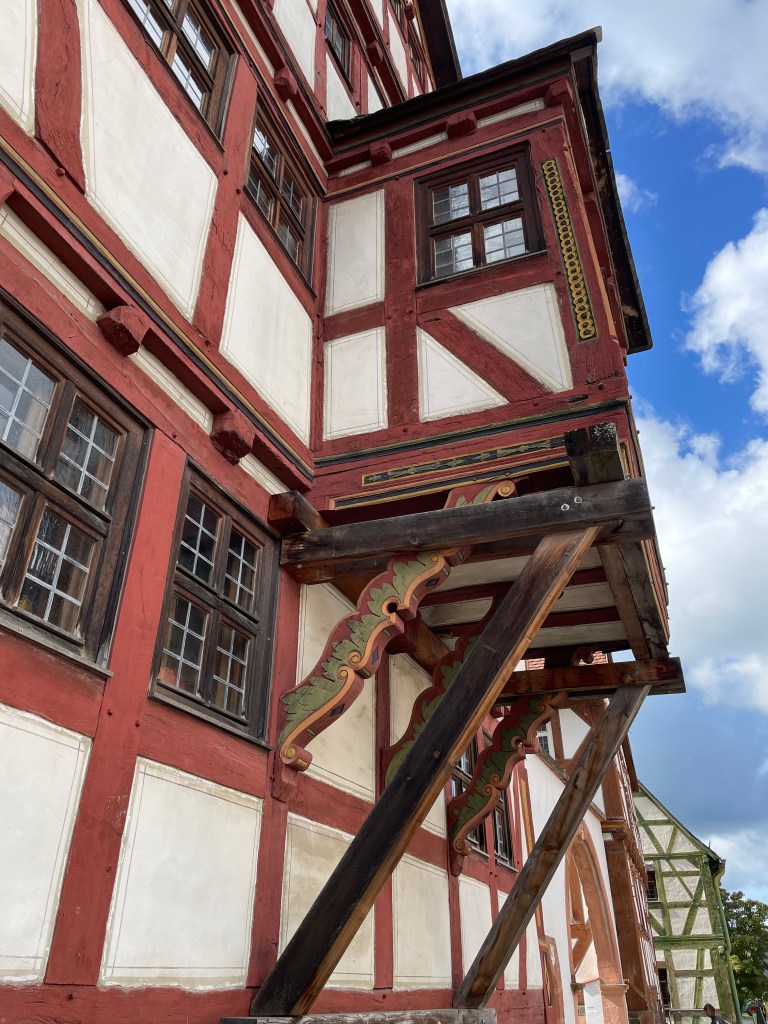
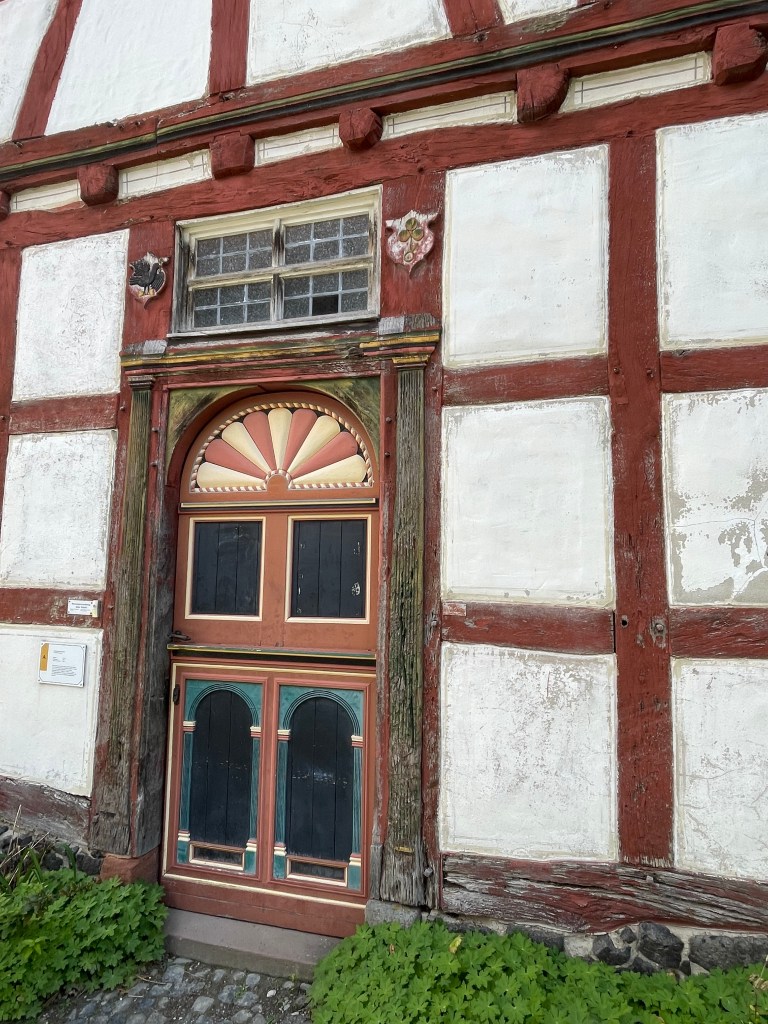
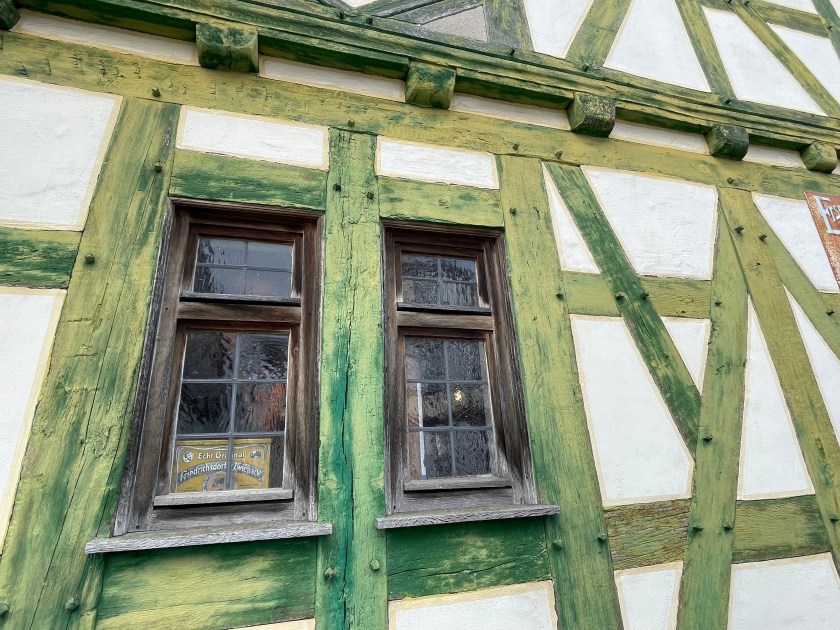
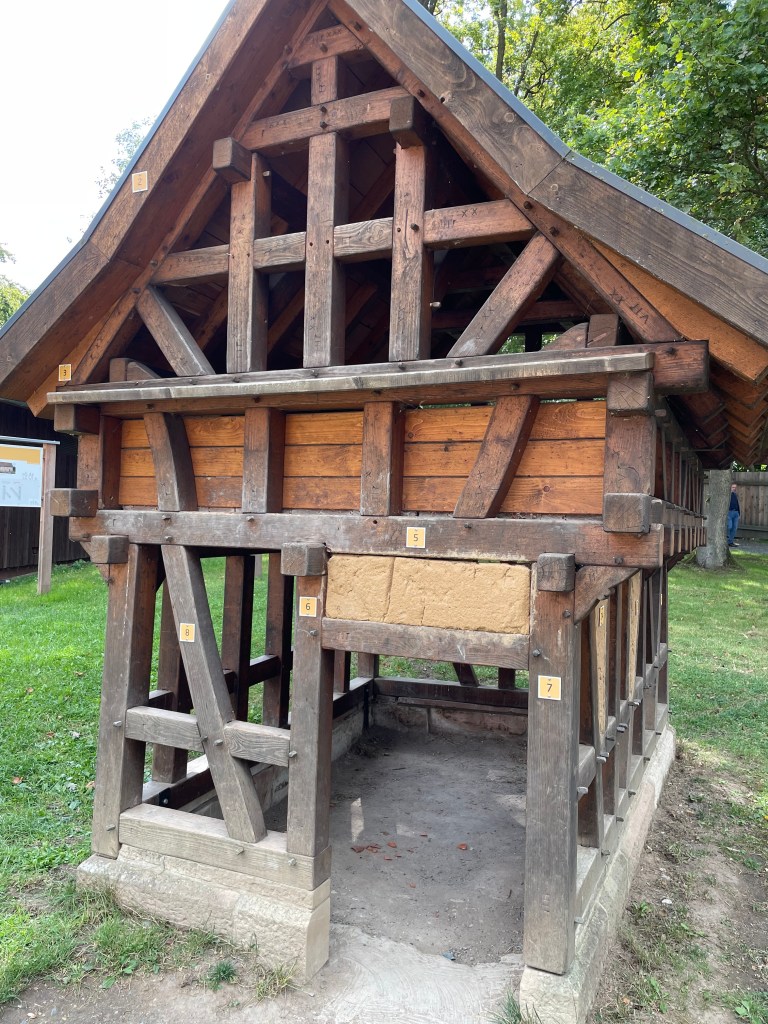
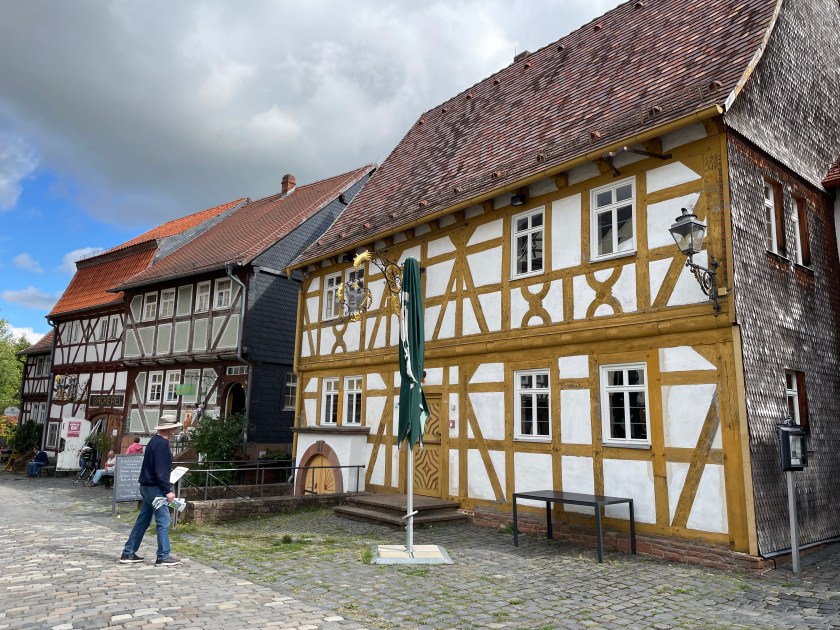
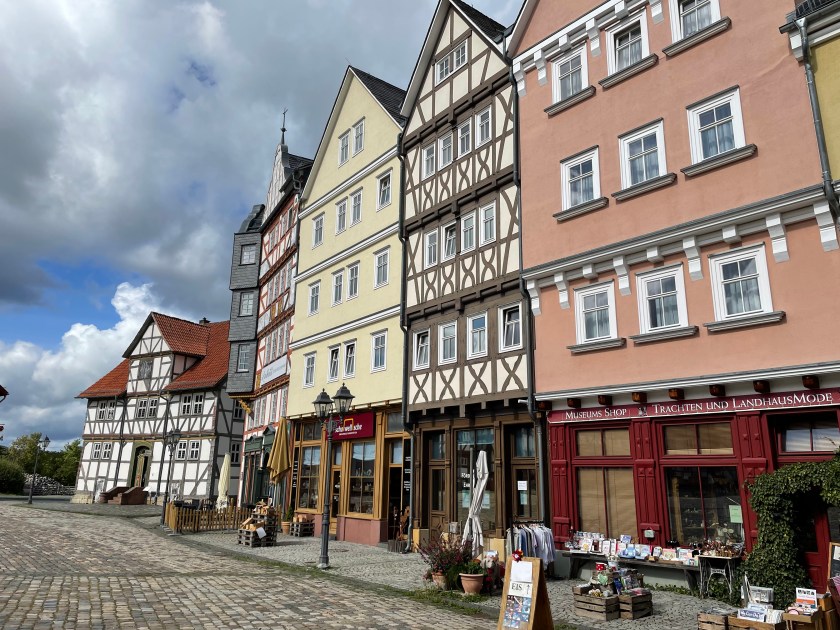
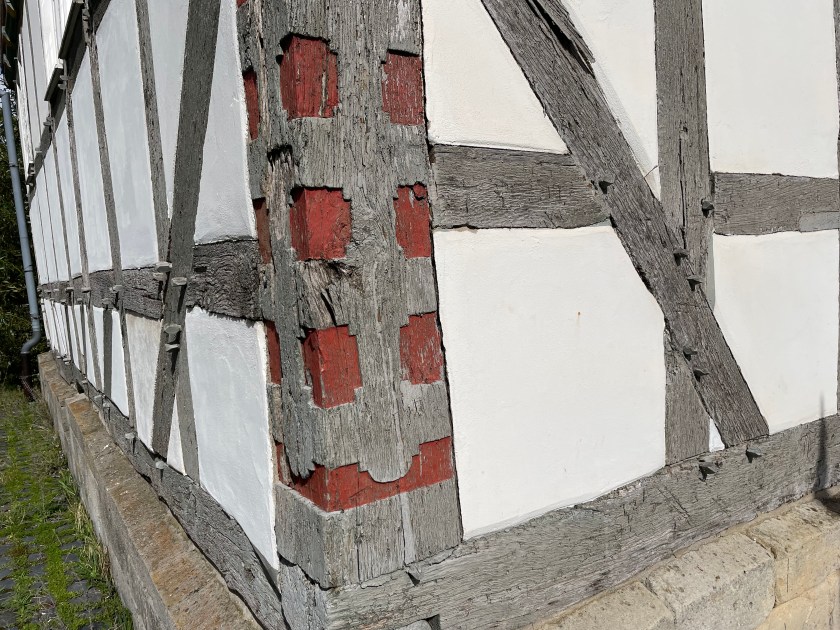
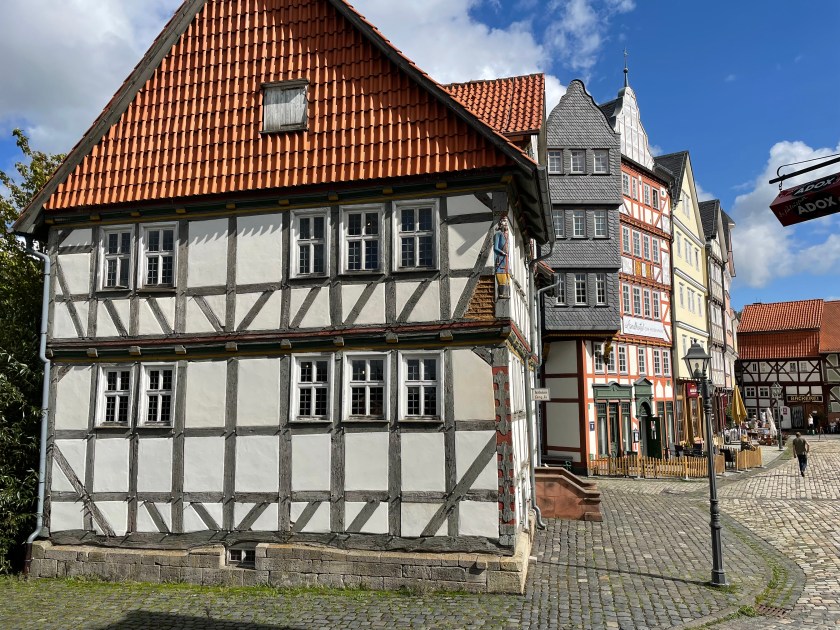
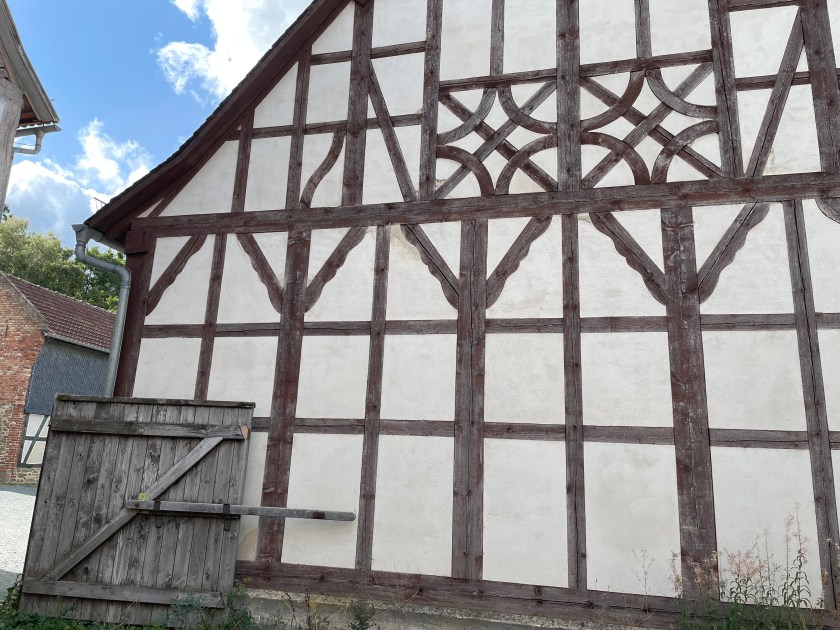
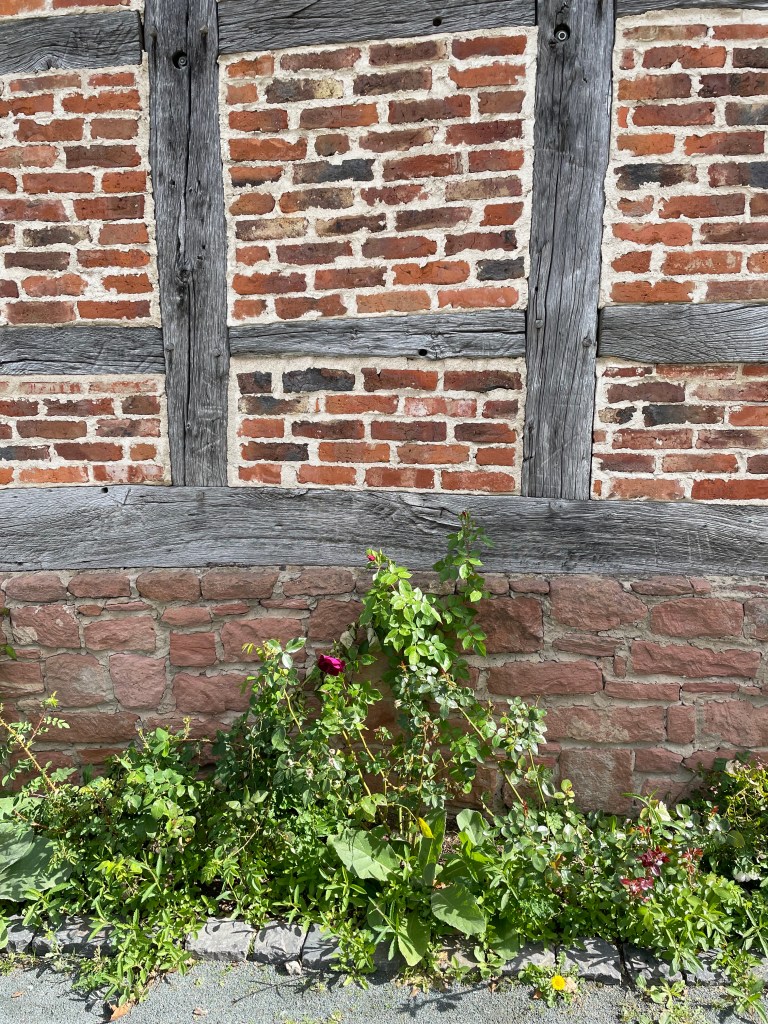
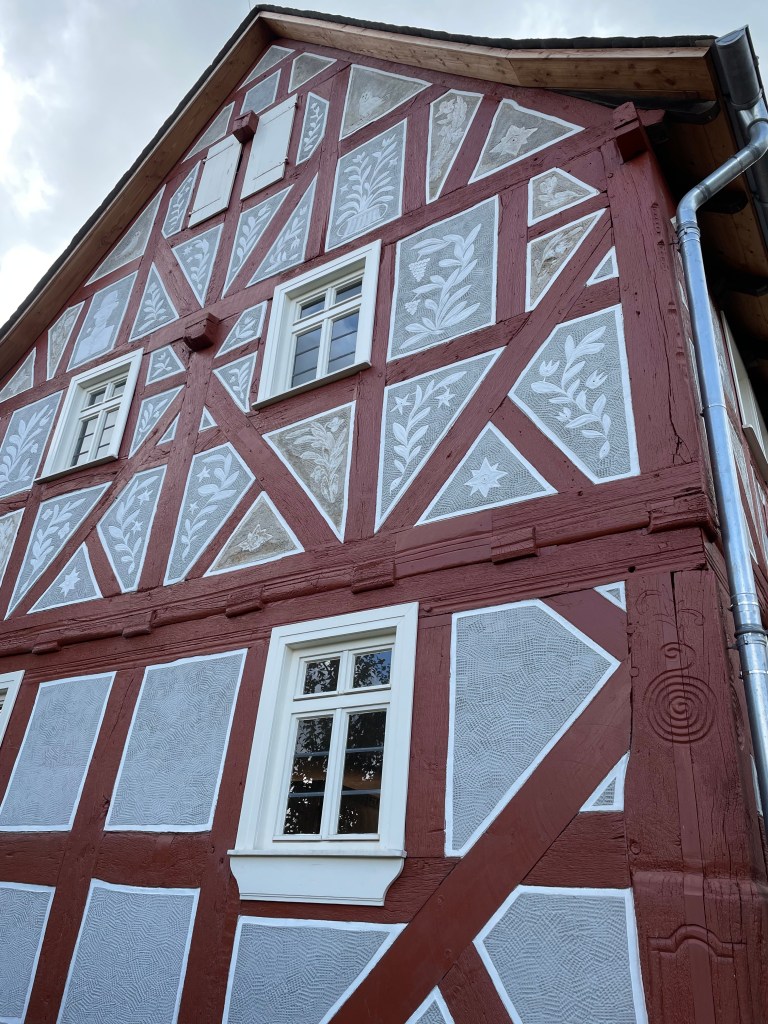
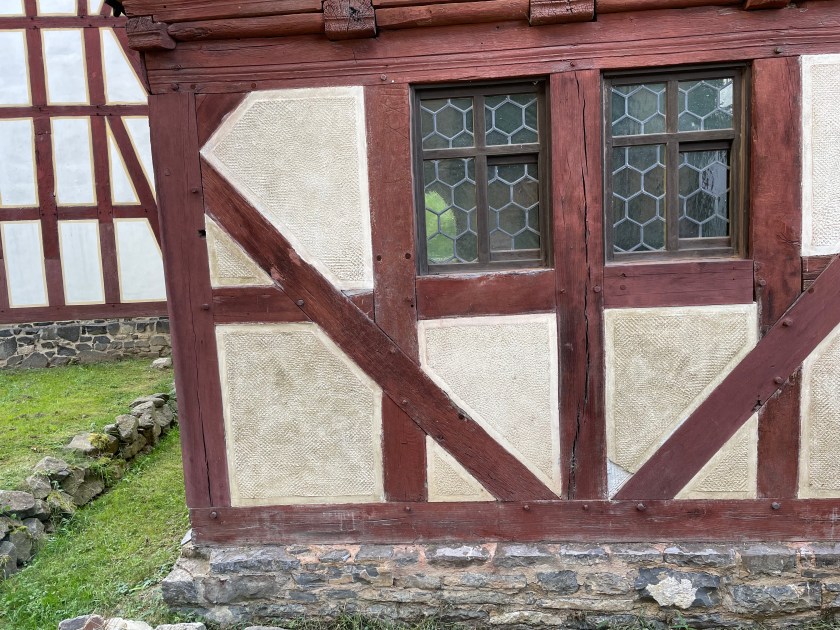
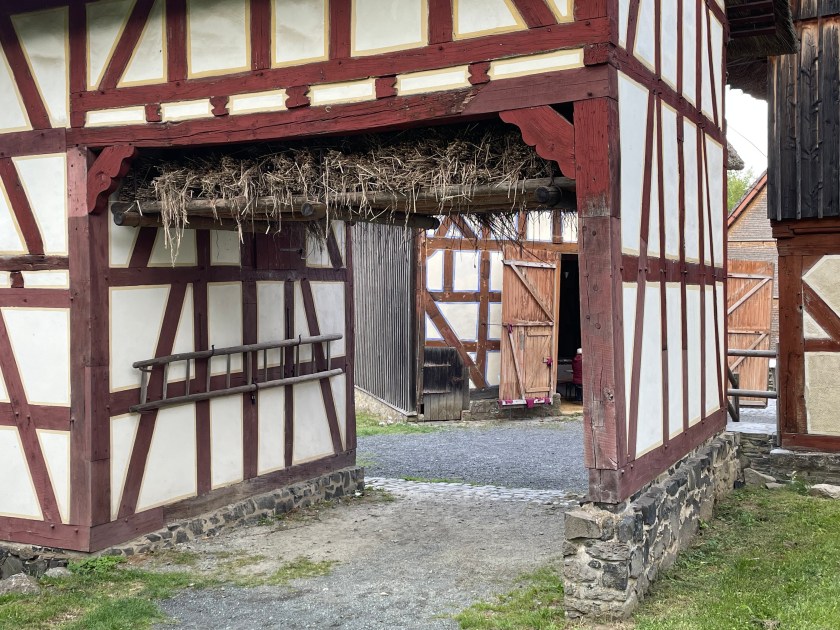
This is the plaza, or village square with some shops and restaurants for the many visitors. Below is some interesting information about the half-timber homes and buildings found throughout Germany, and reconstructed here. In the outer parts of this park were dozens of covered piles of half-timber longs, numbered and catalogued for future reconstruction.
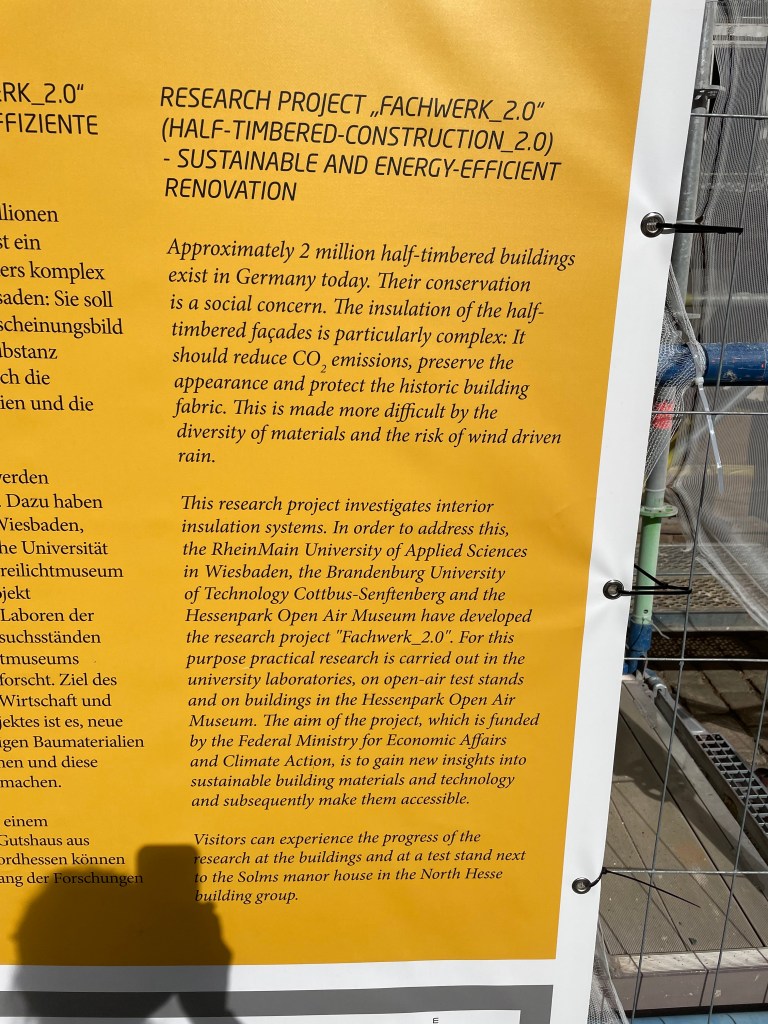
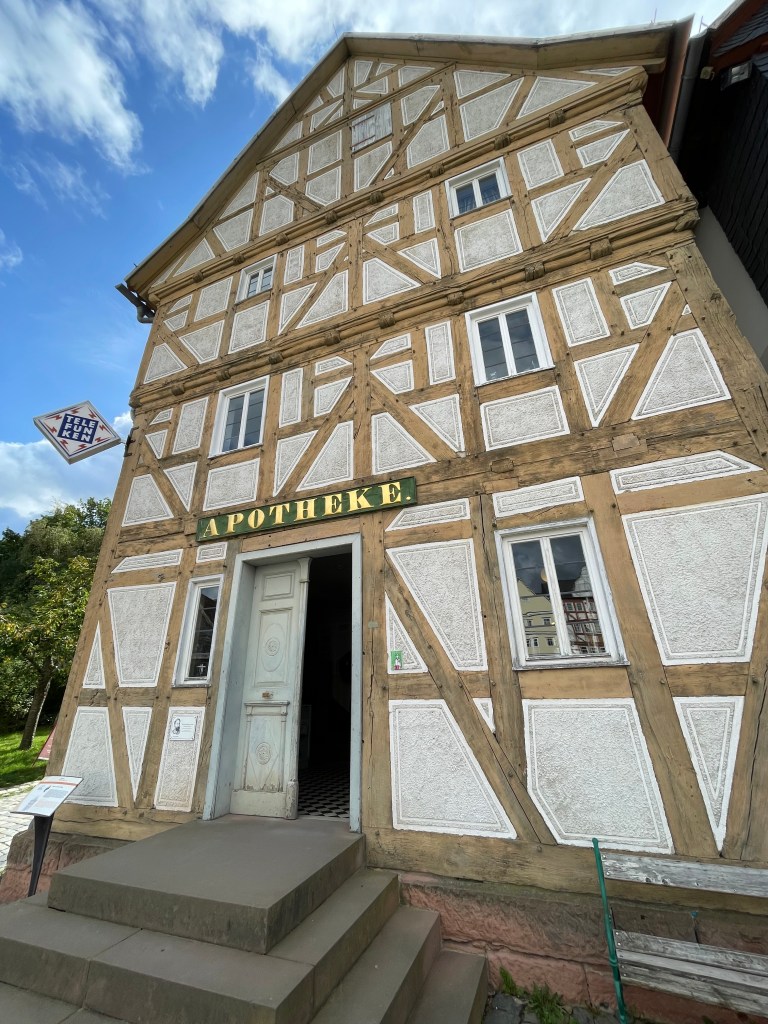
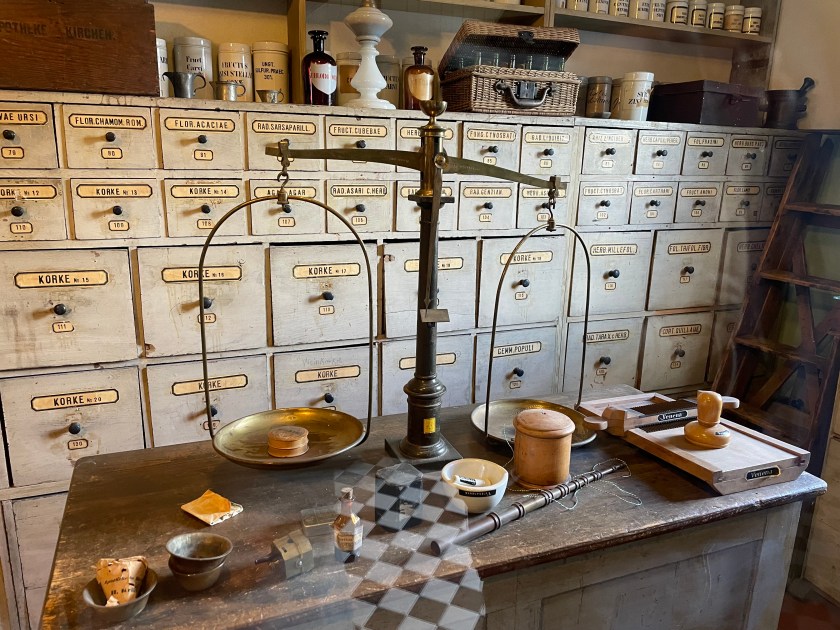
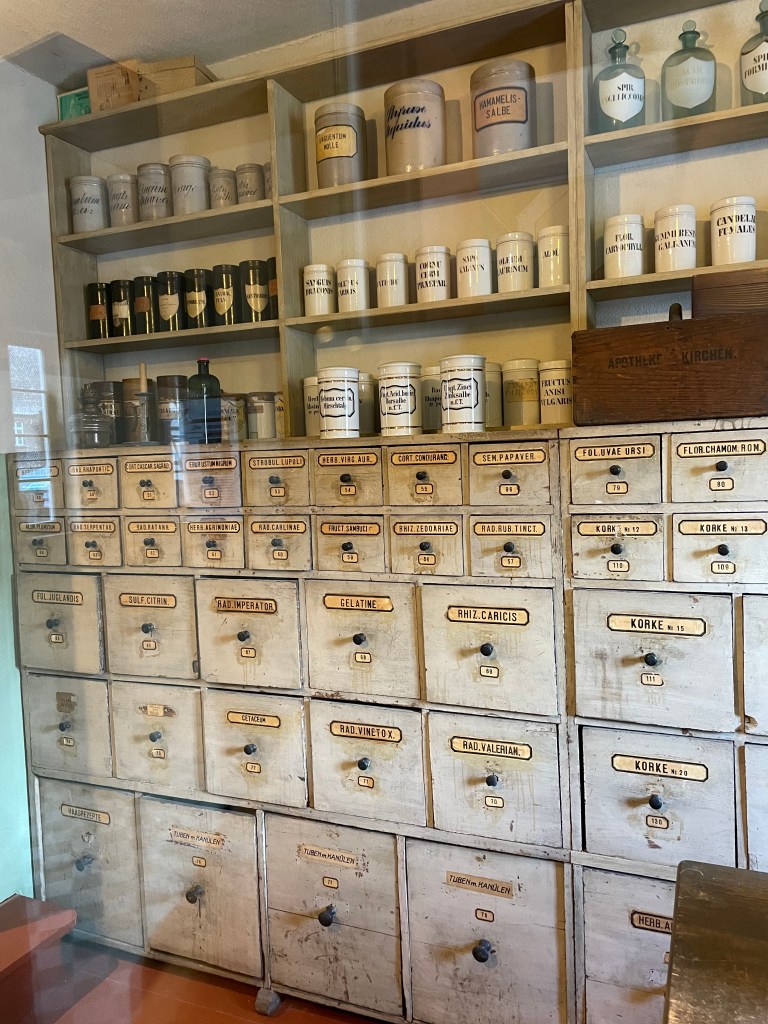
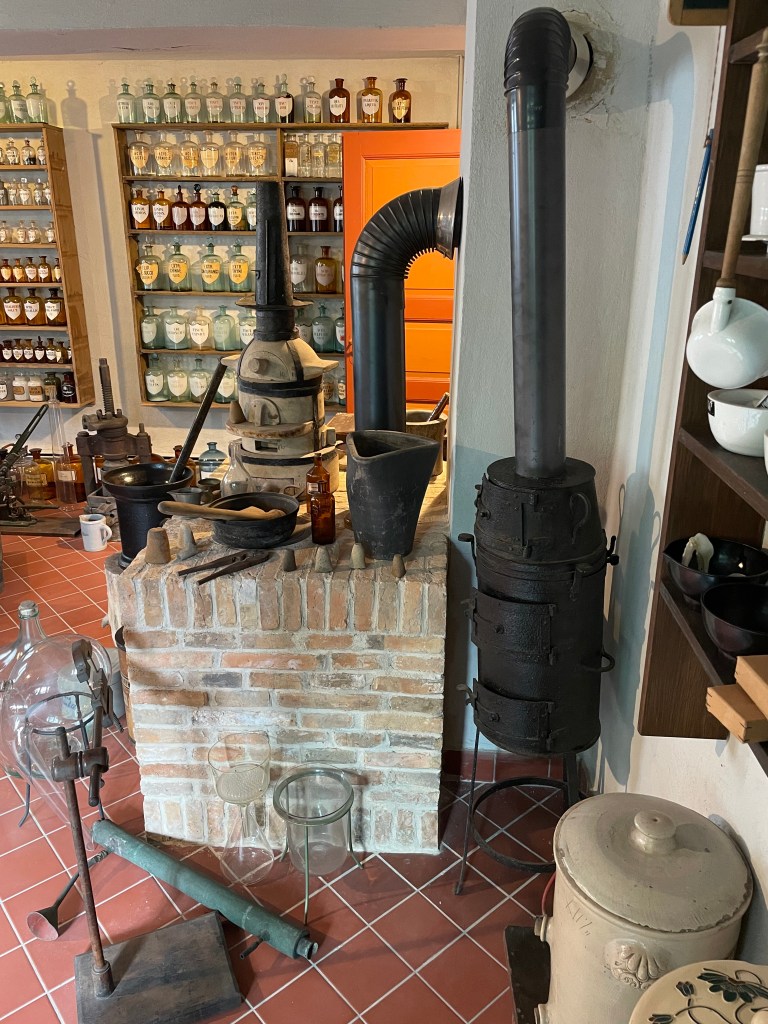
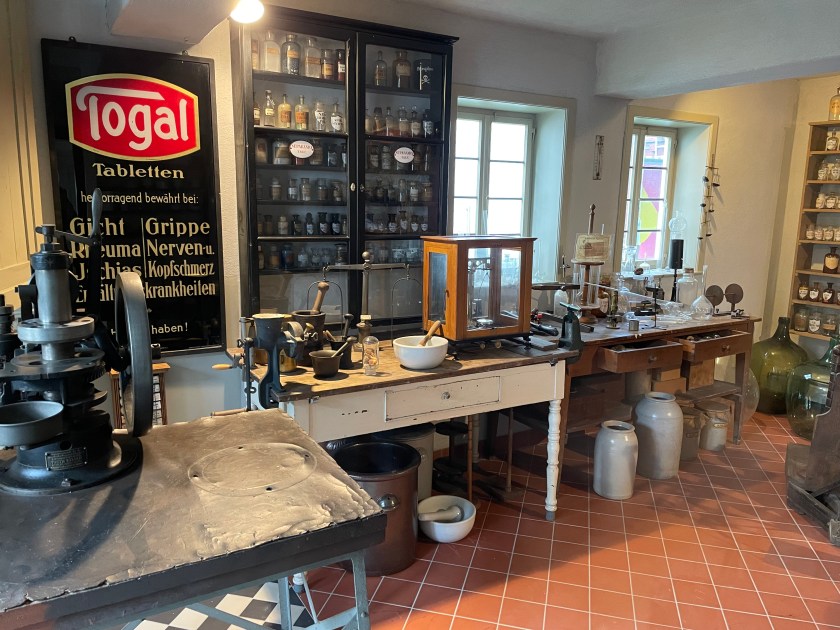
I won’t comment on every photo, building or home, hoping you can make sense of what you’re seeing, like the pharmacy below:
 \ \
\ \ \ \
\ \ \
\ 
\ \ \
\  \ \
\ \
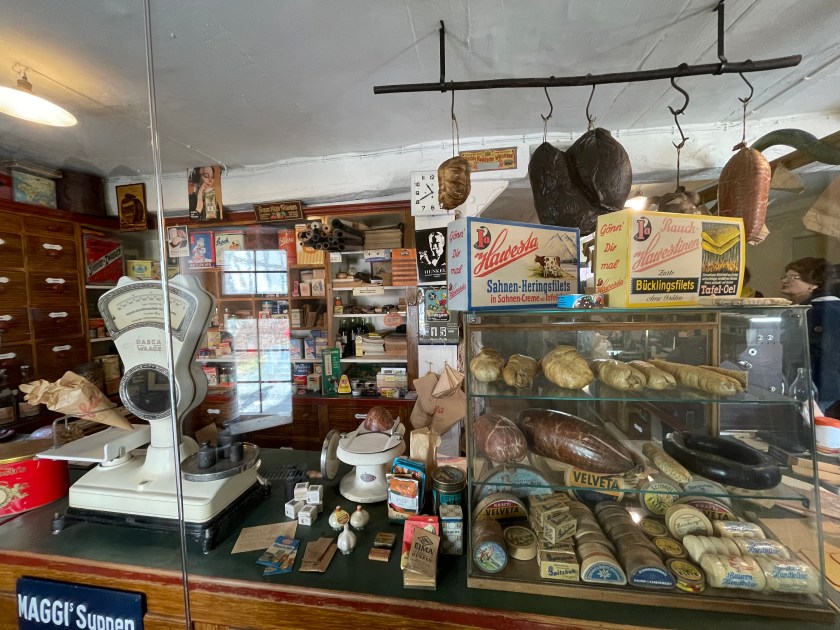
Here’s a little corner grocery:
 \
\ 
 \ \
\ \ \
\  \
\  \
\  \
\  \
\ 
 \
\  \ \
\ \ \
\  \
\  \
\  \
\  \
\  \
\  \
\ 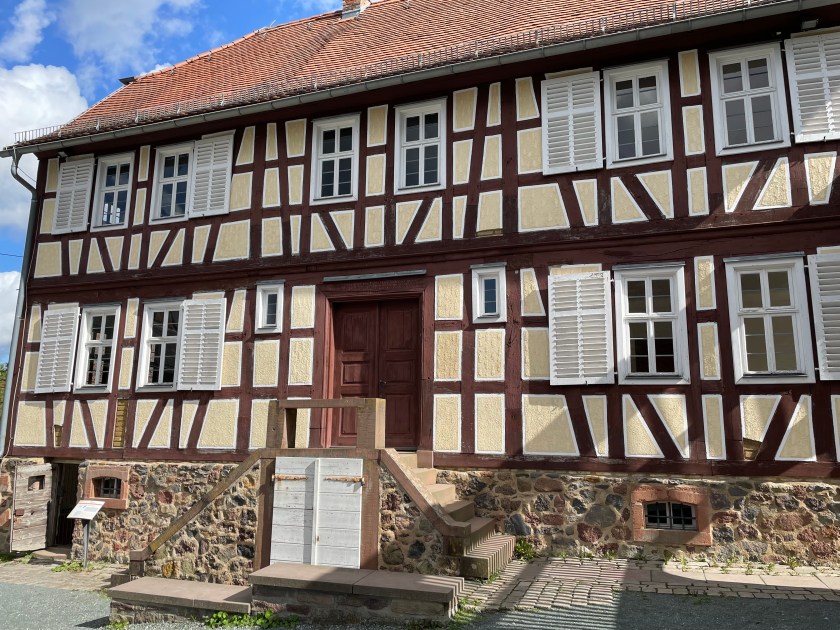 \
\ 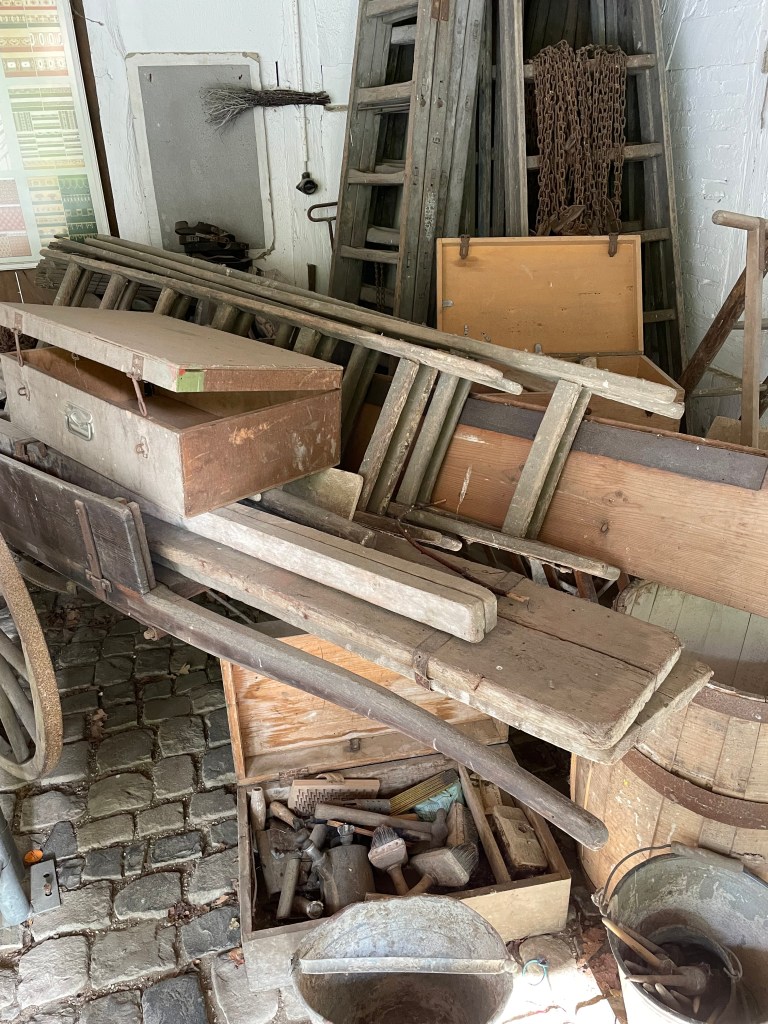 \
\ 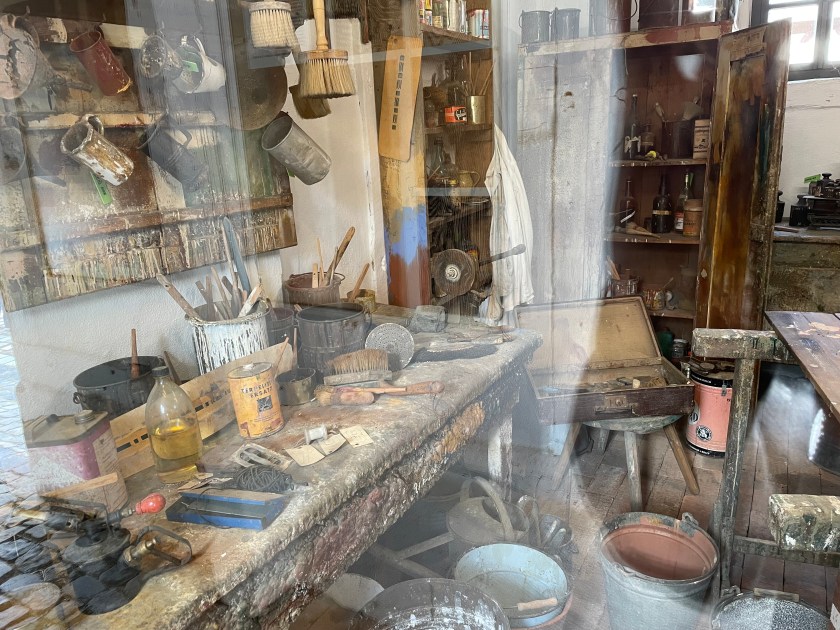 \
\ 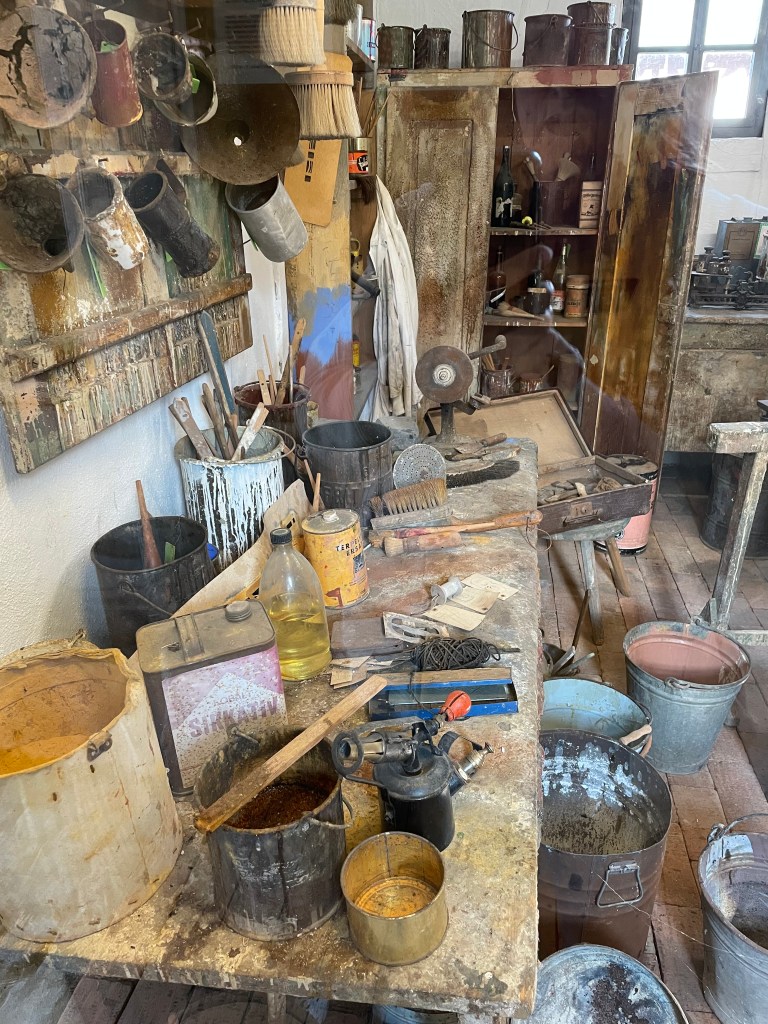 \
\  \
\  \
\  \
\  \ \
\ \ \
\ 
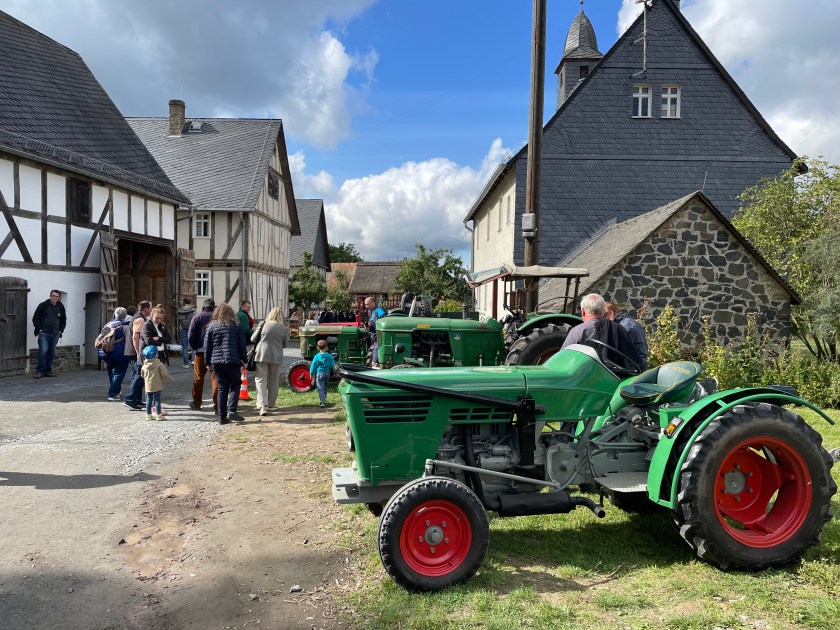
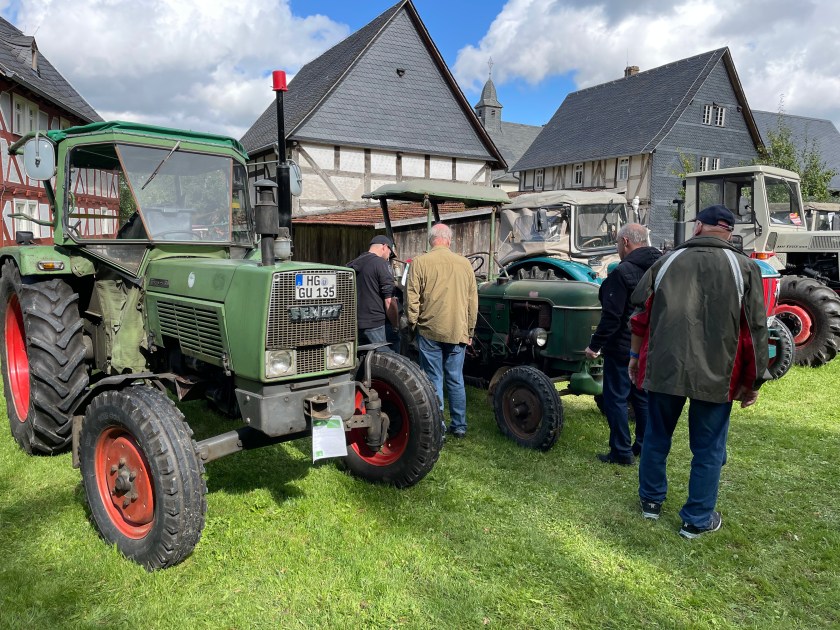
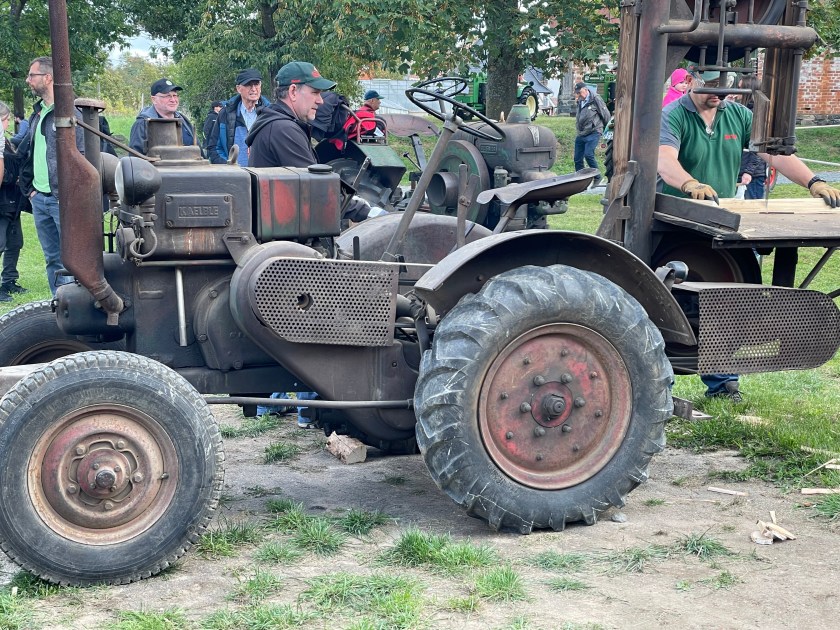
This weekend a special tractor show was going on, so there were 100s of old tractors of every make and model on display throughout the park. My Grandpa Rudolf (b. 1899) was sent to a tractor school in Berlin when he was a student. Tractors were new then, and he wanted to learn how to use and repair them.
 \
\  \
\  \
\  \
\  \
\  \
\  \
\  \
\  \
\  \
\  \
\  \
\  \
\ 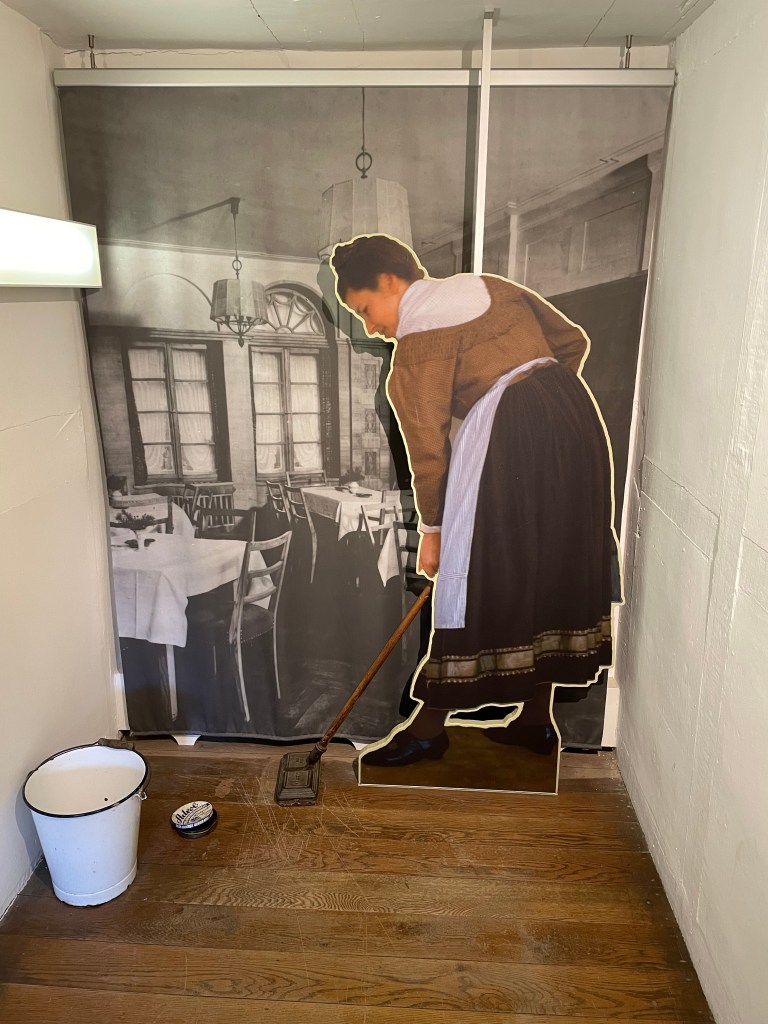
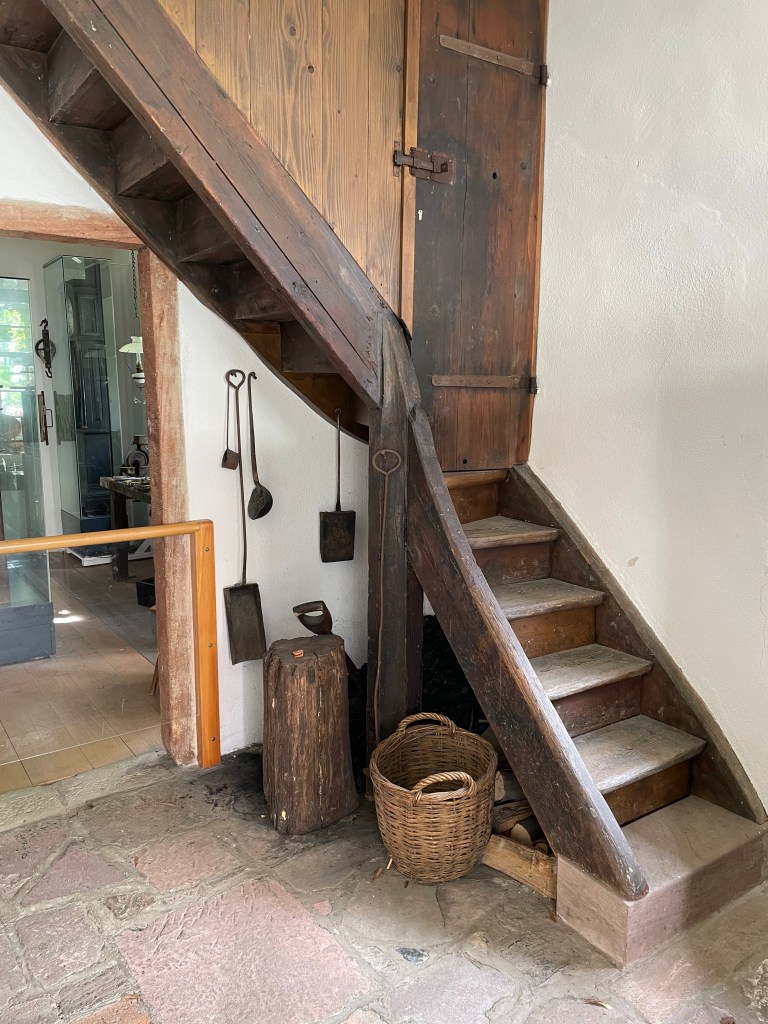
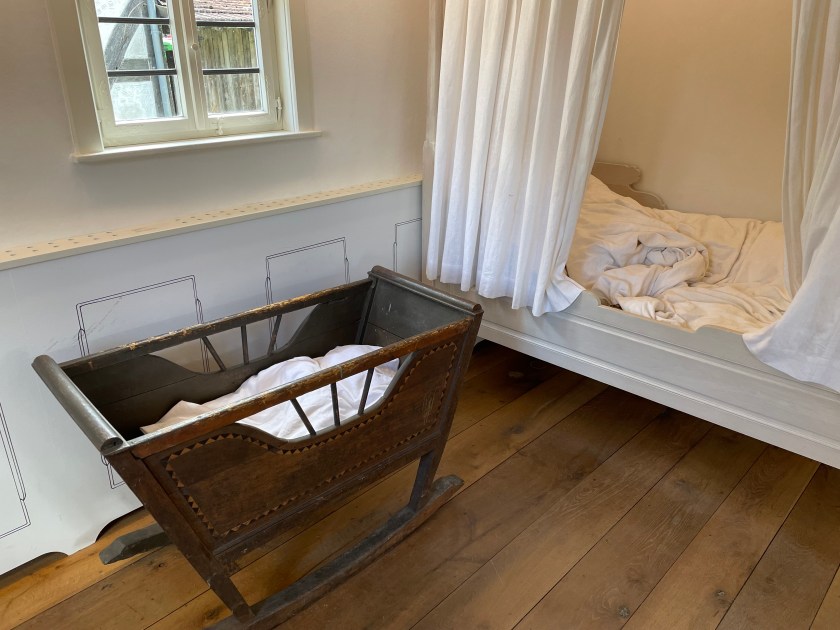
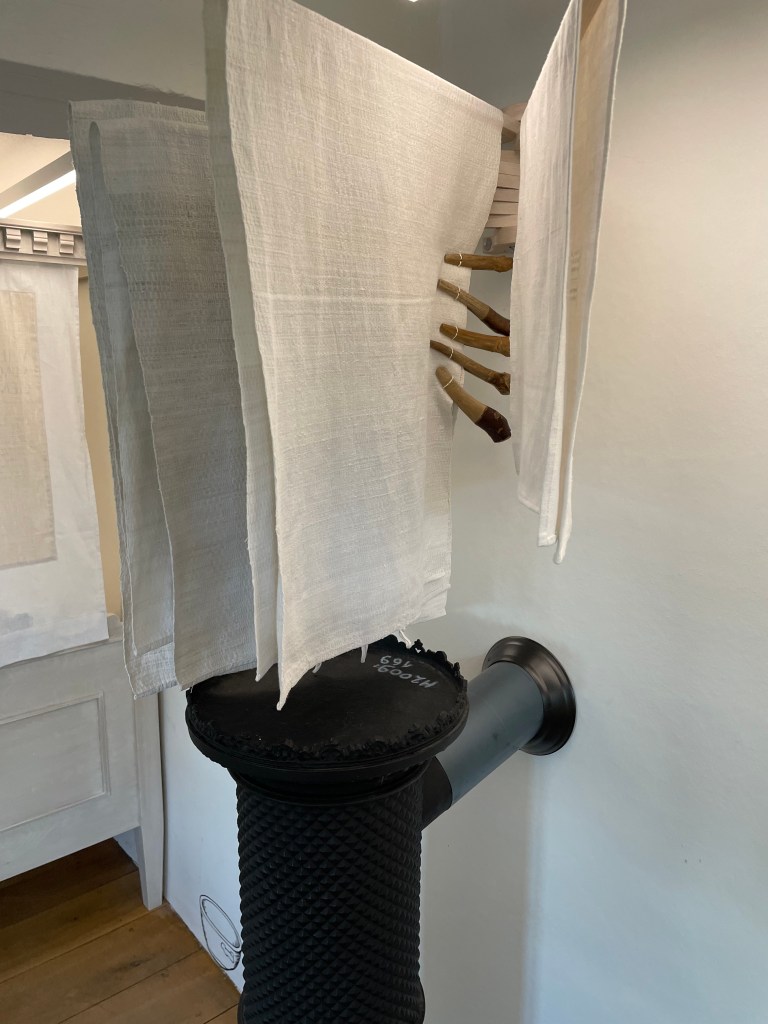
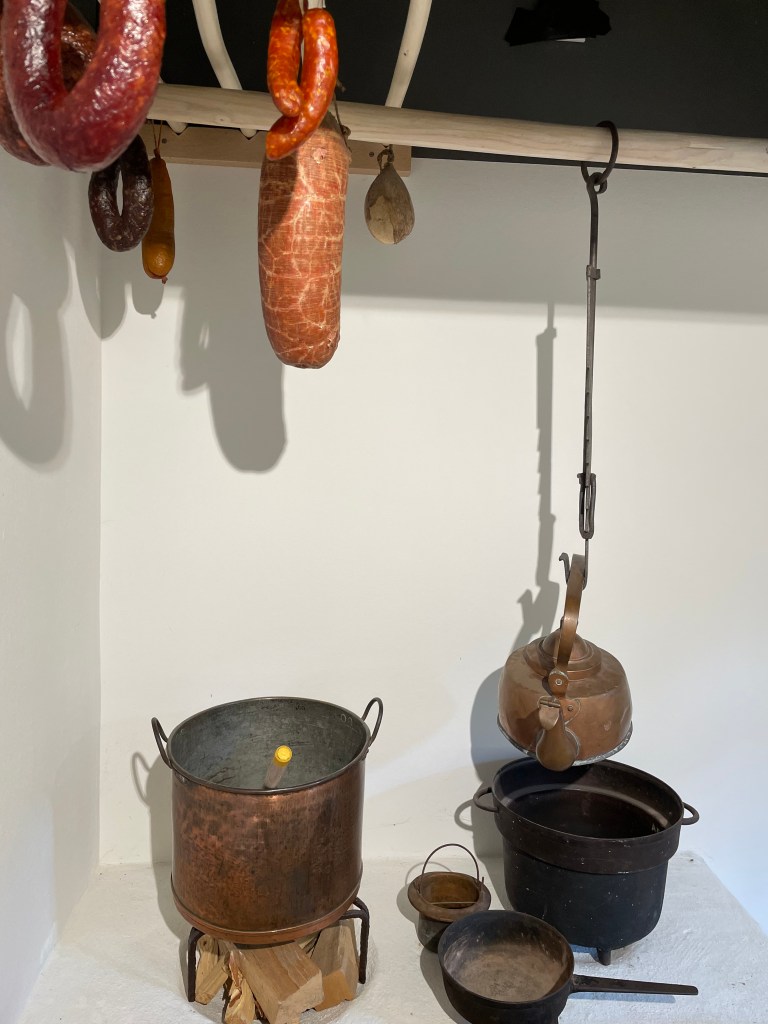
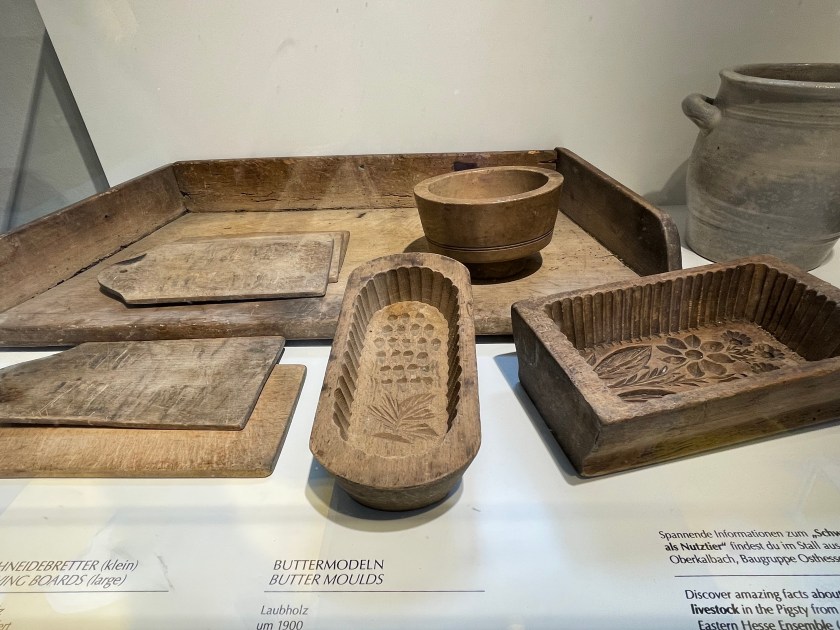
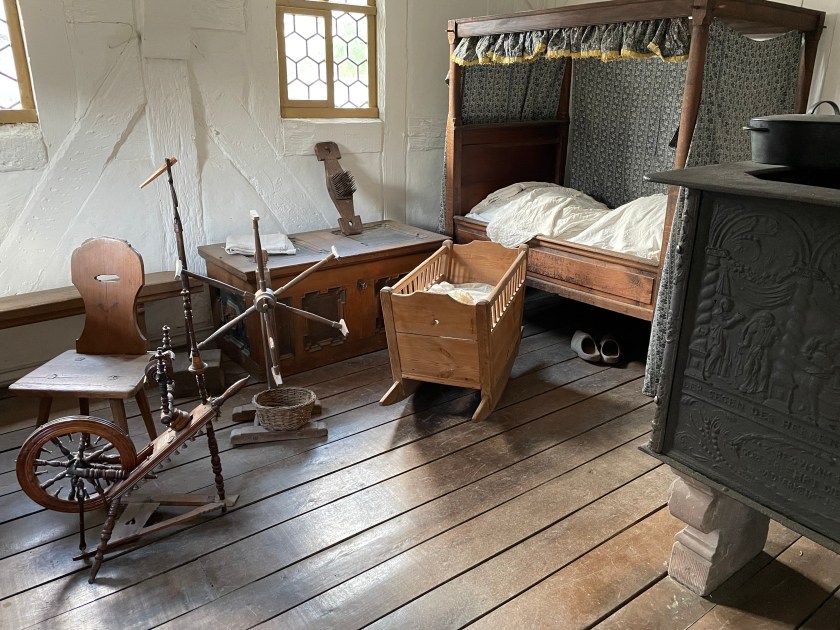
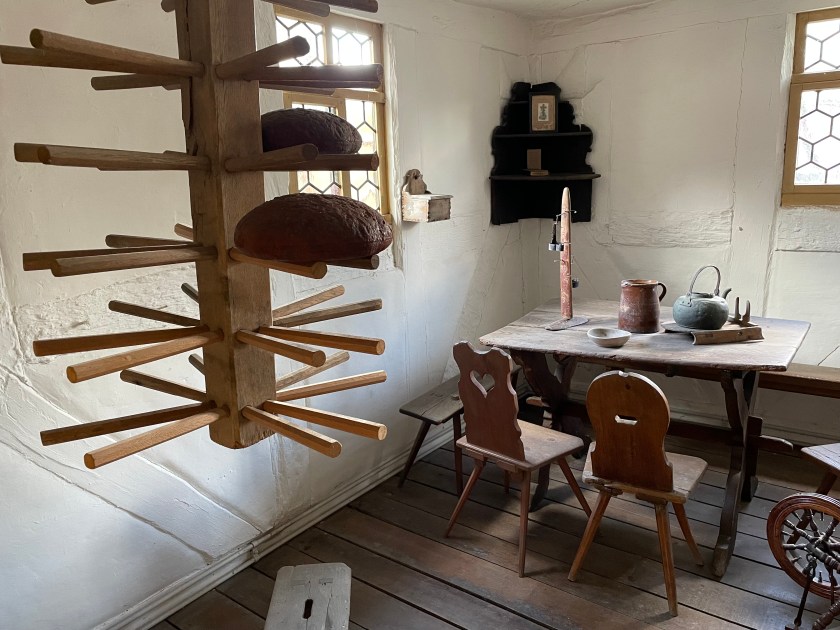
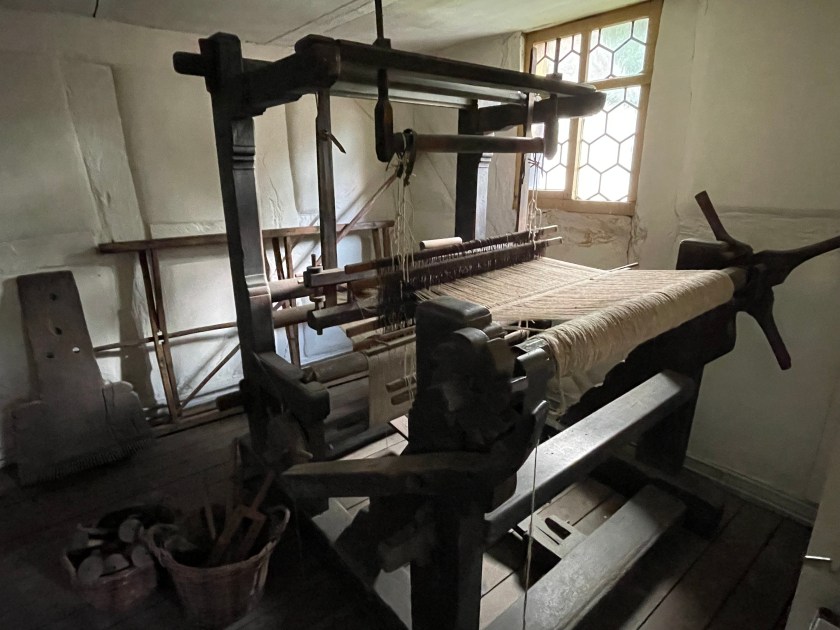
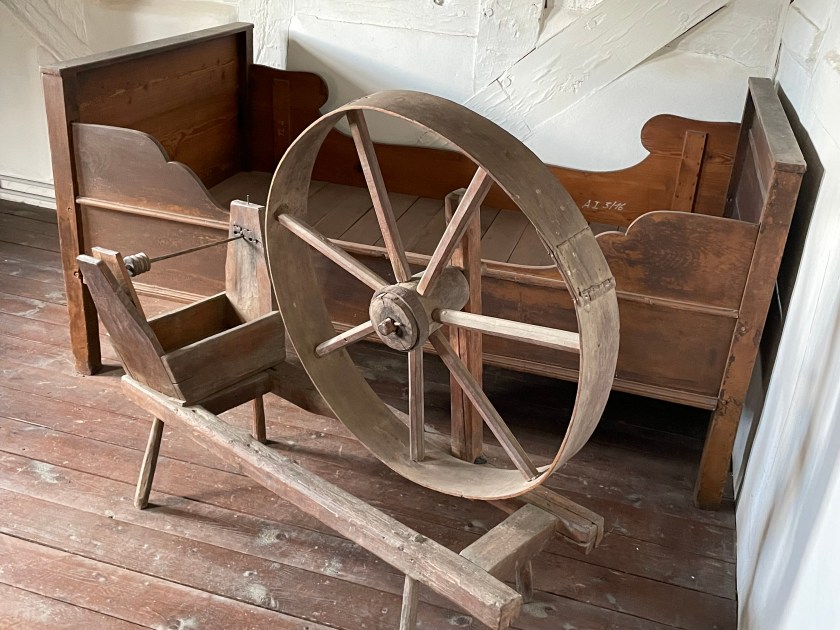
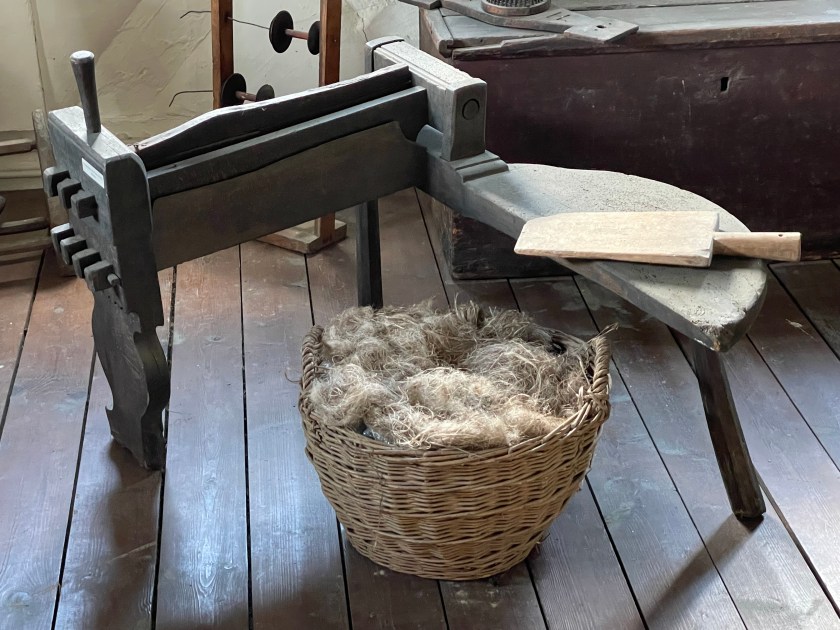
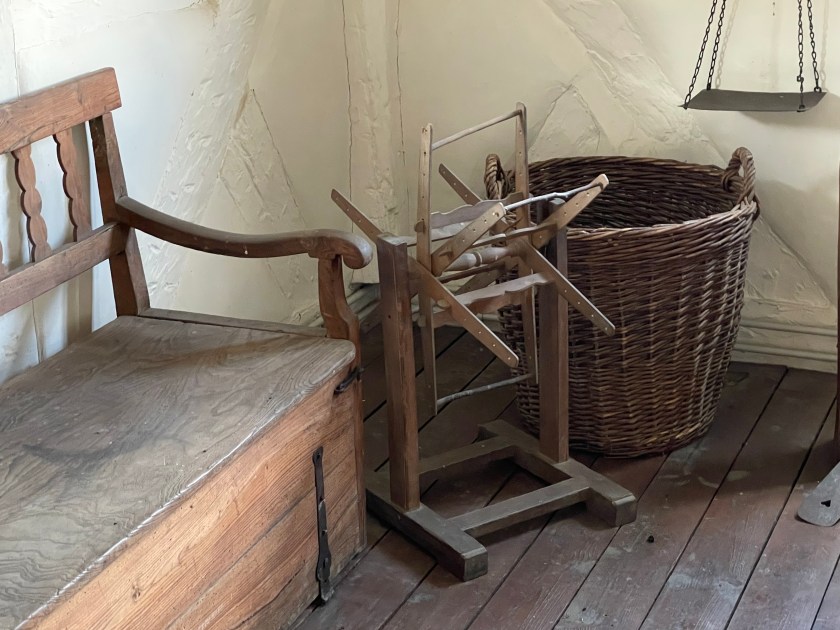
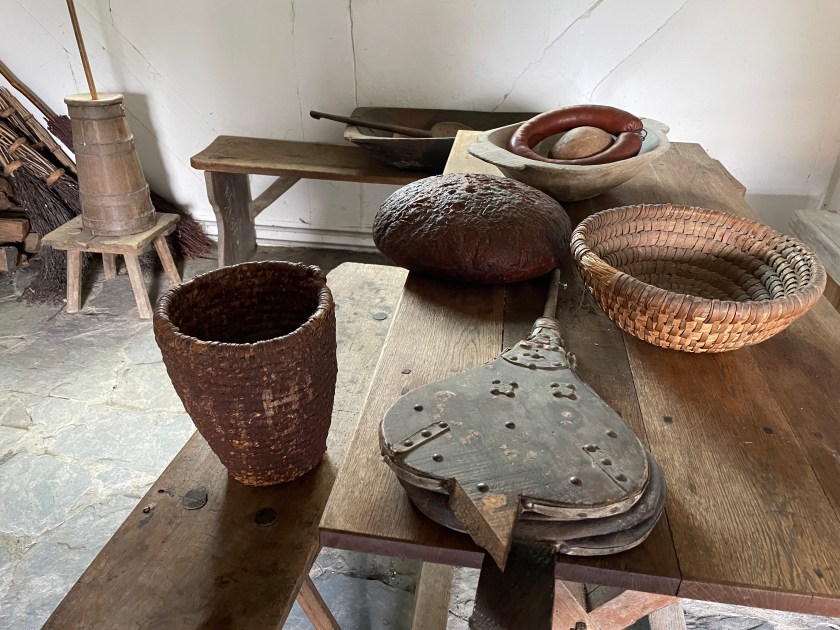
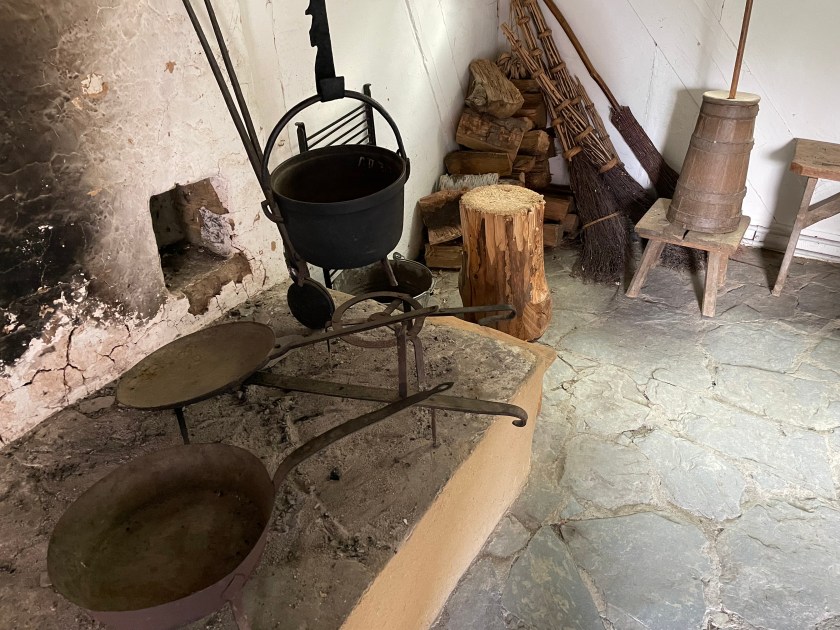
Some of my favorite doors to step through took me into everyday homes that showed what everyday life was like for my grandmother ancestors.
 \
\  \
\  \
\ 
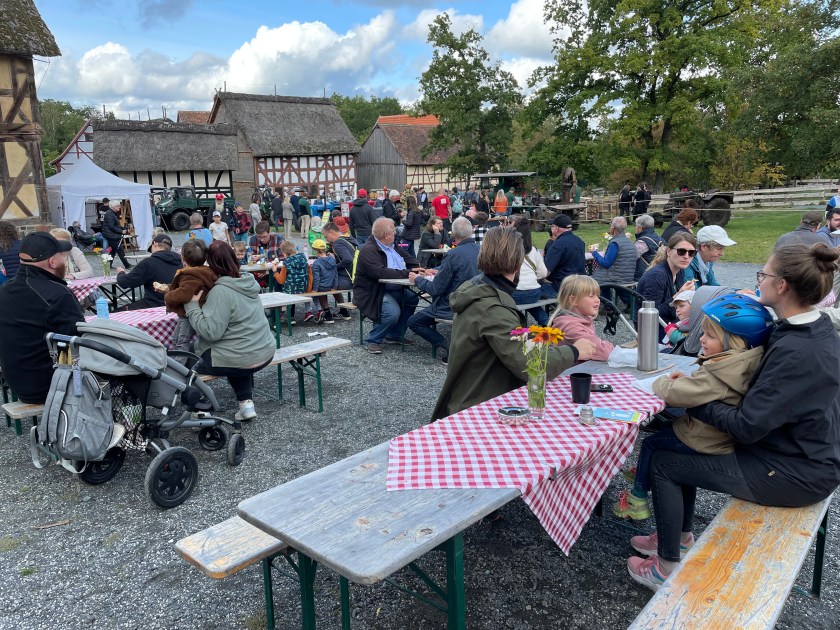
Visitors stopping for a bite of food:
 \
\  \
\  \
\ 
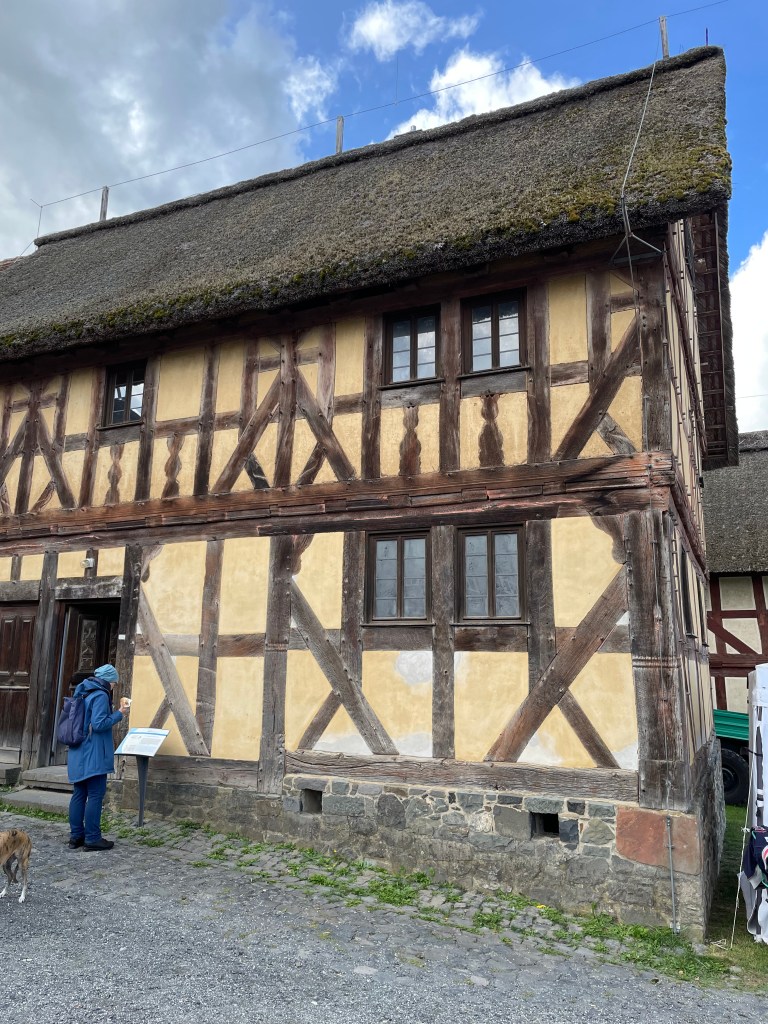
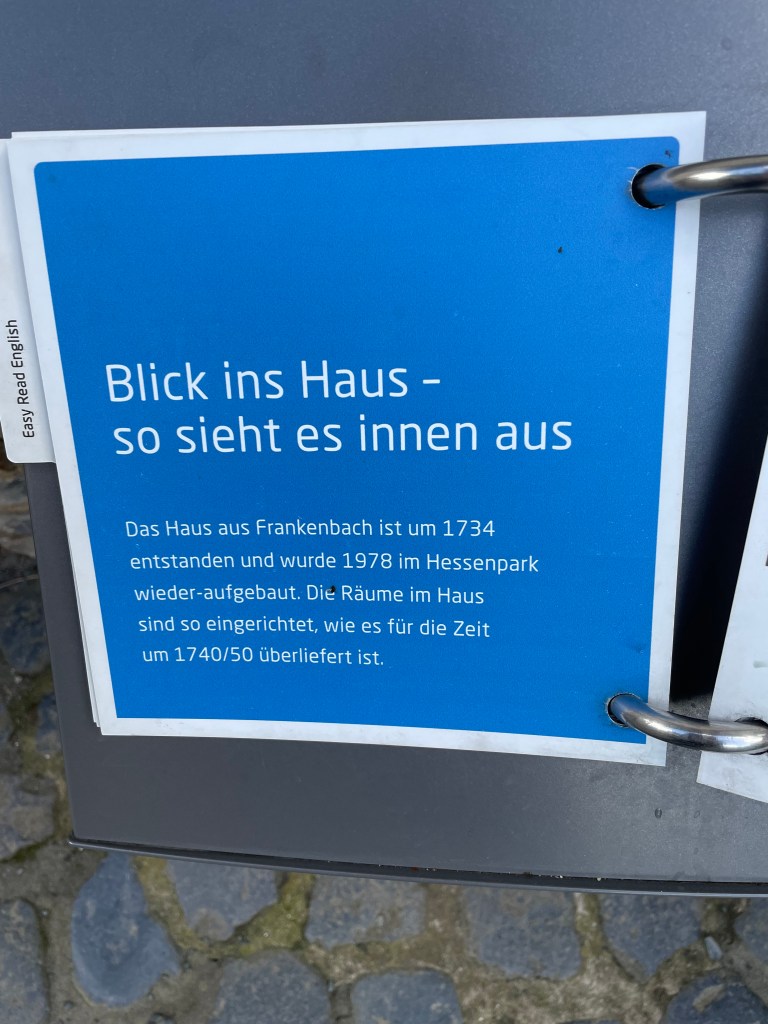
Every building had a sign like this outside, telling where the building came from and what year it was originally built. This one was built in 1734, brought here in 1978, and it represents the 1740/50 time period.
 b
b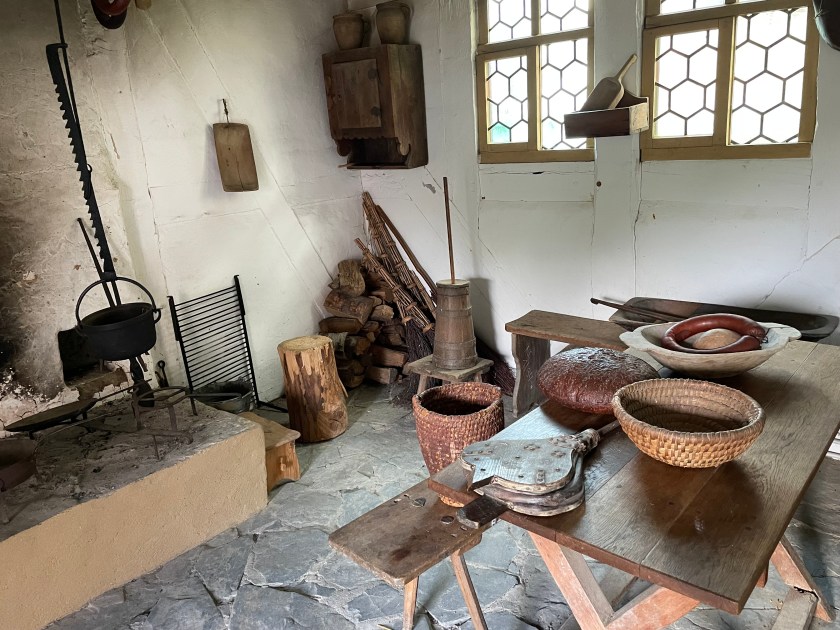 \
\  \
\  \
\  \
\  \
\  \
\ 
 \
\ 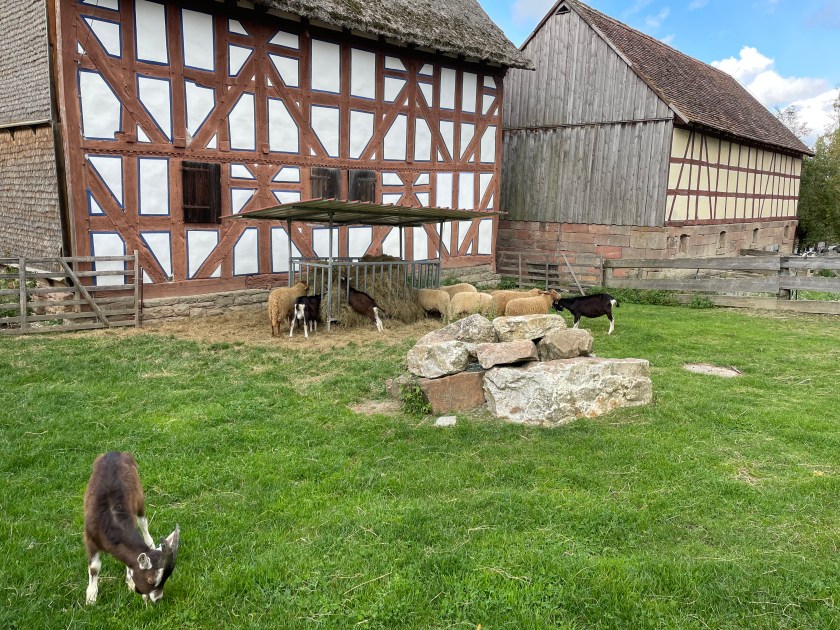
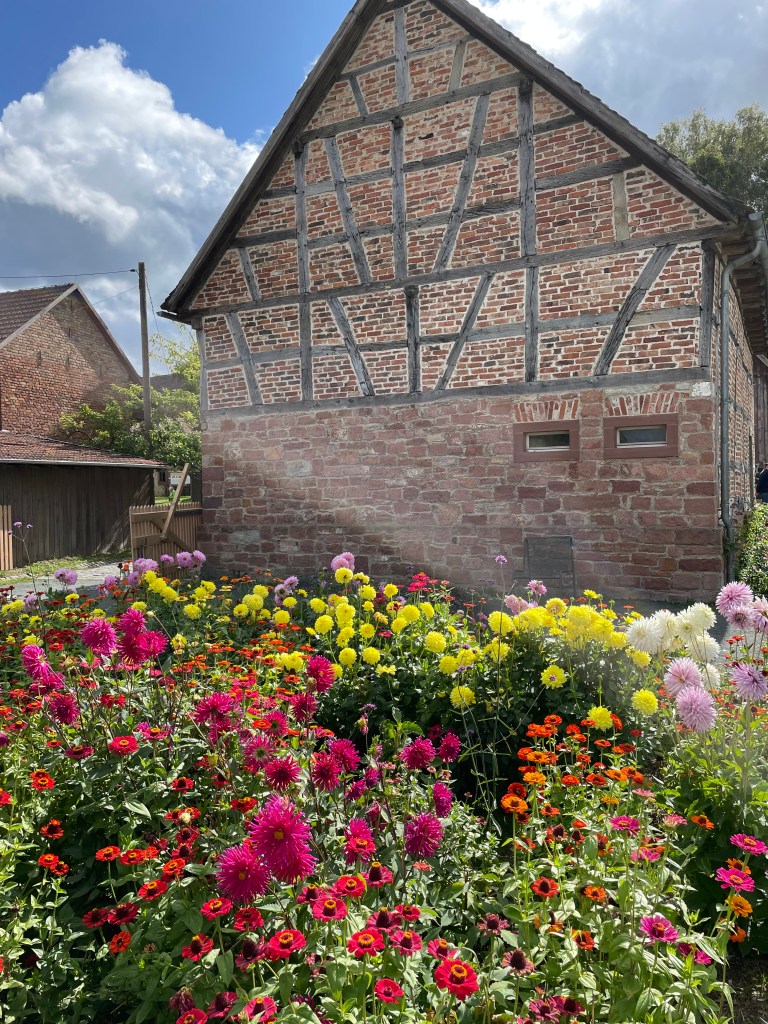
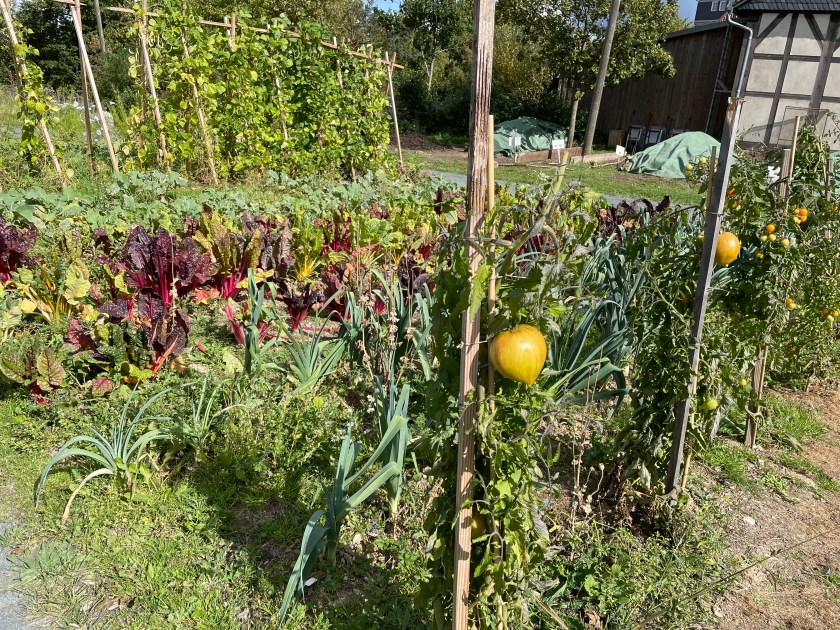
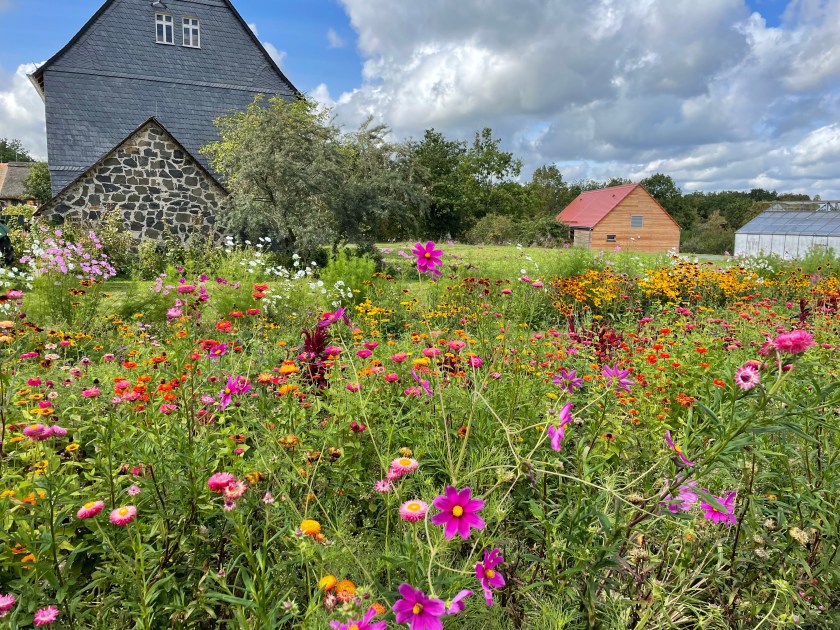
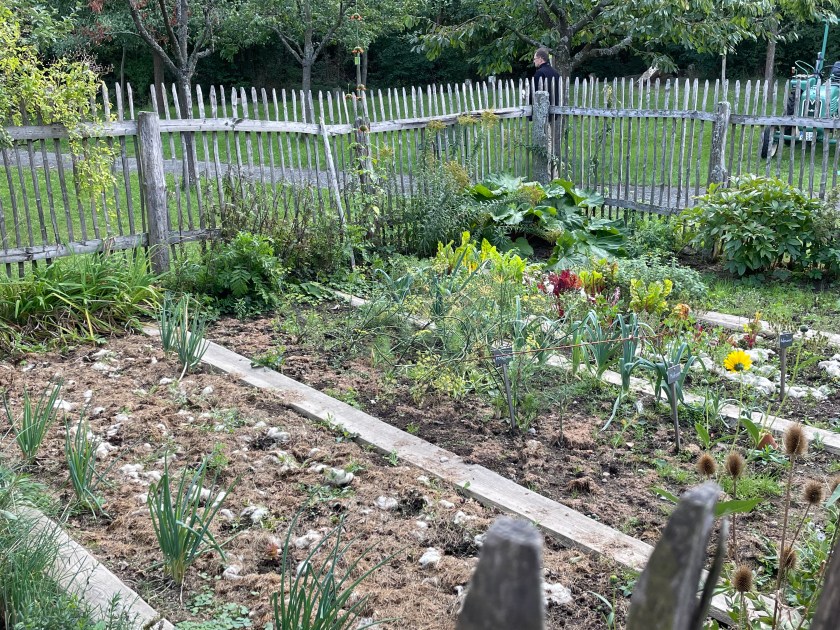
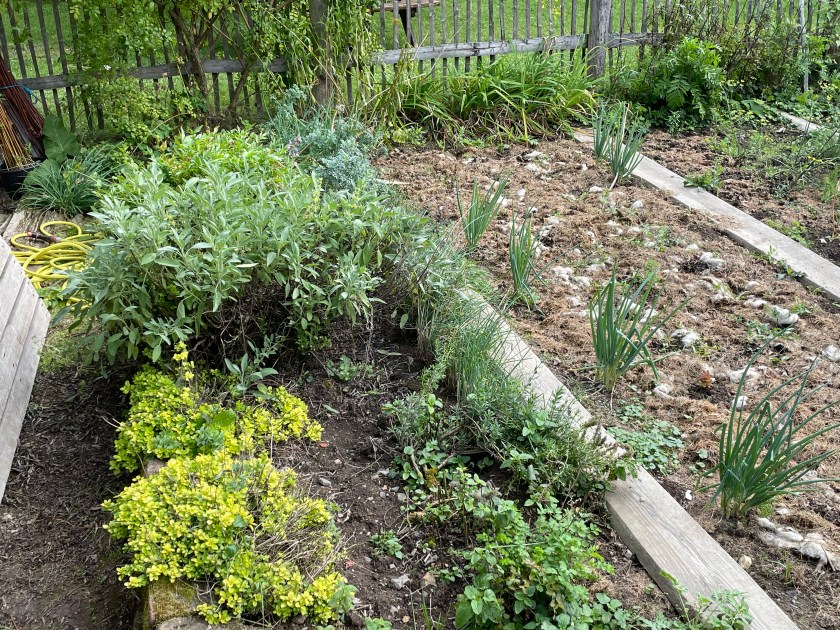
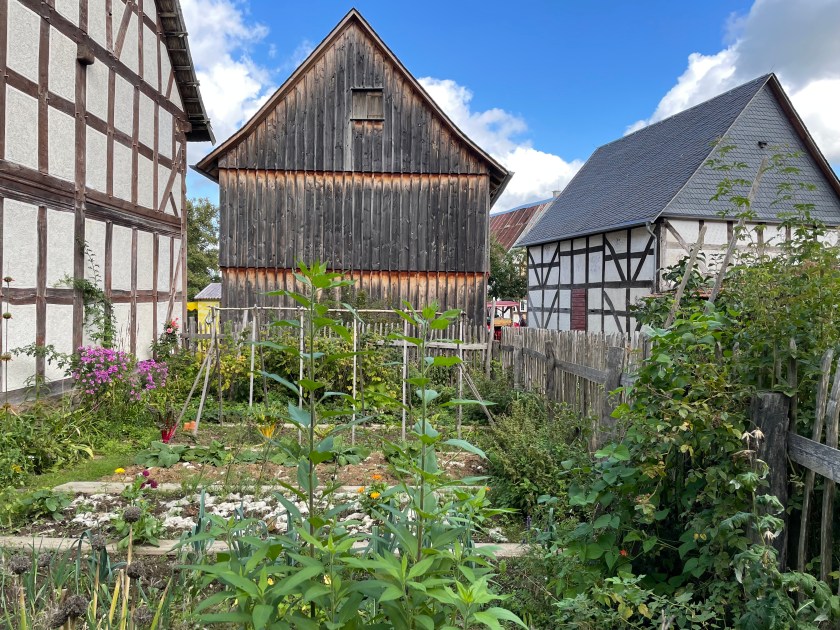
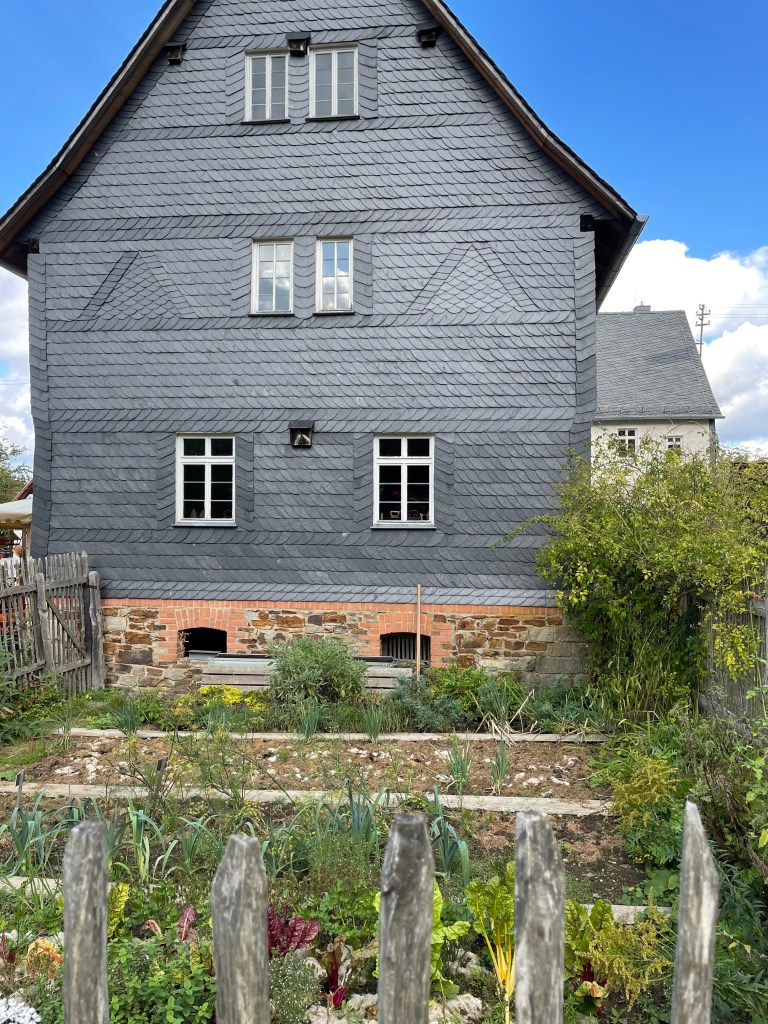
Even the gardens around the homes were historically correct, with plants, flowers and vegetables grown in that time period.
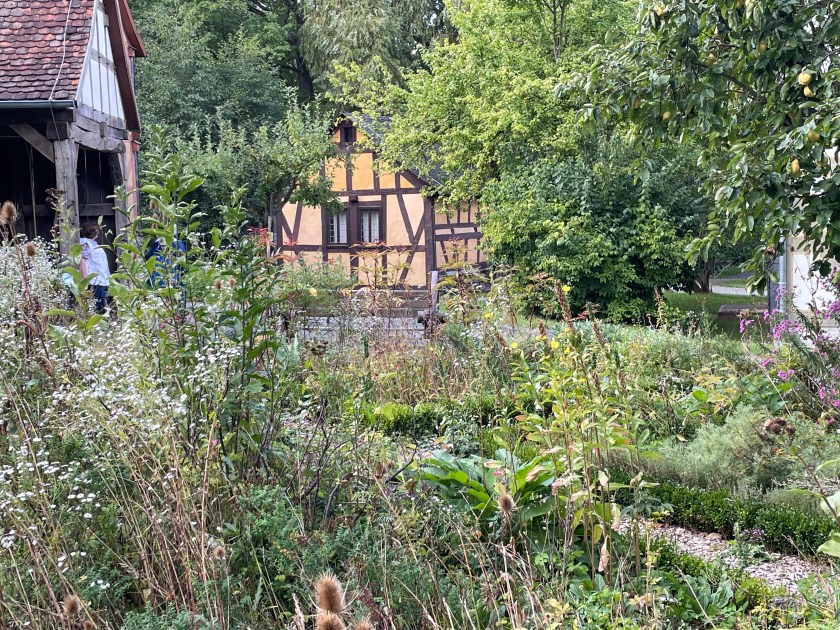
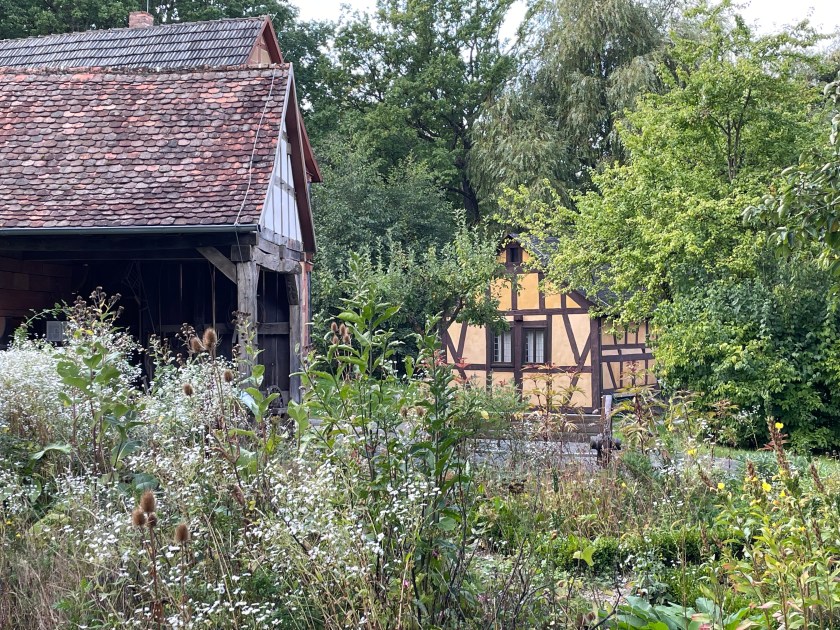
This tour will continue in the next blog posts.

 Our Frankfurt Germany Mission