

After a full day at the office, we had our next culture lesson from the Garbers–a trip on the U-Bahn into the heart of Frankfurt. The U-Bahn is a train that can run above or below ground.
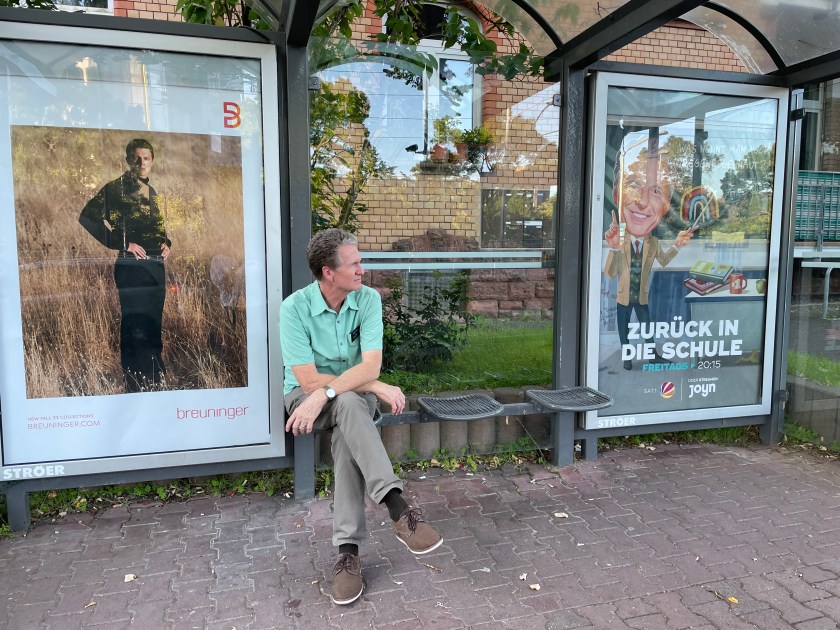
There’s a train platform quite close to our apartment and today’s lesson was on how to use it.



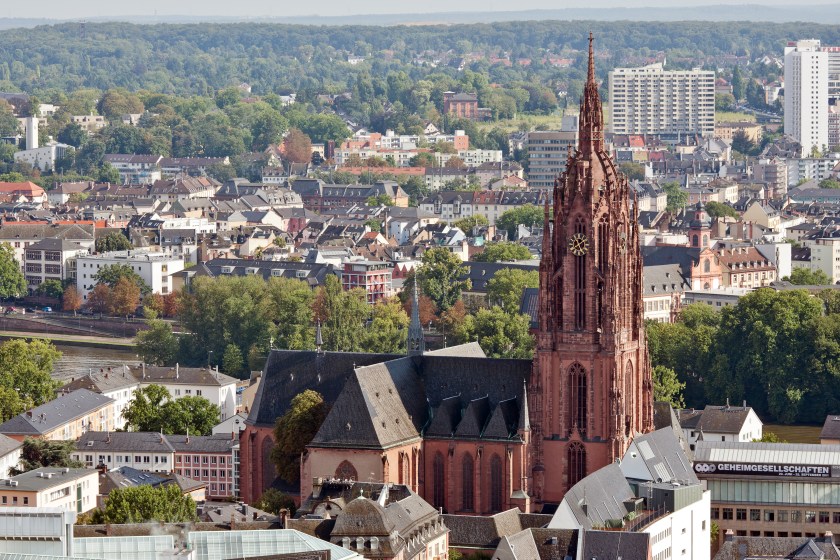
We were above ground for part of the way, then we went down under. When we came to our destination downtown, we came up about 3 long flights on the escalator before seeing the sky! A lot goes on under our feet! We surfaced near the old cathedral or “Dom.” It was once was surrounded by Frankfurt’s Old Town. Here is how it looks now:
From Wikipedia:
The Imperial Cathedral of St. Bartholomew in Frankfurt am Main , the largest sacred building in the city, is the former election and coronation church of the Roman-German emperors and as such an important monument of imperial history. In the 19th century in particular, it was considered a symbol of national unity. The cathedral was a collegiate church from 852 to 1803 , but never a cathedral in the canonical sense of a bishop’s church.
Today’s cathedral is the fourth church on the same site. Previous buildings excavated since the late 19th century can be traced back to the 7th century. The early Carolingian chapel of the Royal Palace of Frankfurt was the site of the Synod of Frankfurt in 794 and was closely linked to the history of Frankfurt and Frankfurt’s old town . The first royal election in Frankfurt took place in 855 in the Salvator Church , consecrated in 852.
In 1239 the church was placed under the patronage of the Apostle Bartholomew and construction of today’s Gothic cathedral began. It was mainly built between 1250 and 1514, when the construction of the west tower, which had begun in 1415, had to be completed without the planned lantern due to lack of funds. The solution, unique in Central Europe, was to shape the cityscape for centuries. Only after the cathedral fire in 1867 was the tower – which is still unique from an architectural point of view – completed by 1878 according to the preserved plans of the Middle Ages .
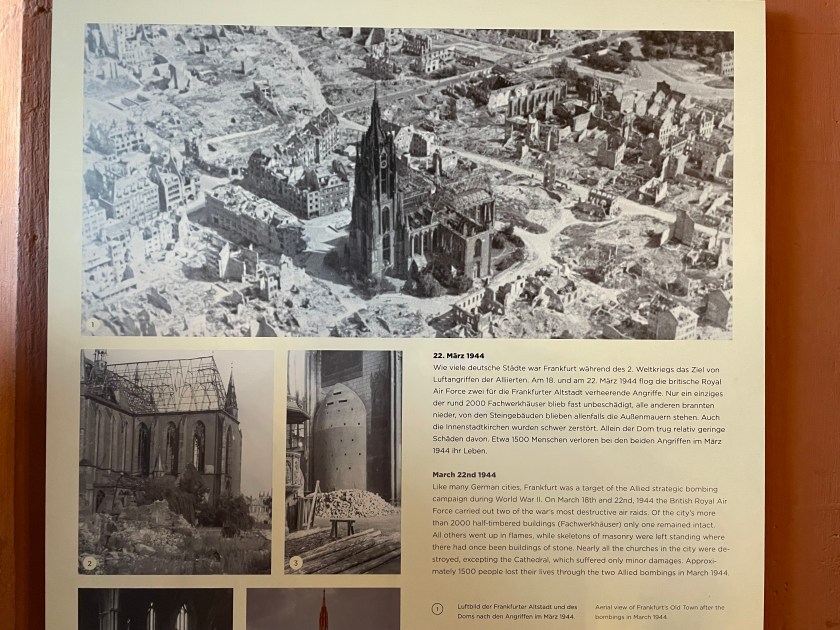
March 22, 1944

The burned-out cathedral in the middle of the destroyed old town, aerial photo from 1945. In six heavy Allied air raids on Frankfurt am Main between October 1943 and March 1944, Central Europe’s largest Gothic old town was largely destroyed. The physical annihilation of the old imperial city was intended to break the population’s will to war. The most serious damage was caused by the attack on March 22, 1944, in which over 1,000 buildings in the old town, mostly half-timbered houses , burned almost completely. The cathedral also suffered major damage when the old Frankfurt collapsed. explosive and incendiary bombs penetrated the roof of the southern transept, all roofs and windows as well as the vaults in the southern transept, the election chapel and the Scheidskapelle were destroyed, and as in 1867, the interior of the cathedral burned out completely. This time, however, the valuable interior furnishings had been brought to safety beforehand. Eight of the nine bells, including the Gloriosa, had already been requisitioned in 1942 and transported to the bell cemetery in Hamburg in order to later be melted down as a “long-term reserve of raw materials.” Fortunately, the tower with the bell remaining in it survived the bombing raids largely unscathed.
The Second Reconstruction
In July 1947, after the rubble had been cleared, the bells were brought back from the bell camp, where they had survived the war, and ceremonially reopened. It wasn’t until 1948 that the actual restoration of the cathedral began.
This drawing shows what happened in 1944 at the end of the war.
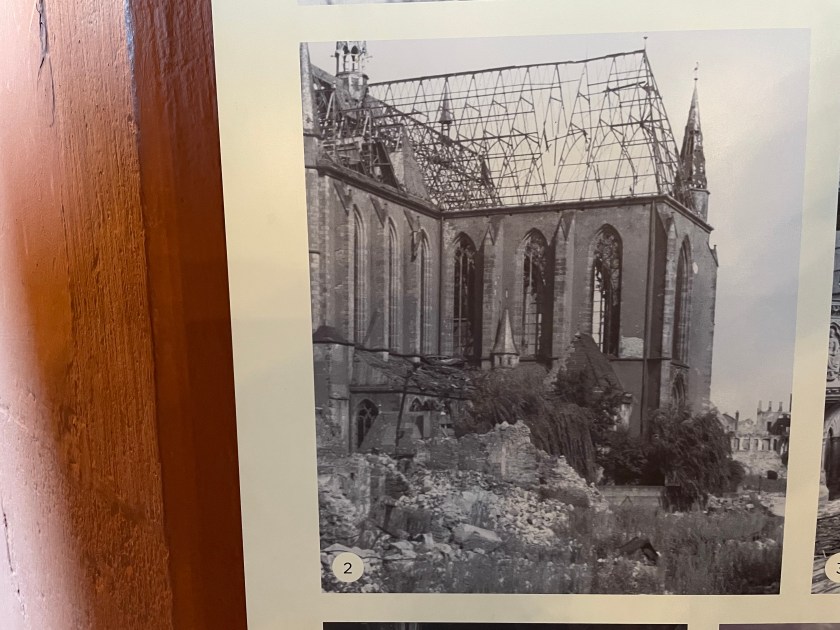
How remarkable that so many old buildings were rebuilt and restored. It’s hard to imagine that most of Frankfurt once lay in rubble. We’re told that there was considerable debate about rebuilding. Do you make things look old, or do you move forward with new architecture? The Dom, of course, was restored to its former glory, and it is glorious. But many of the buildings in the surrounding area that look old are not.
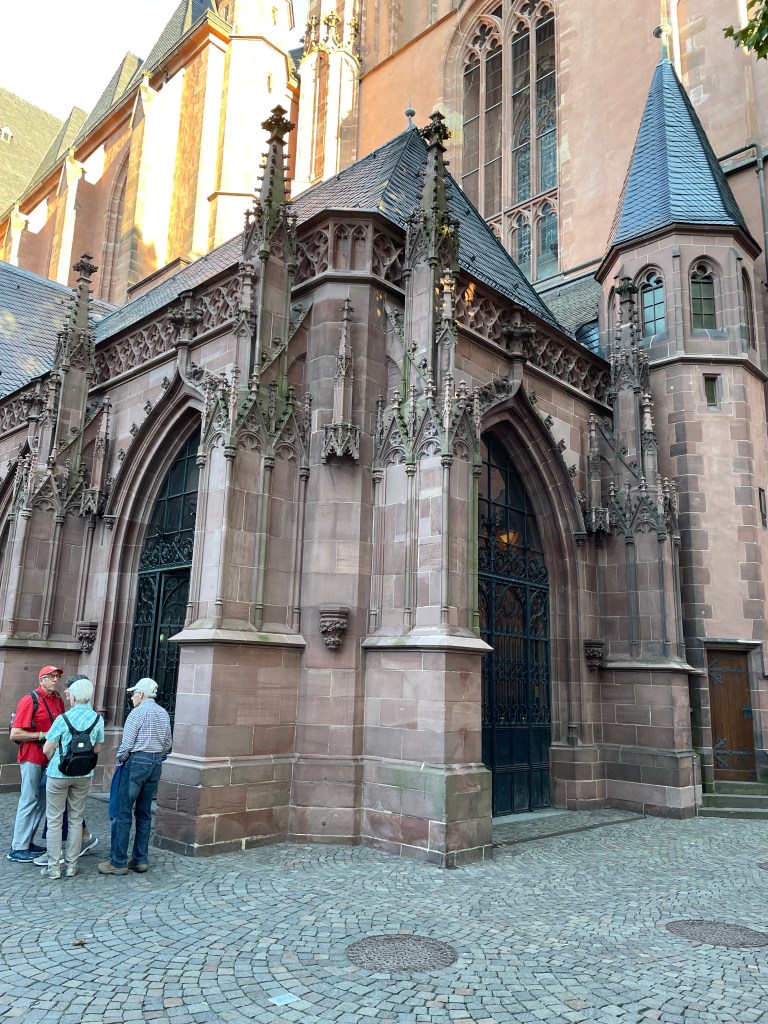
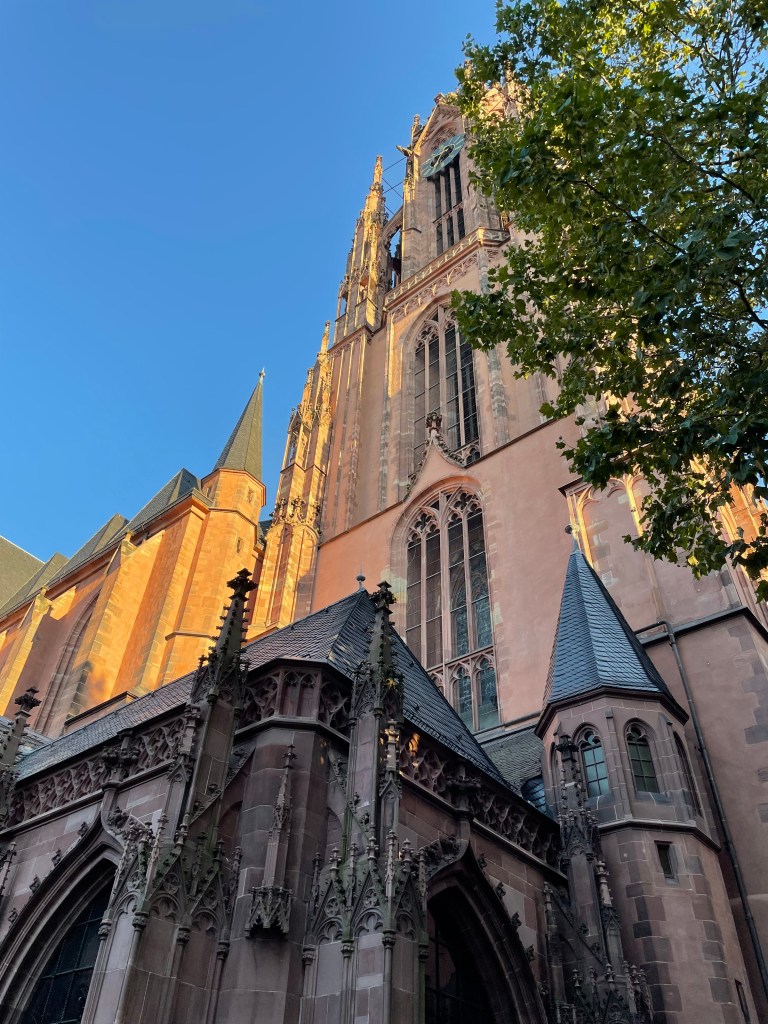
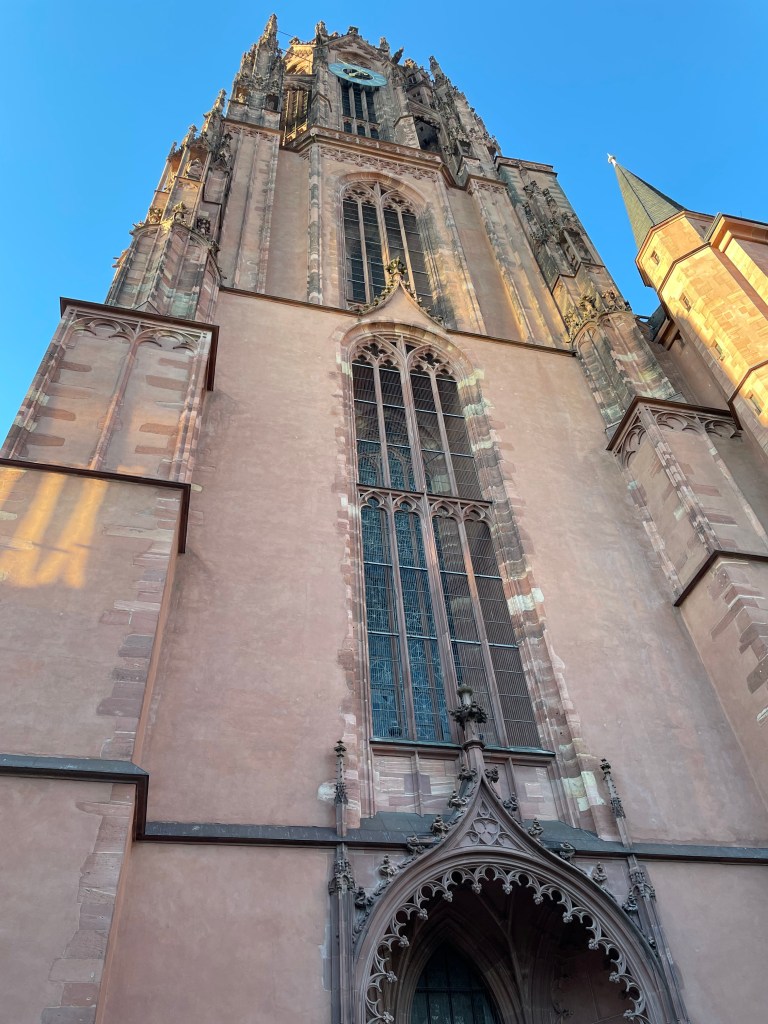
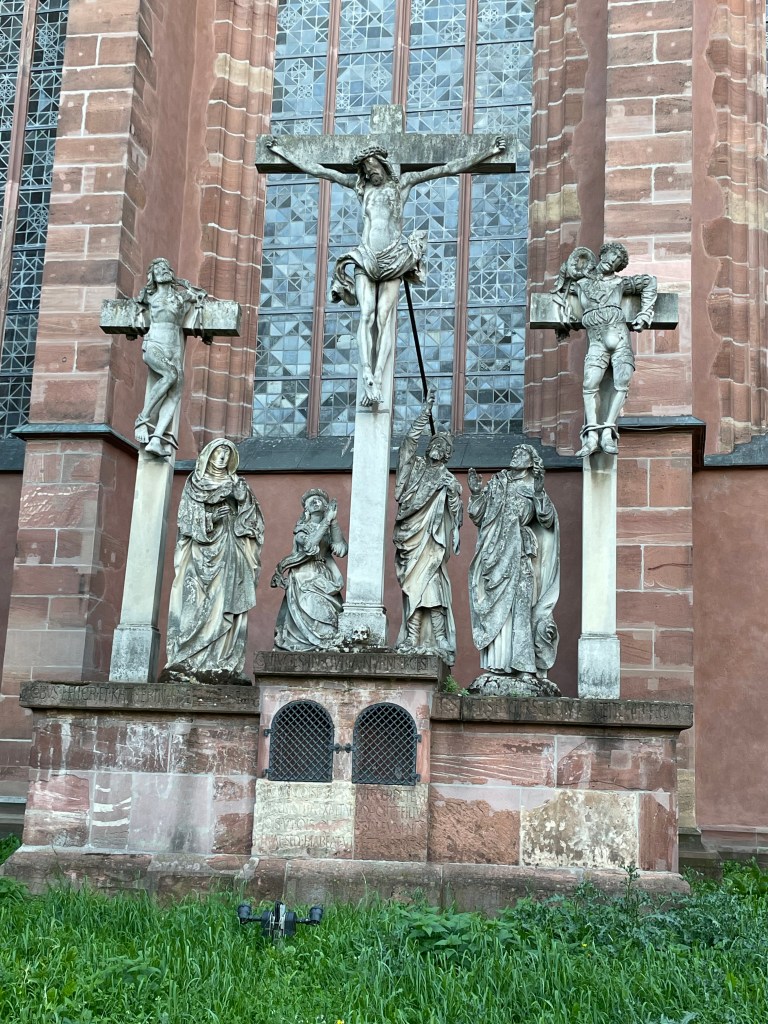
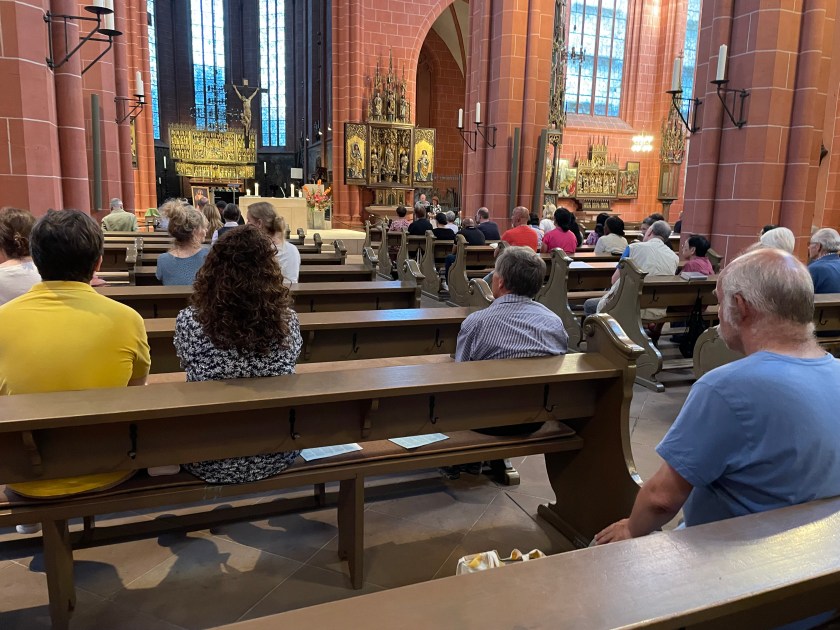
The inside was spectacular!
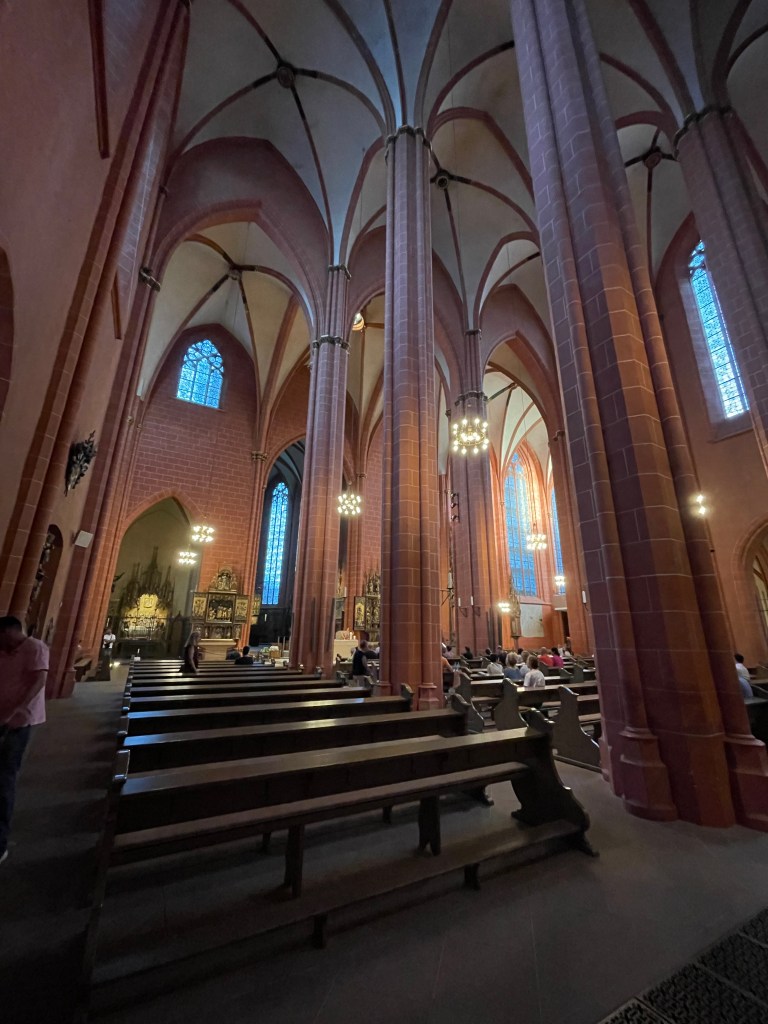
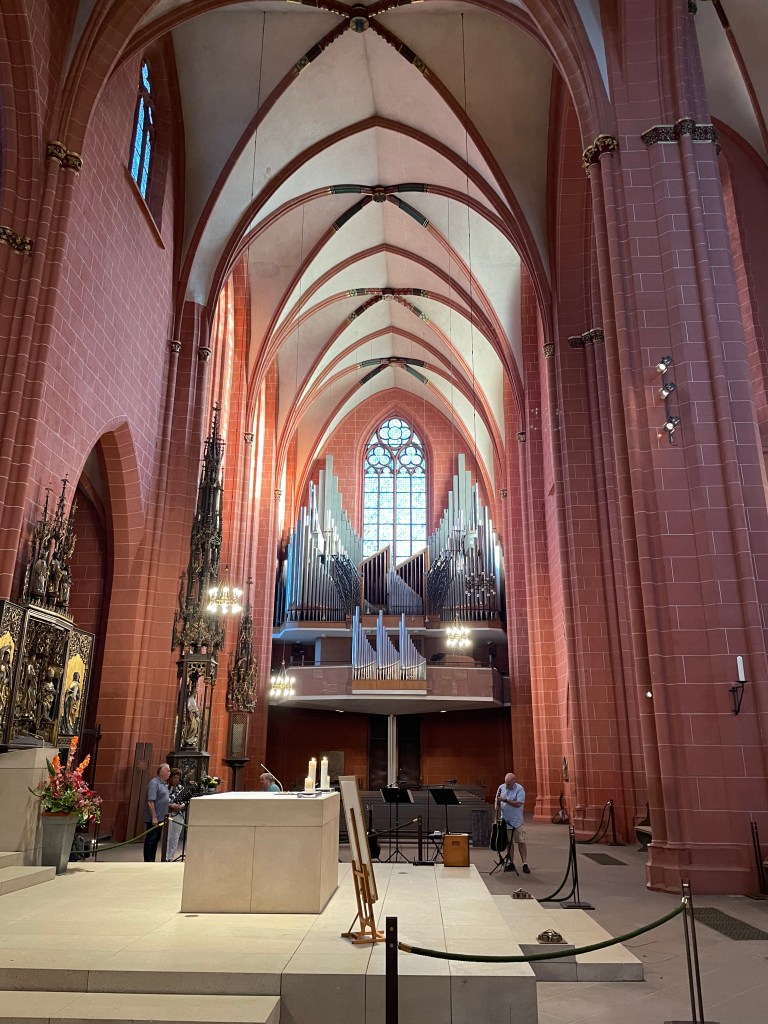
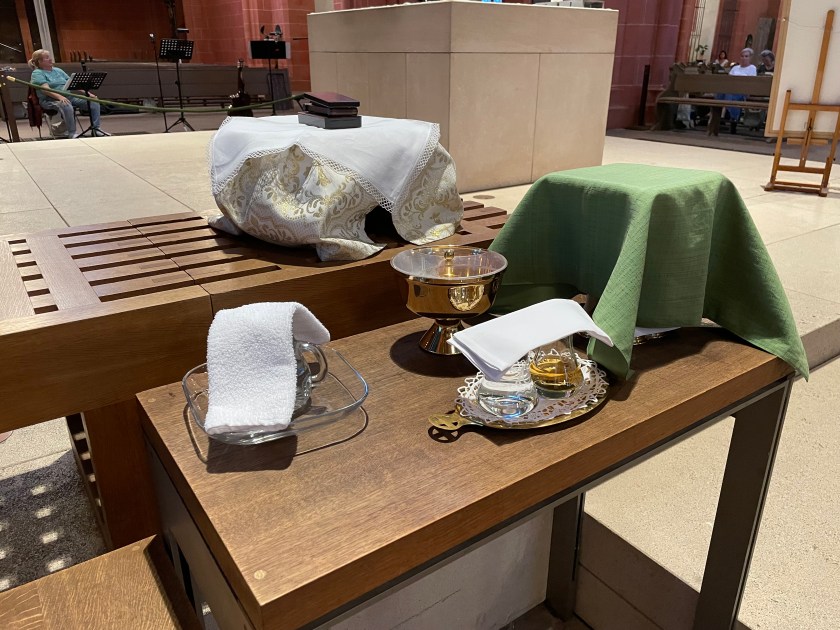
The choir seats:


The baptismal font:

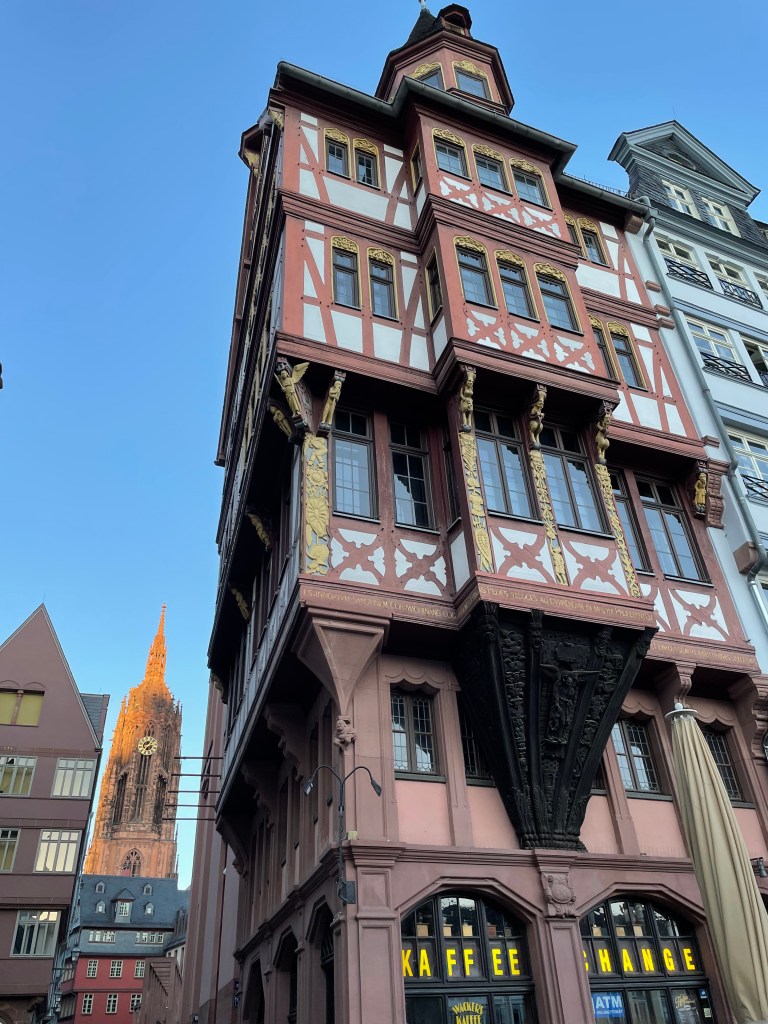
One of the new buildings by the Dom, made to look old.

Black Peter, or Struwelpeter is a character in a famous children’s book.

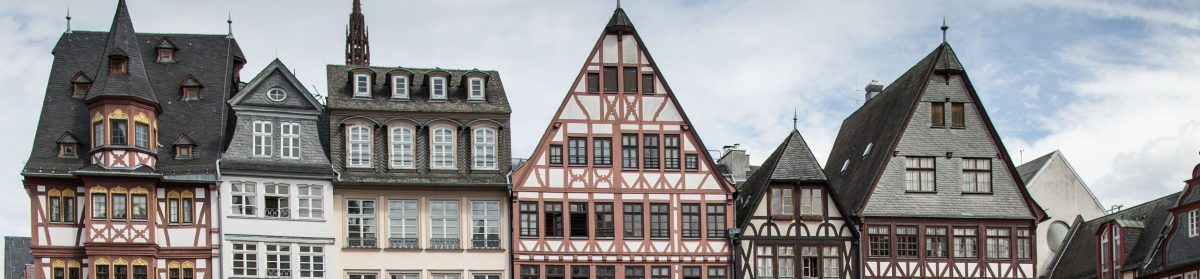
Here is the famous city center town square. Many of these buildings were built in the 1980s. At Christmas time, this entire area is filled with Christmas markets.
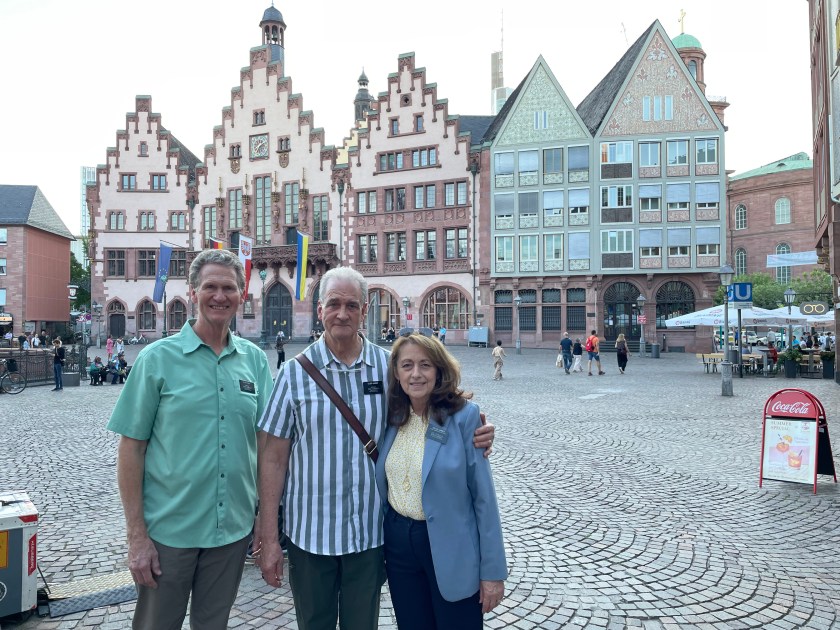
This is the famous face of Frankfurt: Römerberg Square

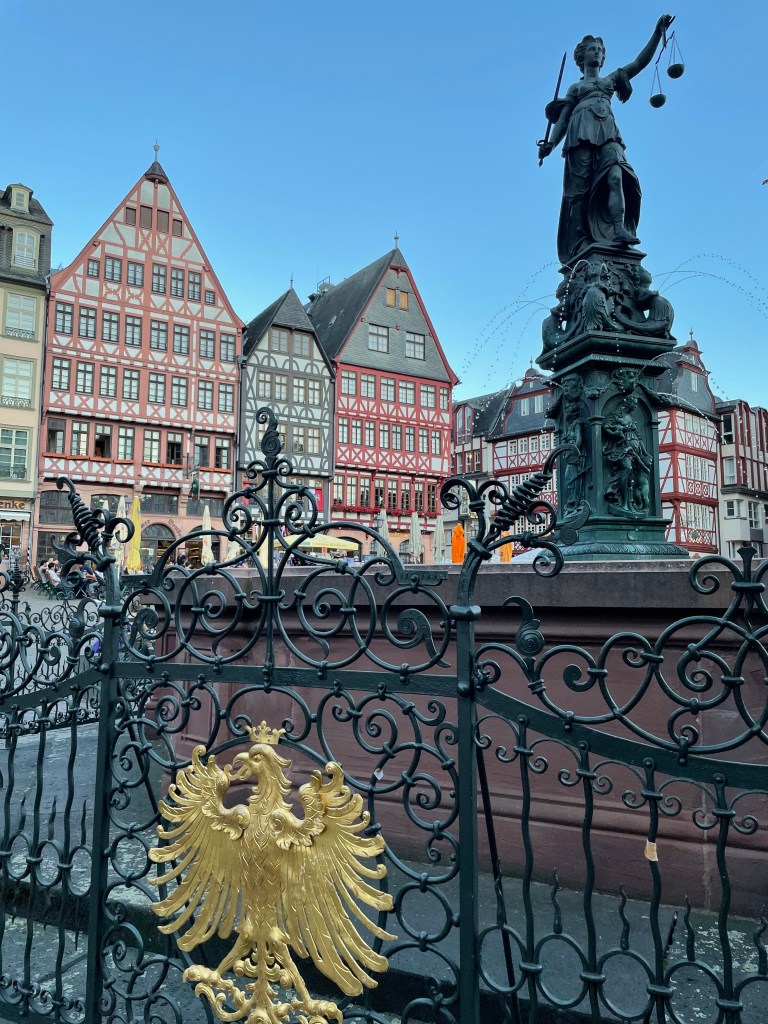

Römerberg Square is just a block or so away from the Main River.
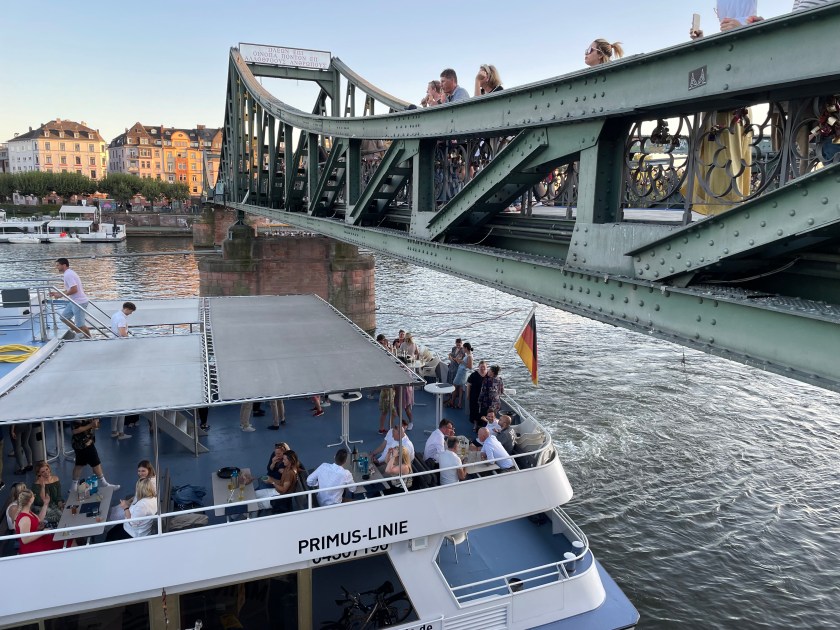


This bridge’s history was simply stated here: built in 1911-1912, built again in 1946, renovated in 1992-1993.

Right beside the “old” part of town is a very modern shopping area with malls and upper end shops and stores. People were out and about, enjoying the beautiful weather this evening.
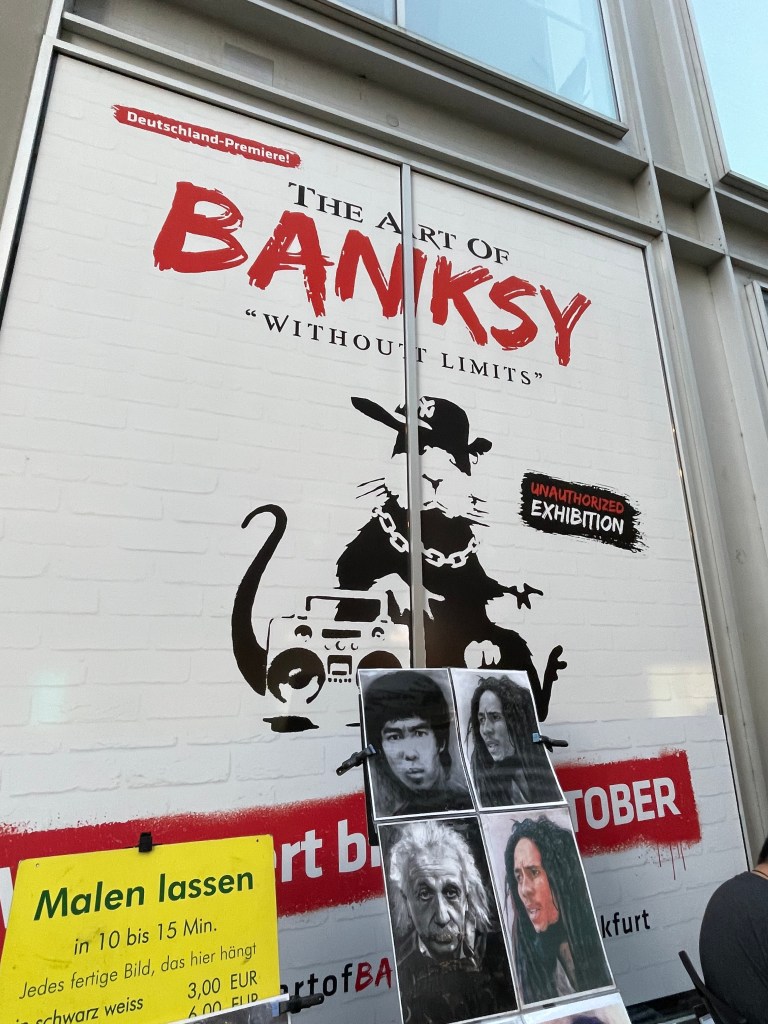
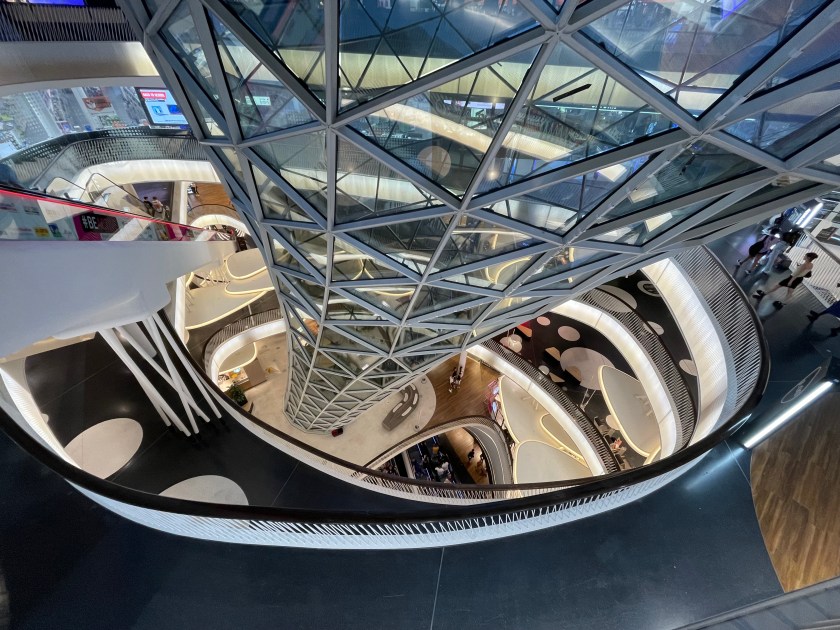

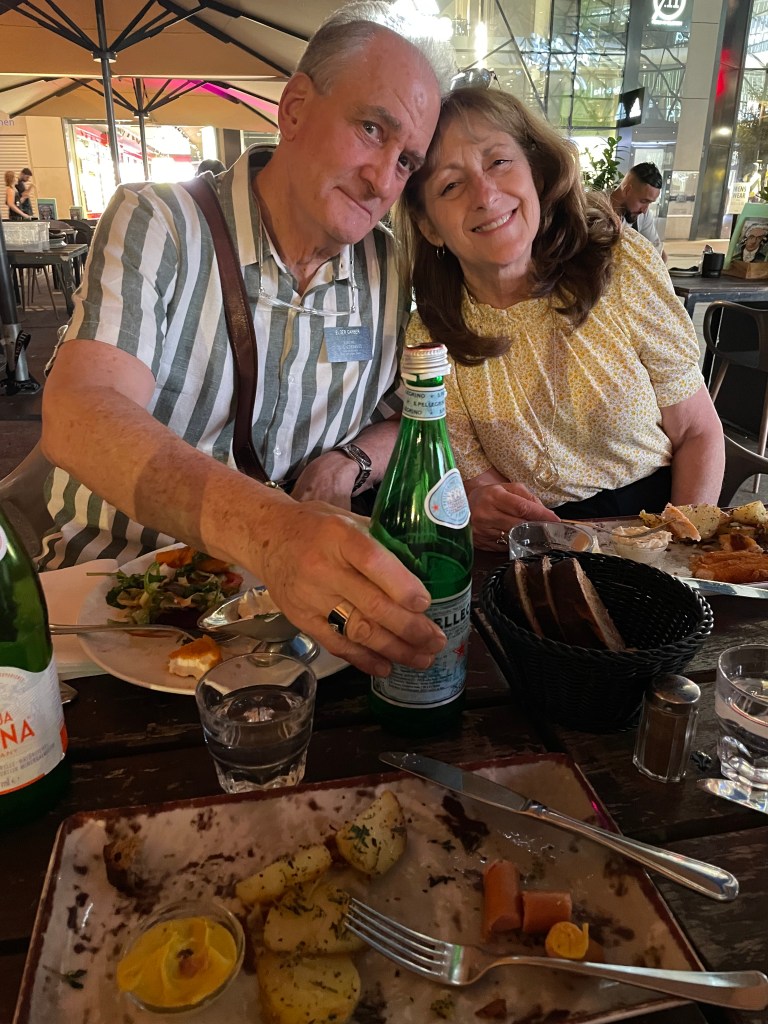
I enjoyed a Frankfurter wurst, which is surprising like our American frankfurter hotdogs. John had some Flammkuchen. We are so happy to be here!


 Our Frankfurt Germany Mission