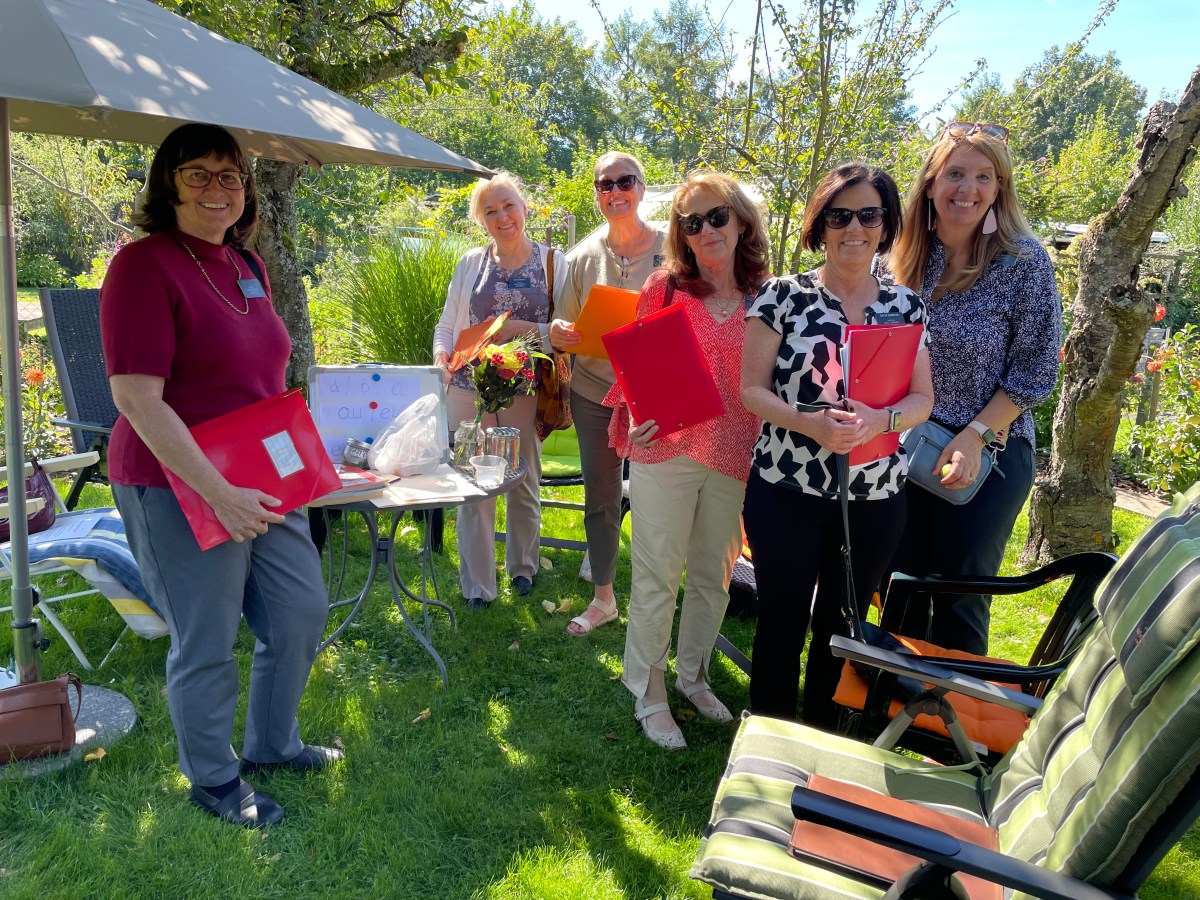

Meet Frau Enger, our dear friend and now my German teacher. Fifty years ago our husbands were missionary companions in Switzerland. When I was an editor for the International Magazines (now the Liahona), her husband, Joachim was our German translator, so I also associated with him. Sadly, Joaquim died in 2015 after a few month’s battle with cancer.
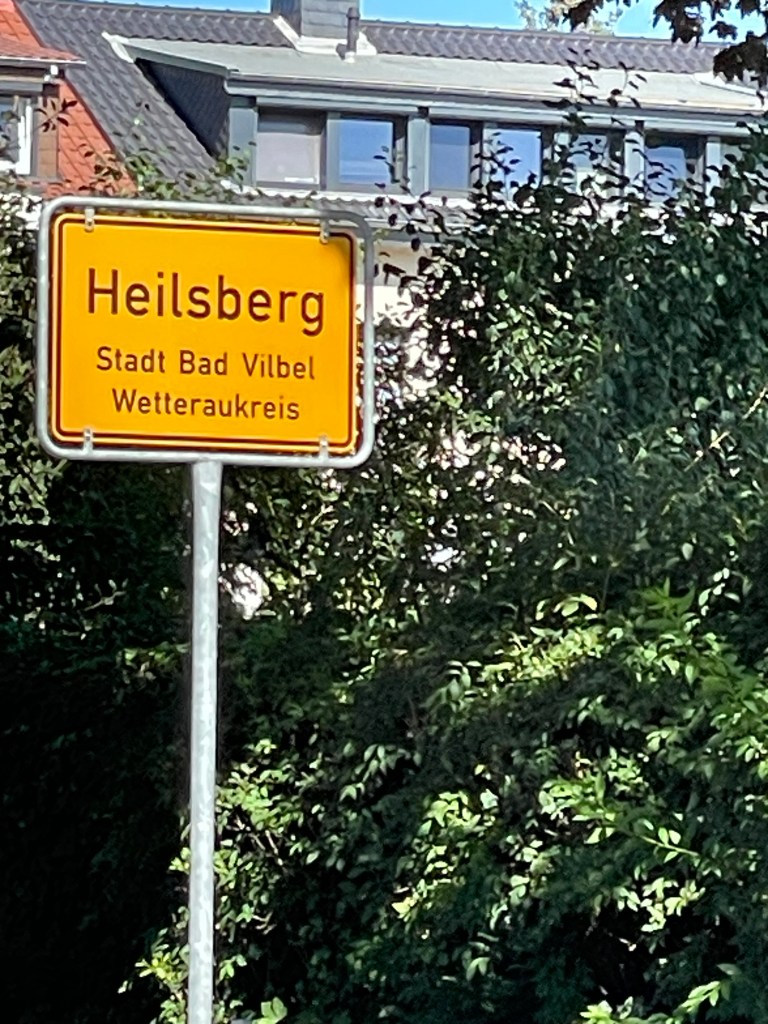
Erika and Joachim found joy solace in their small garden plot not far from their home near Heilsberg. Erika continues to go to her garden every day to tend, water and harvest. It’s peaceful and quiet here. It’s heavenly.
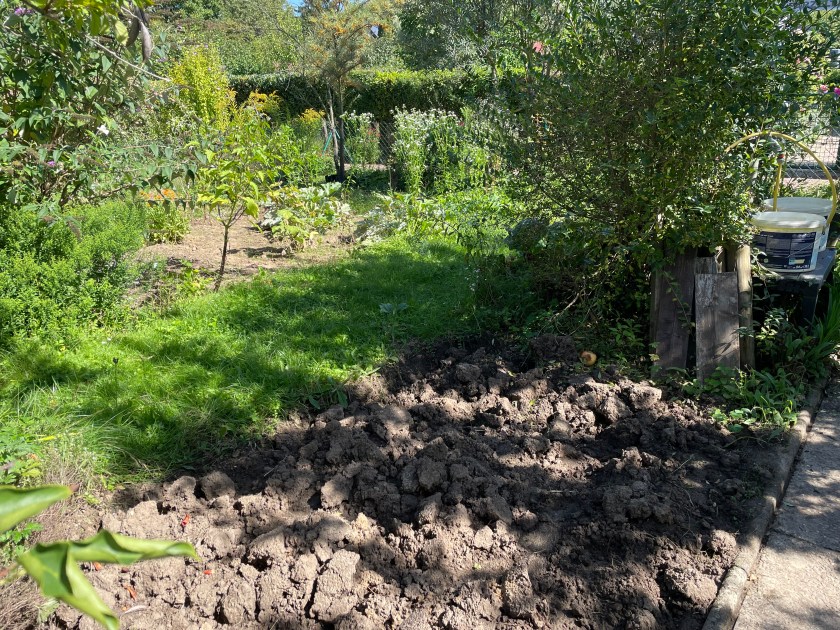
These garden plots are a part of a century-old urban culture in Germany. Here is some really good information about these city gardens:
While “urban gardening” recently turned into every hipster’s pastime, Germany has a long-established culture of city gardens, dating back to the period of strong industrialization and urbanization in the 19th century.
Today’s gardeners are rediscovering the joys of digging the earth, making their statement against consumerism by growing their own vegetables. But when the allotment gardens were initially created, they aimed to combat urban families’ extreme poverty and malnutrition.
First called “gardens of the poor,” they are now known as “Schrebergärten,” inspired by the “Schreber movement” launched in 1864, which drew on the ideas of German physician Moritz Schreber.
During World Wars I and II, the food produced in those gardens became essential for many families’ survival.
Today, for many foreigners, the fenced up garden colonies, with their tiny cottages lined up along railways or occupying former no-man’s land, seem a little mysterious.
Click through the gallery above or watch the video below to learn more about these very German gardens, which become particularly busy this time of year.
https://www.dw.com/en/a-brief-guide-to-german-garden-colonies/a-39133787
This fun 3 minute video in the link above does a great job explaining how these gardens work. The cost for renting a garden plot is about 200-250 Euro per year.
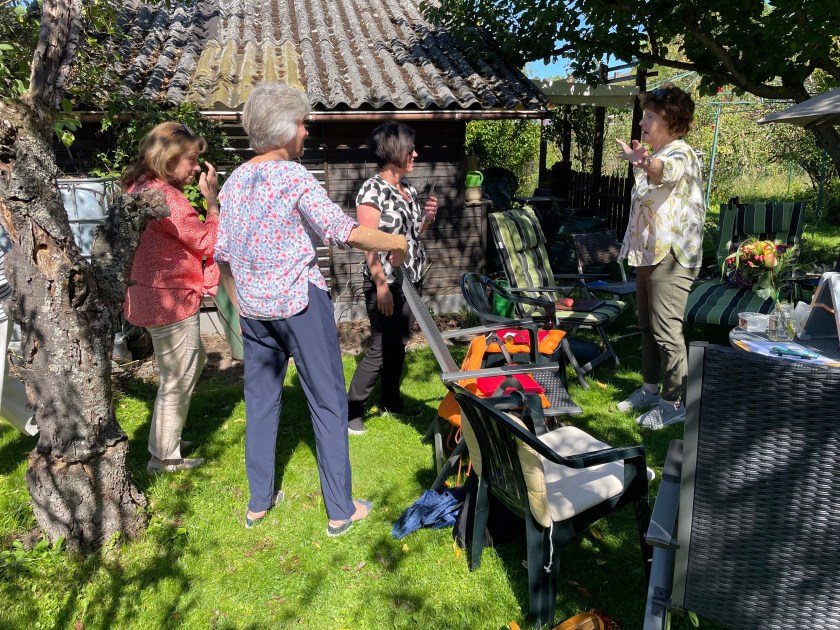
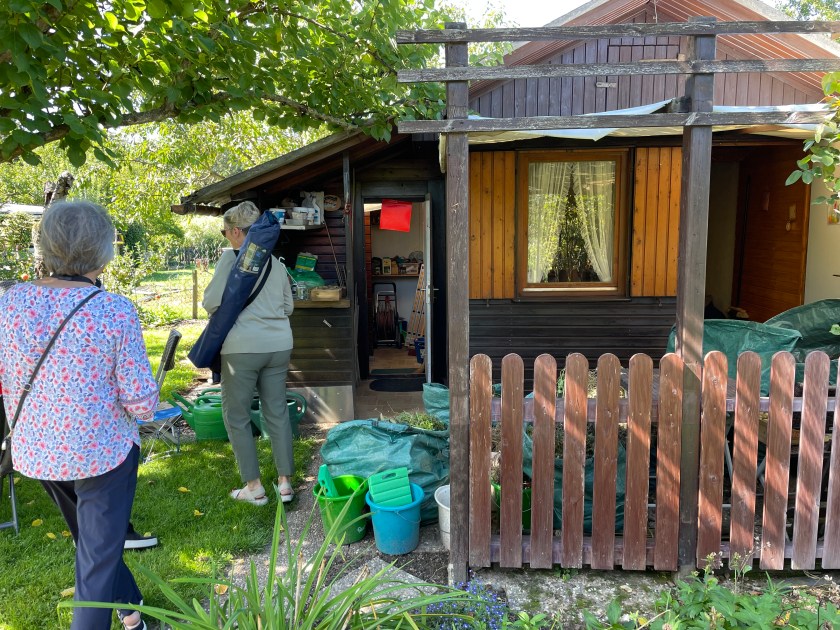
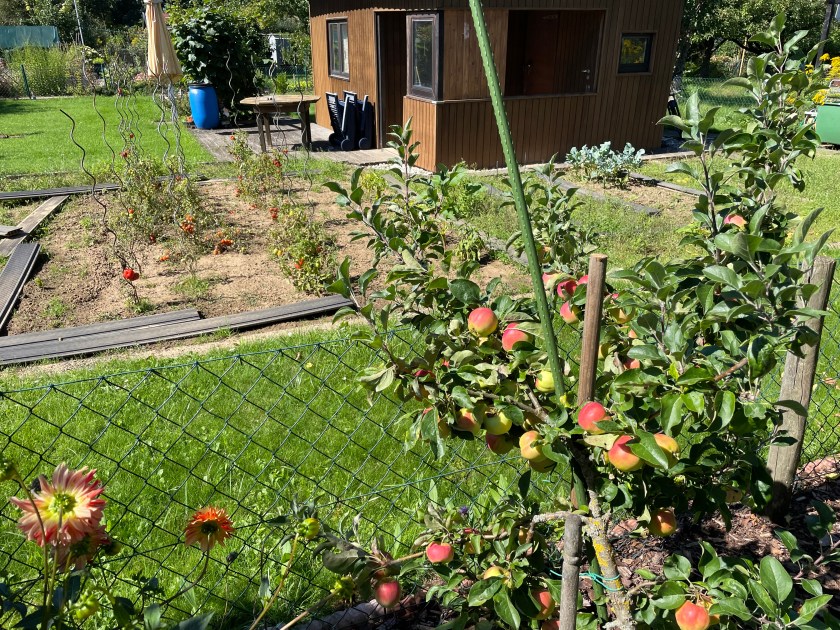
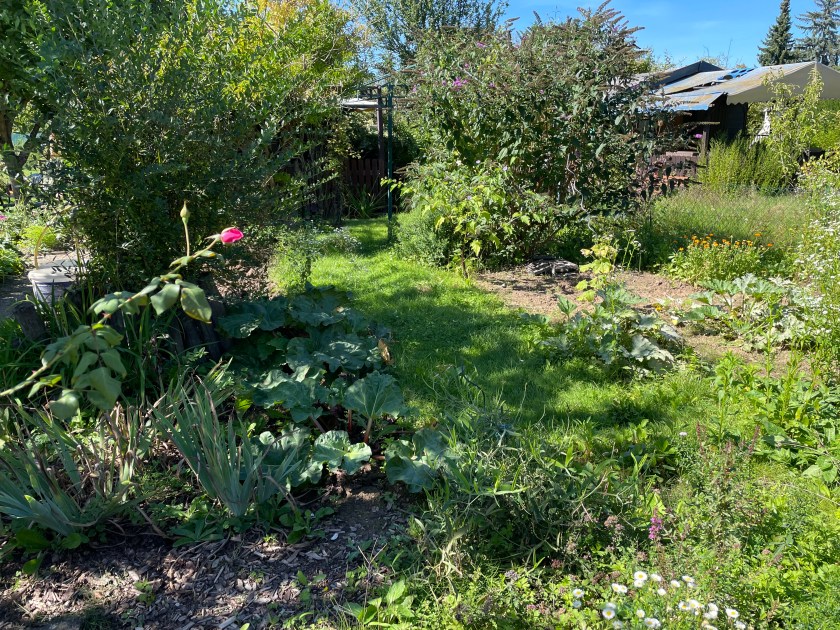
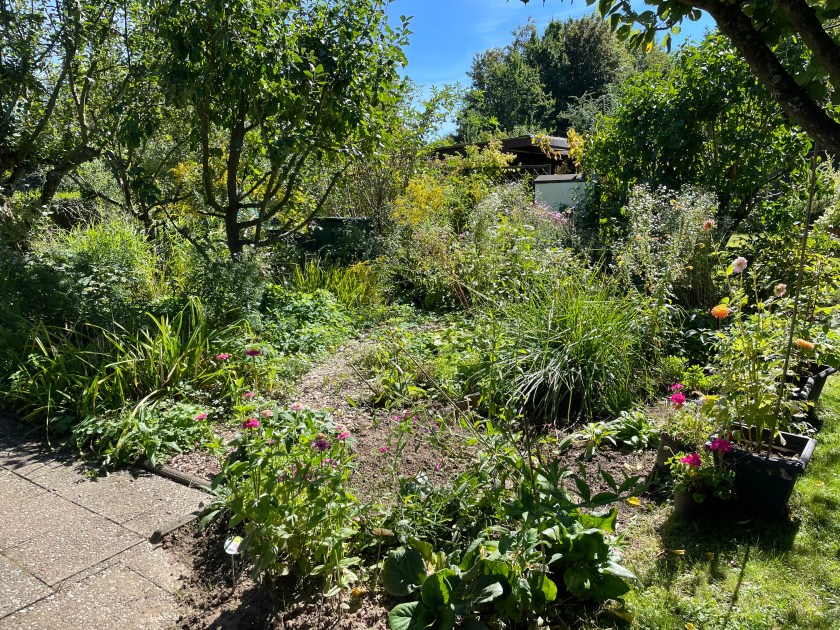
In this home away from home, Erika has a potting shed with her tools and pots and mulch. She built a small greenhouse structure from boards and tarp for her tomatoes. This garden plot has been Erika’s haven of peace. It was so quiet and peaceful and beautiful in an earthy way–not precise and tidy. She had flowers–Sweet Peas, Zinnias and Dahlias, a small apple tree and a kiwi tree, some rhubarb, a melon plant and some squash. There is a little bit of this and a little bit of that filling her allotted space. It felt like we were in Peter Rabbit’s garden, water cans and all, from days gone by. The weather was perfect. It really was heavenly. I loved being there.
Today for our German lesson, we sat in the shade of a large apricot tree surrounded by these flowers and vegetables and trees. No one else was in sight. The bees hummed and the butterflies dipped around us. The weather was perfect. I would come here everyday too, if I could.
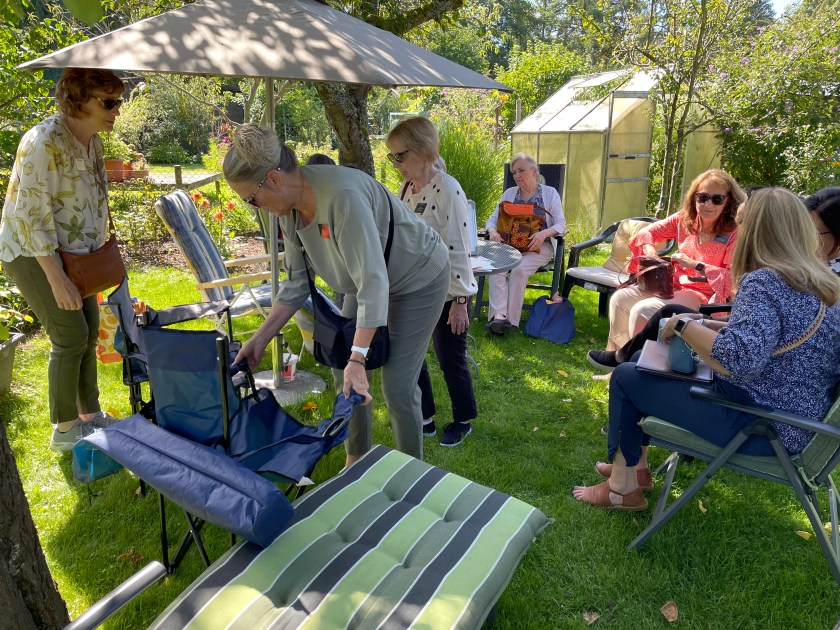

“Frau Enger” has been teaching English lessons to the wives serving in the Area Offices for about 11 years. Every week she prepares a lesson and something cultural to teach the ladies who adore her. Before Covid she came to the church to teach, after Covid she started doing the classes at her apartment or in the garden.
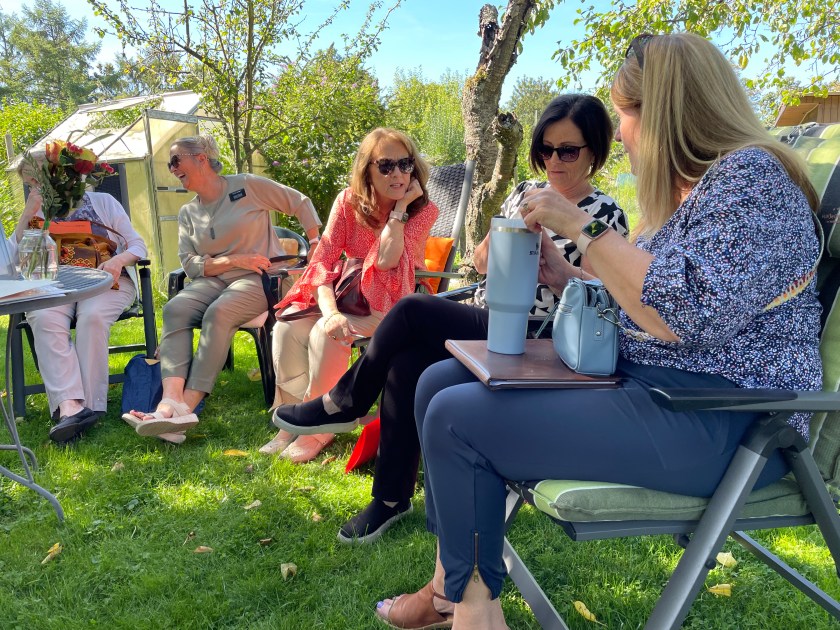
Today we learned about the sounds made in words with umlauts. She prepared a handout for each of us and we listened to her enunciate the words before we repeated them. Everyone was relaxed and at ease and absorbed what they could. We laughed a lot and enjoyed being together.
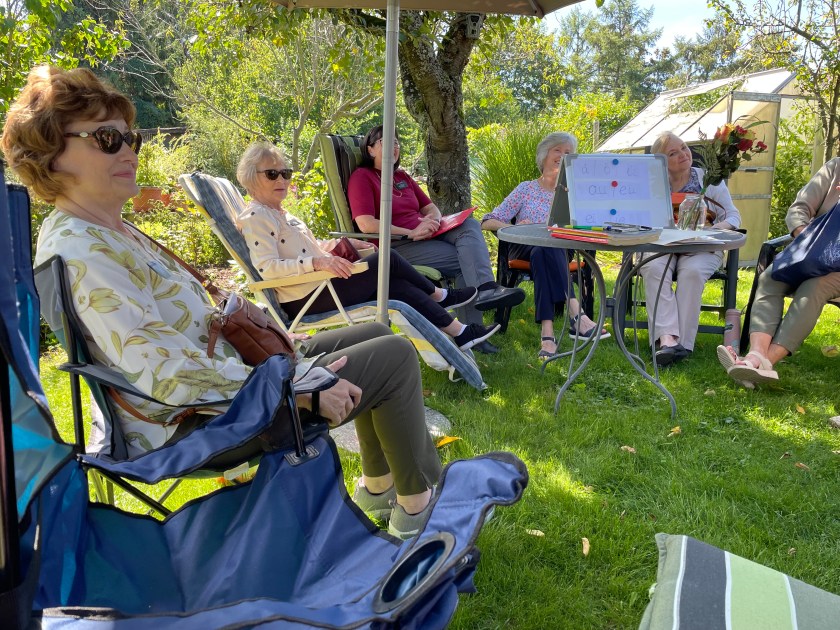

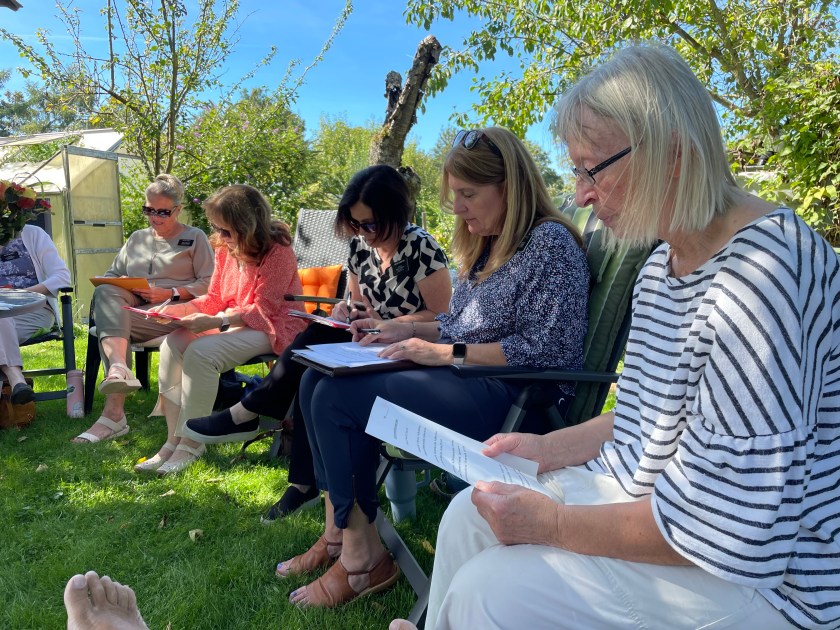
After the lesson we each picked an apple from her little apple tree.
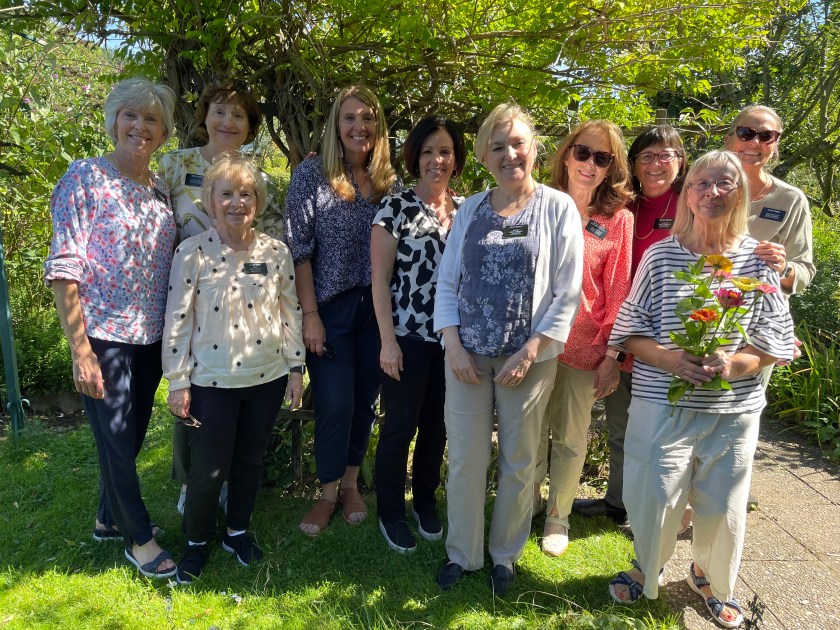
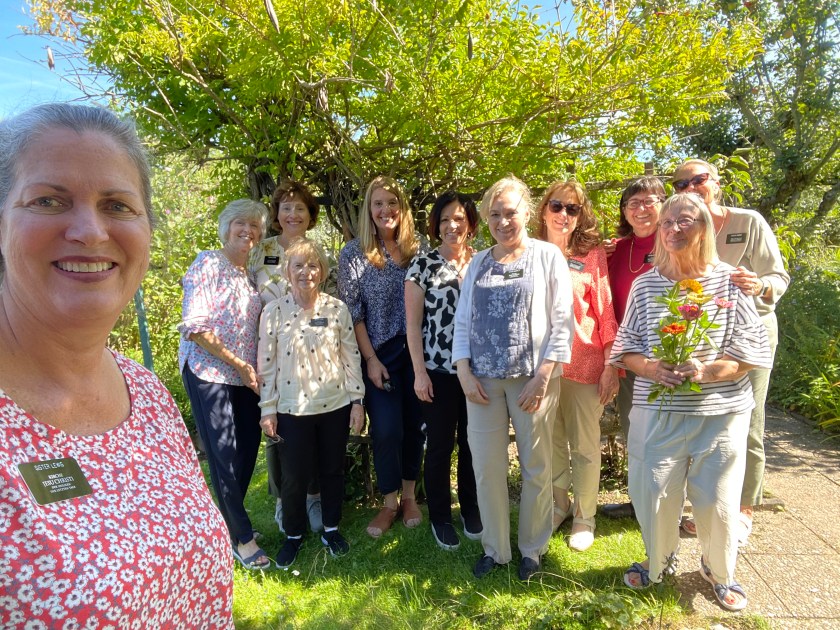
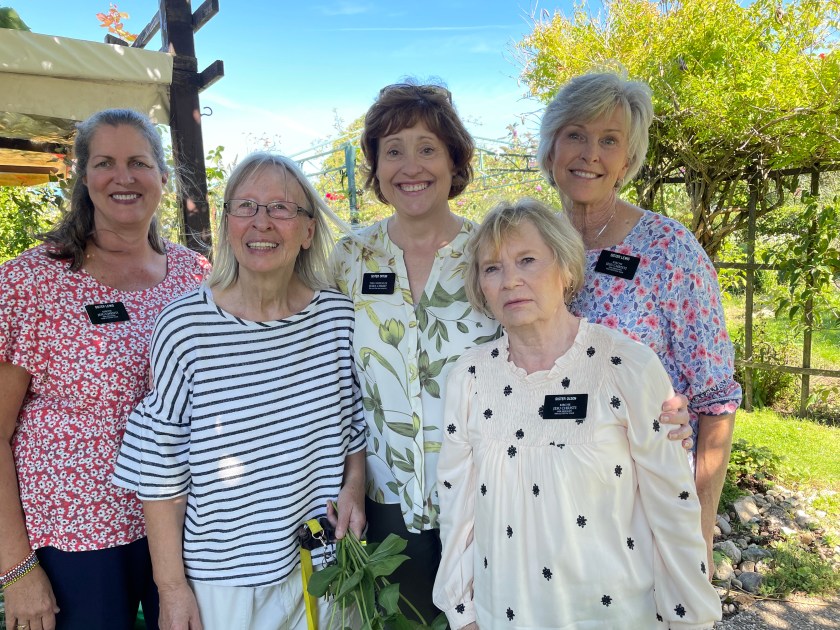
Here are my German-learning friends:
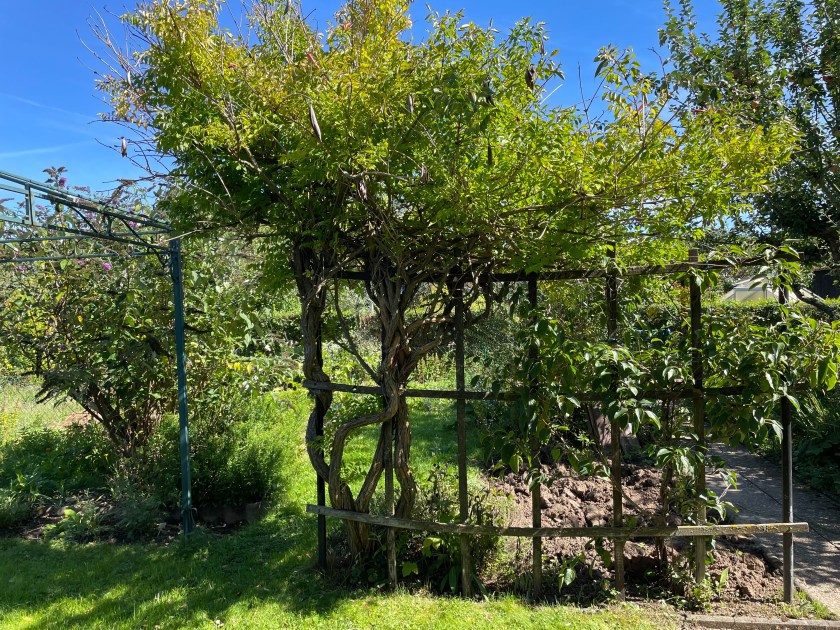
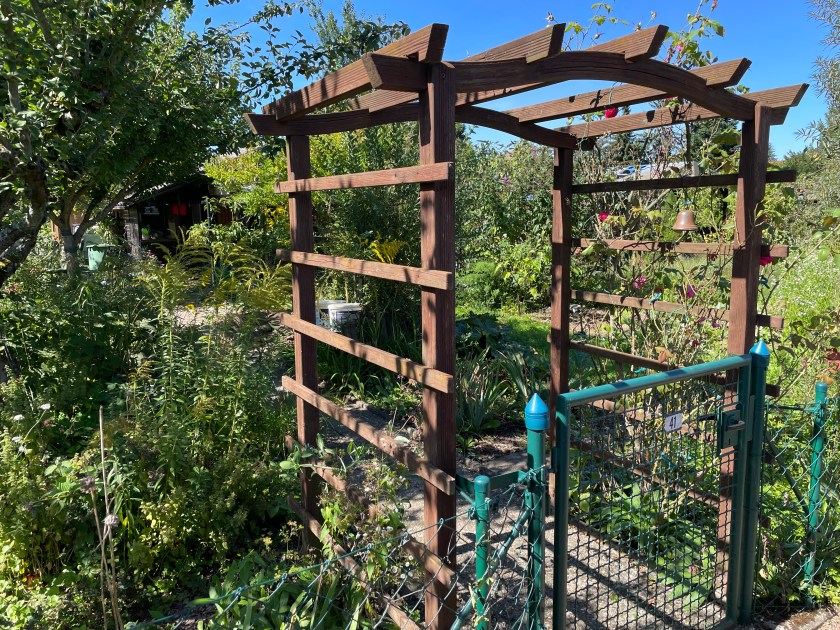
This is the entrance to Erika’s garden, with its gate and lock.
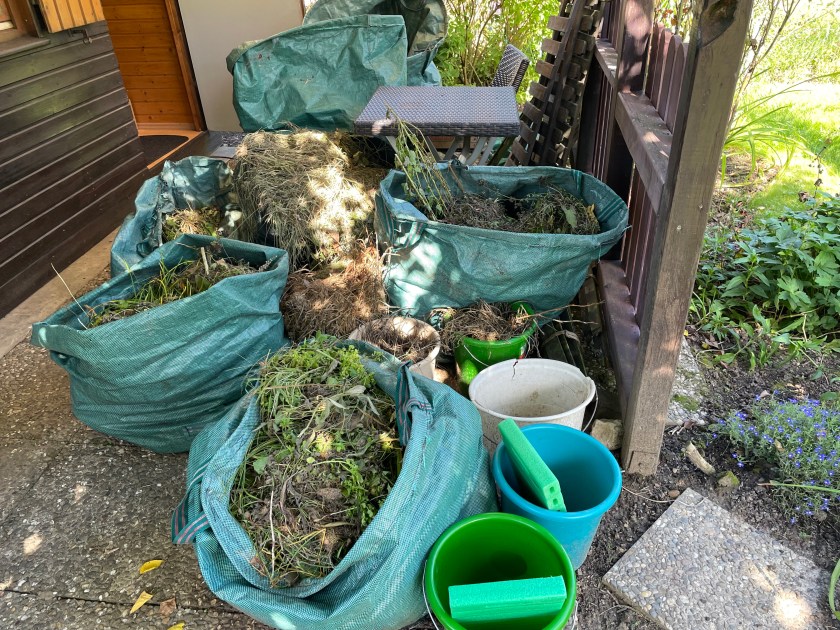
Paths lead through the gardens. Each has its own personality. Some are well-kept, others need help. But each one is an escape from the busy world around us, a refuge, a place of peace.


 Our Frankfurt Germany Mission