

In 2009 John and I traveled with Roger Minert and his wife, Jeanne to Germany and Poland to visit some church historical sites he was researching. One of the places we visited was a small village in Poland called Selbongen, where we had to track down someone in the village who could unlock the church for us so we could photograph it. We also visited an abandoned cemetery not far away on a grassy overgrown hill where several of the early church members here were buried. (I have photos from that trip at home in my files.)
Roger later prepared a comprehensive history of the Church in Selbongen. He wrote an article now published here:
https://rsc.byu.edu/harms-way/selbongen-branch-konigsberg-district
This is a bit from that article:
Selbongen Branch, Königsberg District
A unique branch in many ways, the Selbongen Branch was situated in a very isolated part of East Prussia from its inception in the 1920s until its demise in the 1970s. The branch was founded in great part thanks to the gospel dedication and missionary spirit of one member, Friedrich Fischer. He was converted in Berlin in the 1920s and went home to Selbongen to share the gospel with his relatives and his friends. The branch grew so steadily that the Church decided that the Selbongen Branch needed its own meetinghouse. One was constructed there in just two months during the year 1929. As of the outbreak of World War II in 1939, this was the only meetinghouse owned by the Church in Germany or Austria.
| Selbongen Branch[1] | 1939 |
| Elders |
6 |
| Priests |
3 |
| Teachers |
8 |
| Deacons |
6 |
| Other Adult Males |
40 |
| Adult Females |
62 |
| Male Children |
17 |
| Female Children |
14 |
| Total |
156 |
The Selbongen branch was, in many aspects of the word, a family. From its beginnings among the extended Fischer family, it came to include members of the Krisch, Kruska, Mordas, Pilchoswki, Skrotzki, and Stank families. The branch had existed barely two decades when World War II ended, but by then many marriages had occurred among these families. The rate of activity among the members of the branch was also exceptionally high.
Emma Stank Krisch (born 1915) was one of the first members of the LDS Church in Selbongen. Later she described the meeting rooms inside their unique structure:
Inside was just a chapel, and we had one room and one classroom. When you came in, on the left side was the classroom and straight [ahead] was the chapel. And there was a stage, a platform at the back. There was no electricity in the building.[2]
Regarding the décor in the meetinghouse, Günther Skrotzki (born 1930) recalled the following: “On the right wall was a picture of Heber J. Grant, and on the left wall one could see the quotation ‘Who will go up to the mountain of the Lord? . . . He who hath clean hands and a pure heart,’ embroidered on a large banner. On the right side there was a pump organ below the picture of the prophet [Heber J. Grant].”[3]
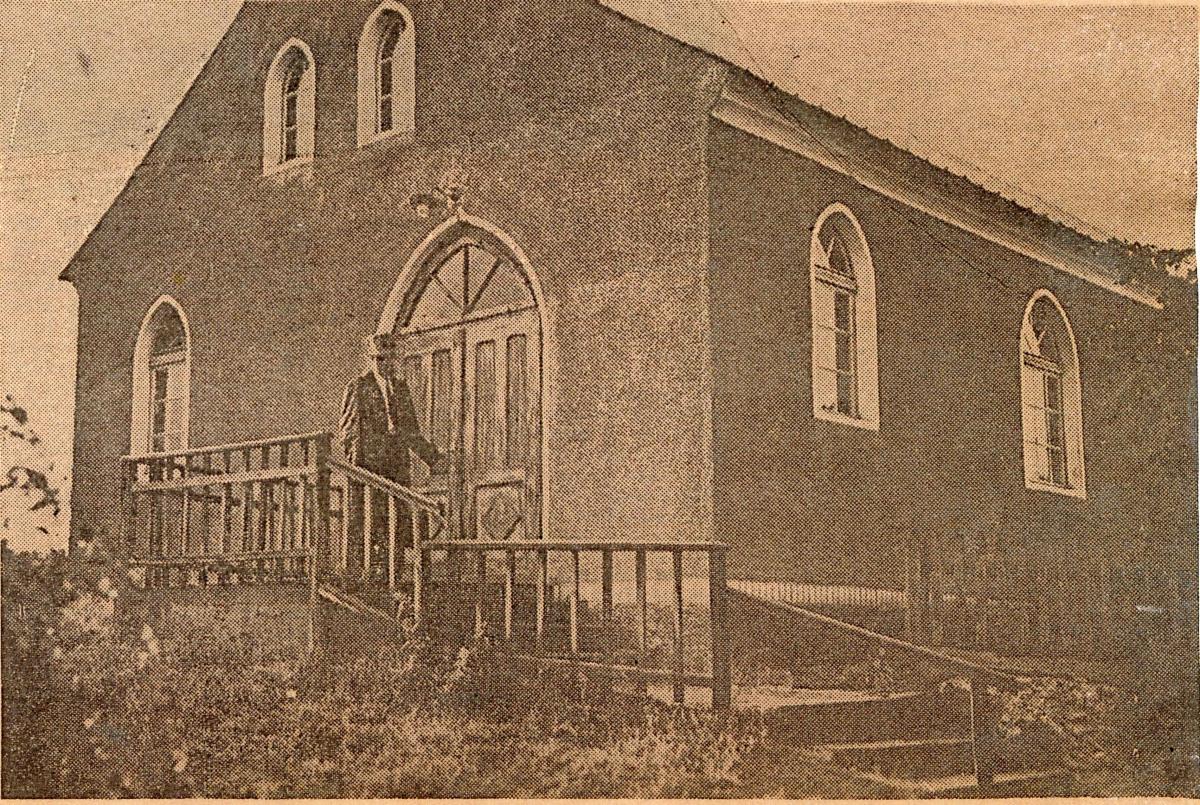 The East German Mission constructed this meeting house for the Selbongen Branch in 1929. This photograph was taken for the Deseret News in 1938. The building still stands.
Emma’s daughter, Renate Krisch (born 1941), added these details: “There was no running water in the building and no restrooms, so we had to go next door to the Kruska home.”
Emma Stank Krisch recalled that many of the members of the Selbongen Branch did not live in the town of about six hundred inhabitants, but came from various small towns and farms in the vicinity. For this reason, the Sunday meetings were held consecutively in the morning.
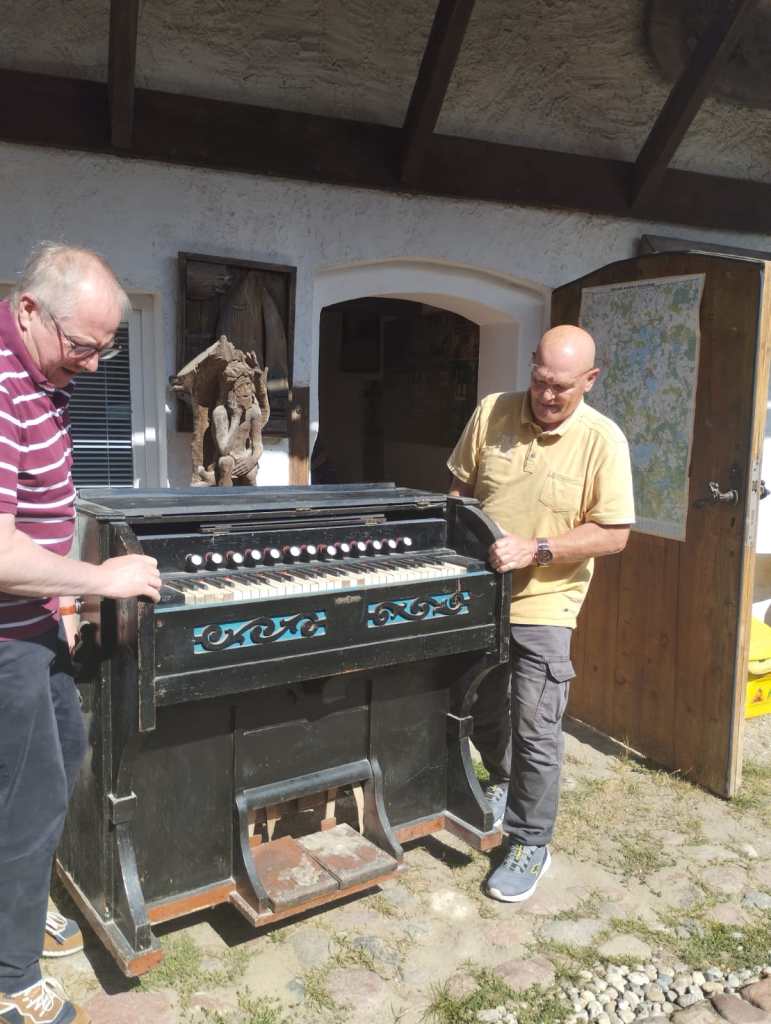
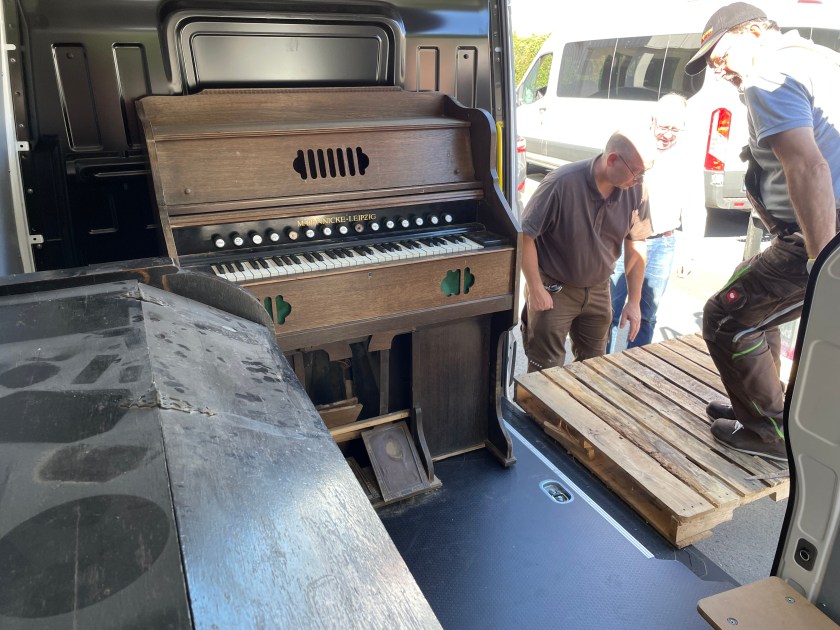
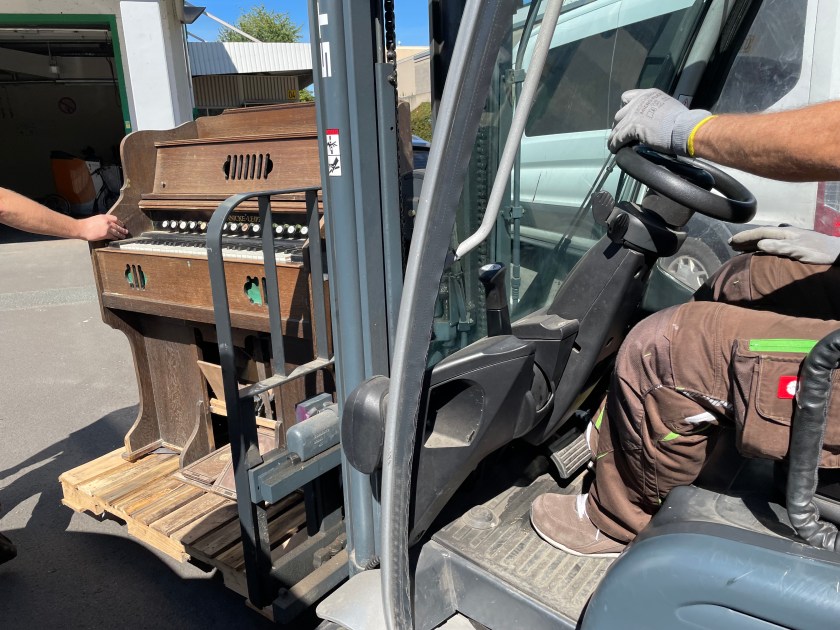
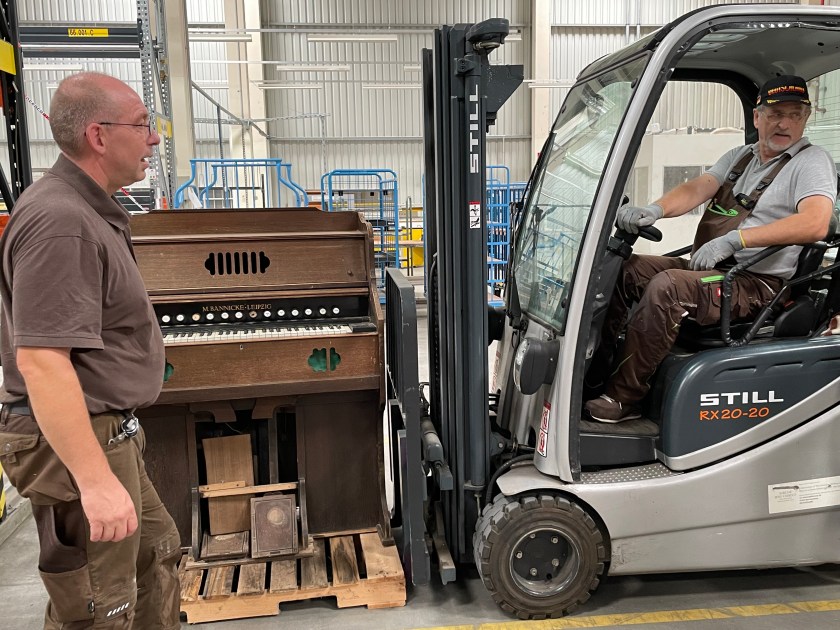
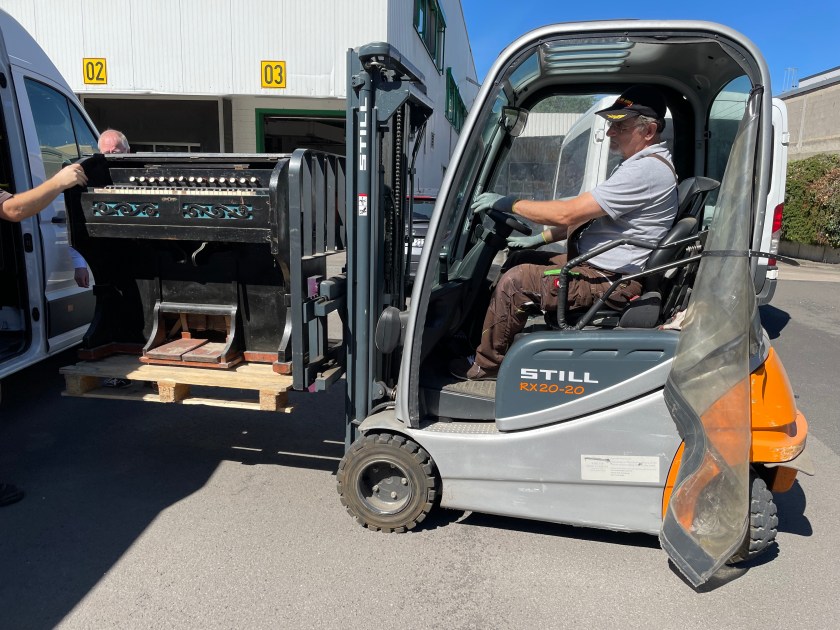
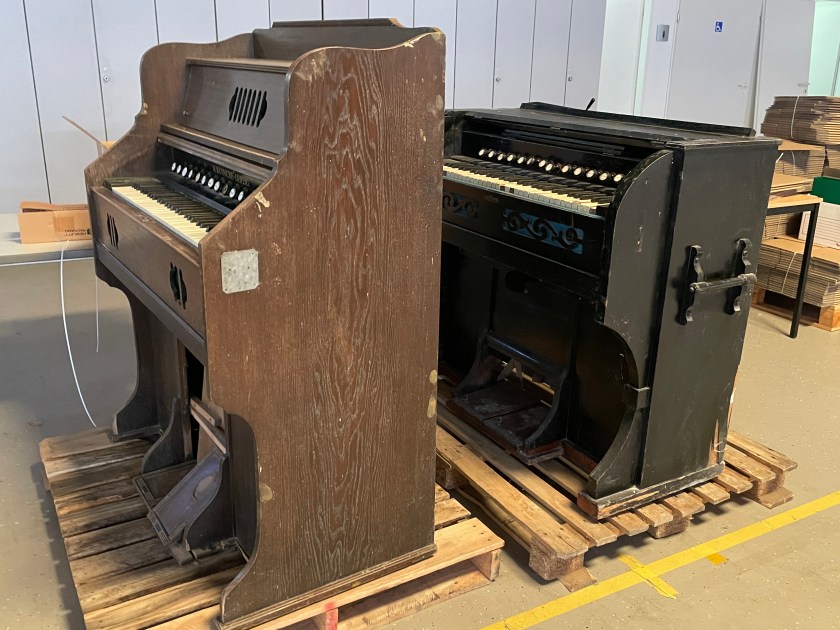
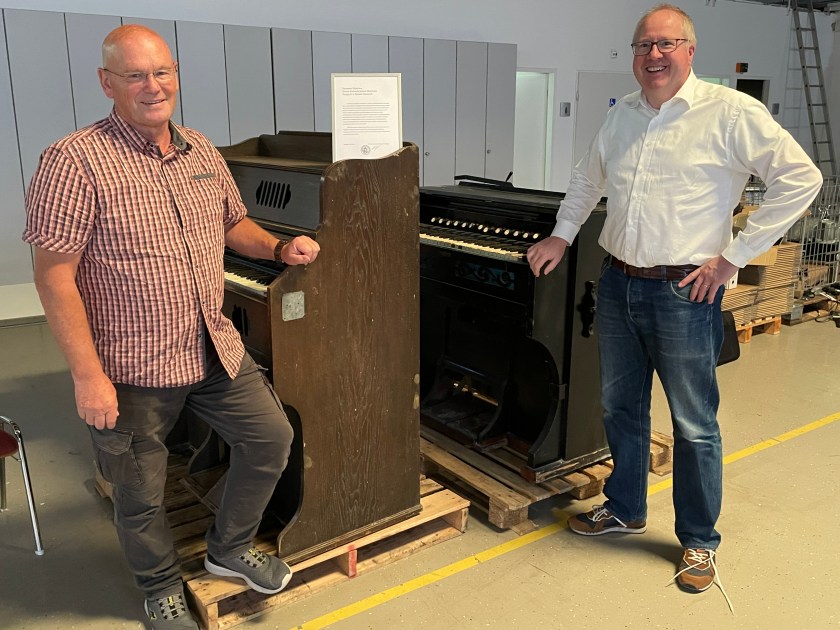
This week Rainer Miller and Folkhard Konietz received 2 organs that were used by the Saints in Selbongen, kindly donated to the Church by the community. The church is now used by the Catholics. The organs are no longer working. The black organ above was the first organ purchased for the Selbongen Branch and when it wore out, they purchased the brown organ from Leipzig. Both are pump organs with foot pedals and bellows. This type of organ is called a harmonium.
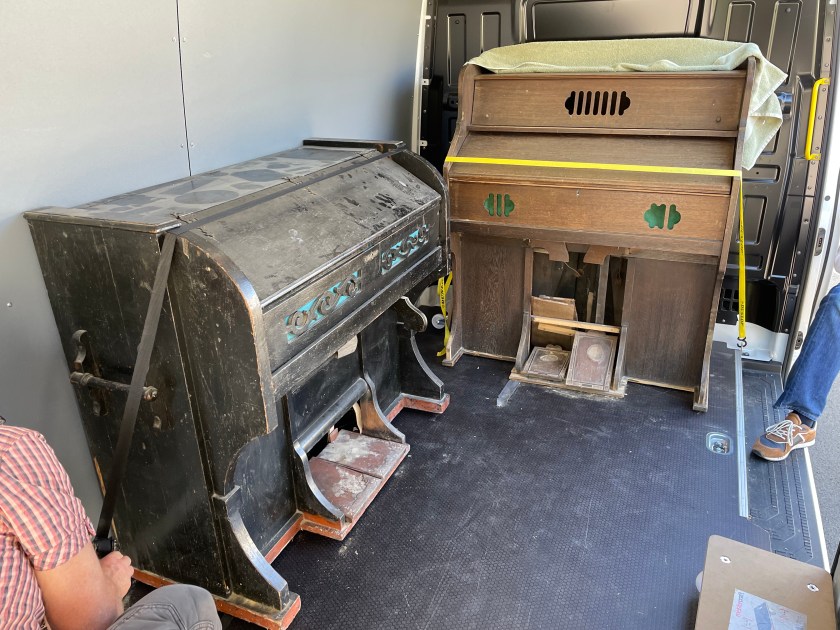
Today I went with Sister Kathi Irving, a Church History missionary, to receive these instruments for safe keeping. They will be stored temporarily at the old Church Distribution Center until a home is made for them at the Phoenix Haus.
This is the donation agreement that came with the organs: 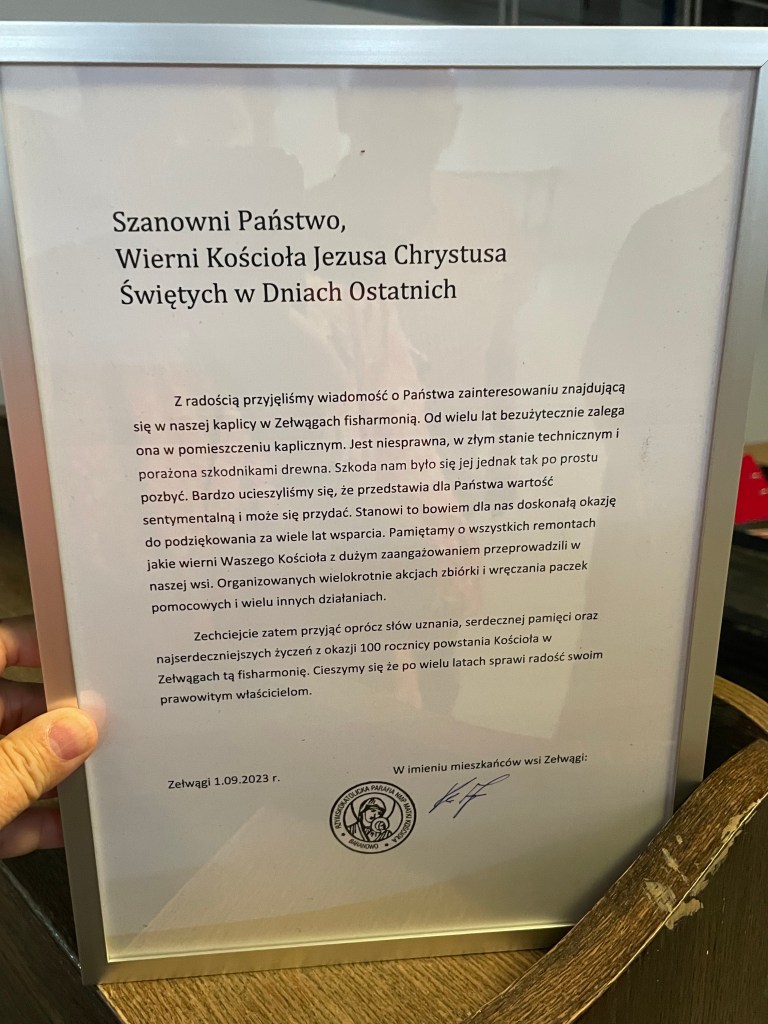
I felt it was a piece of good luck to happen to be here to see these historic organs being kept and preserved. They are an interesting part of the history of the Church here in Europe.

 Our Frankfurt Germany Mission