
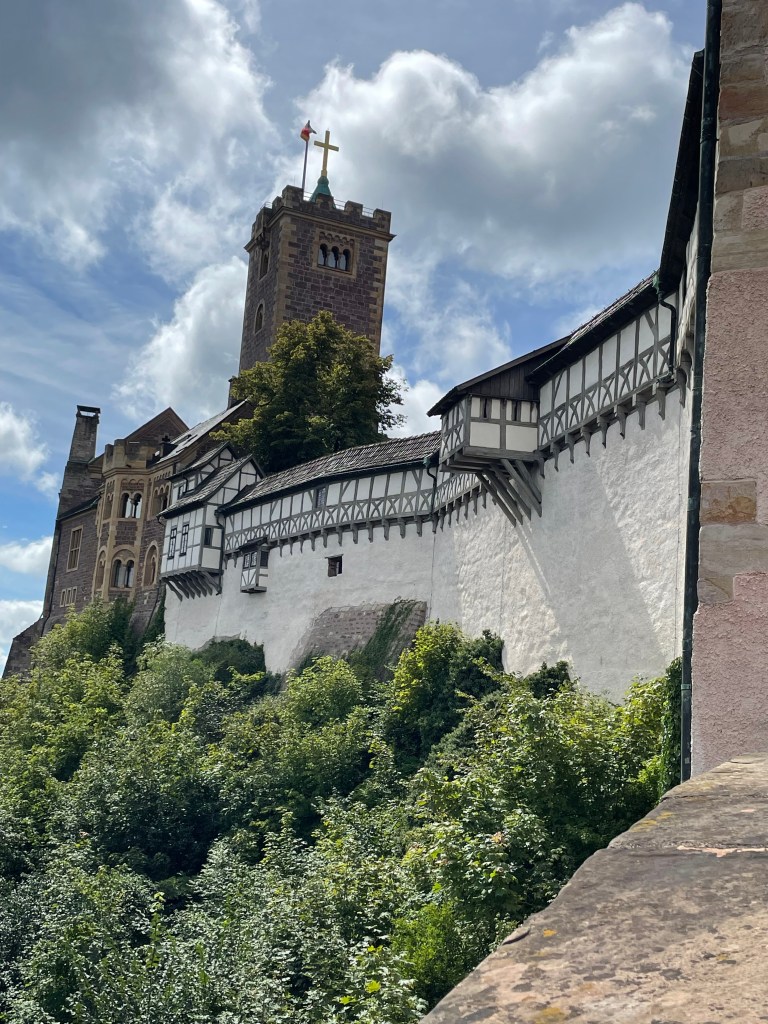
We went on a fantastic outing today to visit a fortress castle in Wartburg, about 2 hours away. First we picked up our BYU intern, Rebecca, 25 minutes away in a town called Schönek-Kilianstädten where she lives in the downstairs of an older member’s home.
We drove through rolling fertile hills filled with forests and fields. The only time you see brown dirt here is in a plowed field. Everything is green and fertile. There are wildflowers in the grass along the sides of the roads that cut through forested areas between towns of homes with red roofs. All is picturesque.
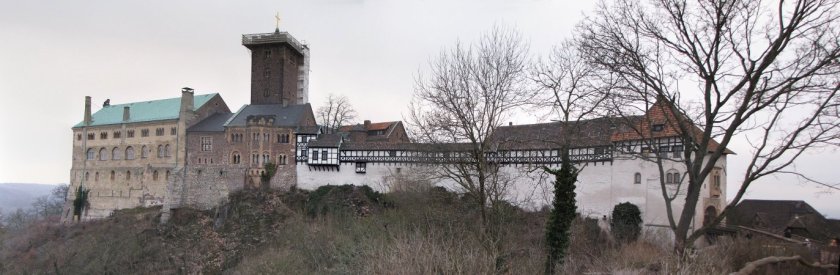



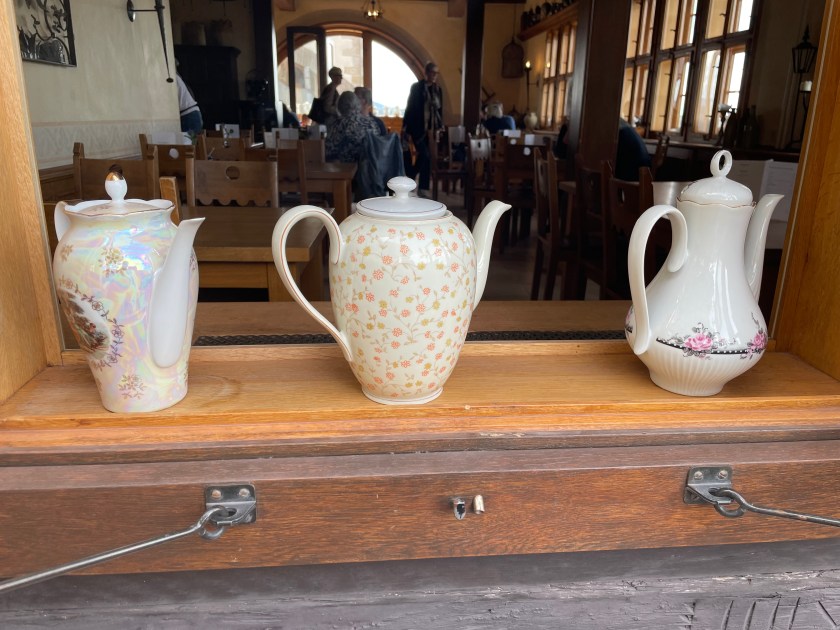
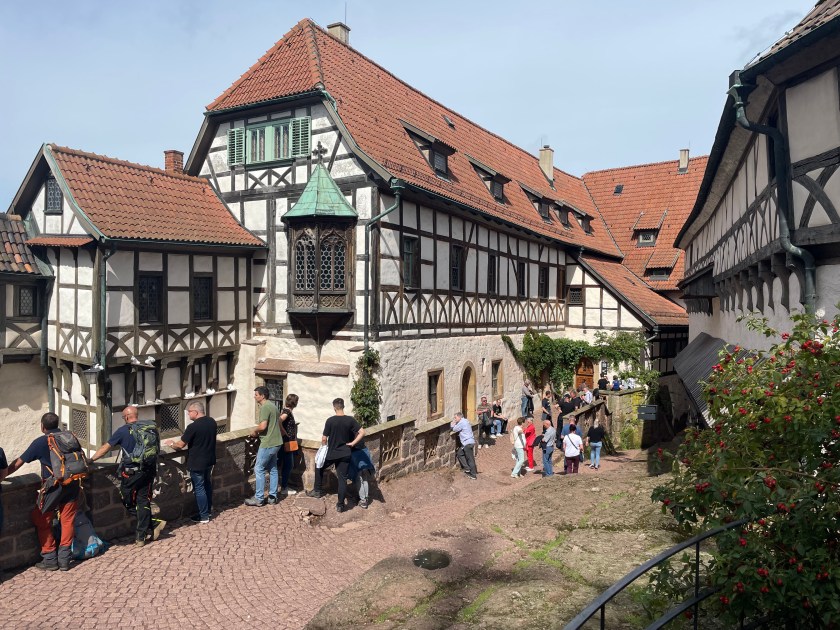
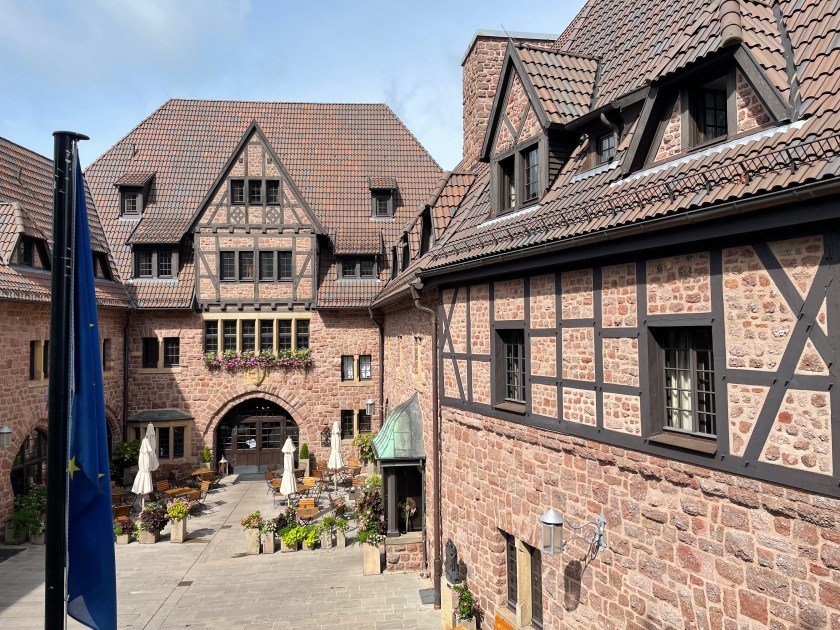
In today’s world, you can stay at an old guest house up on top, or have a meal in a fine restaurant. Concerts are held here regularly.
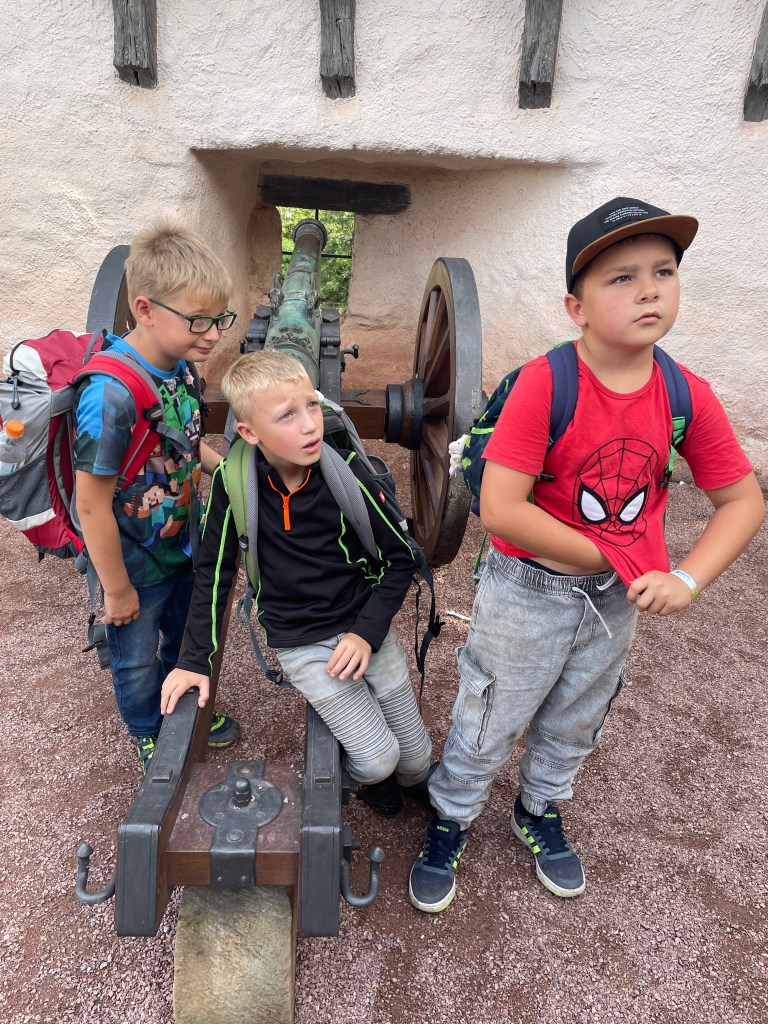
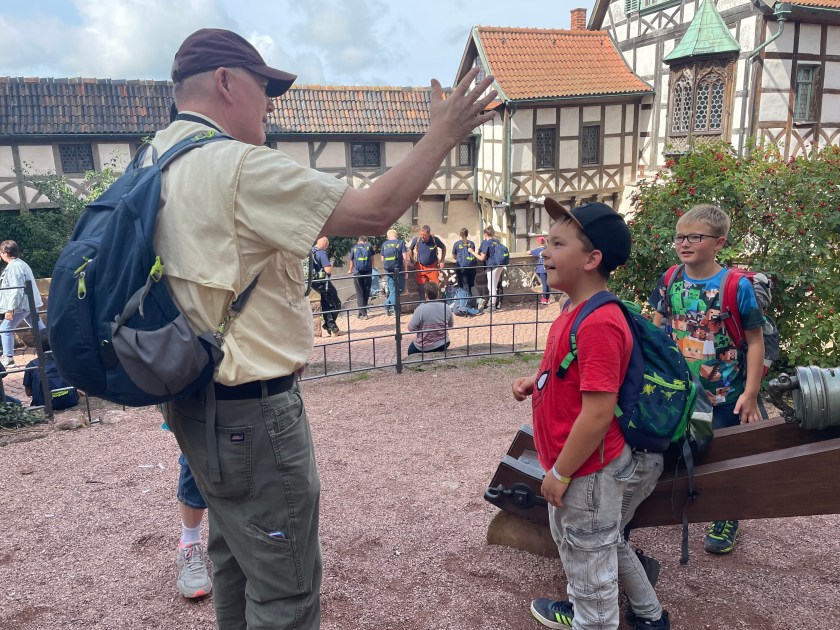


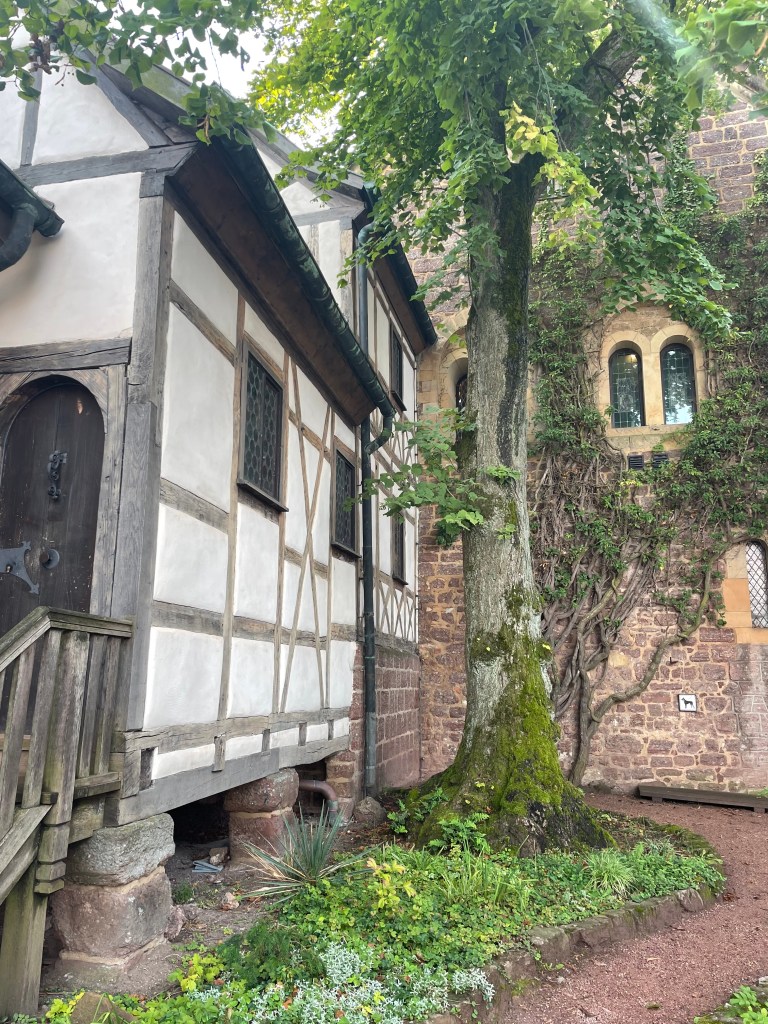
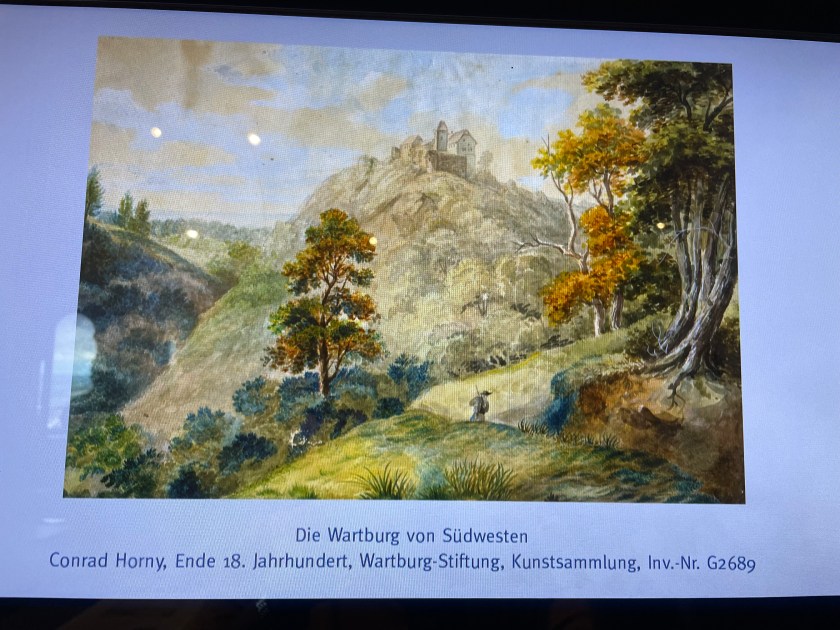
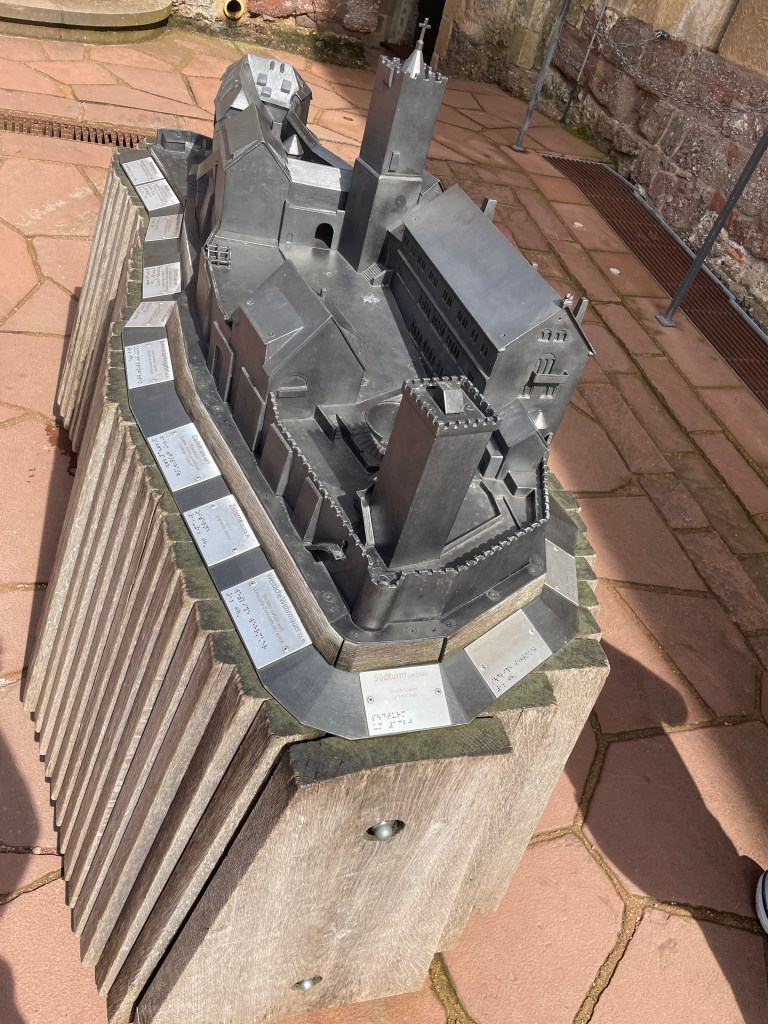
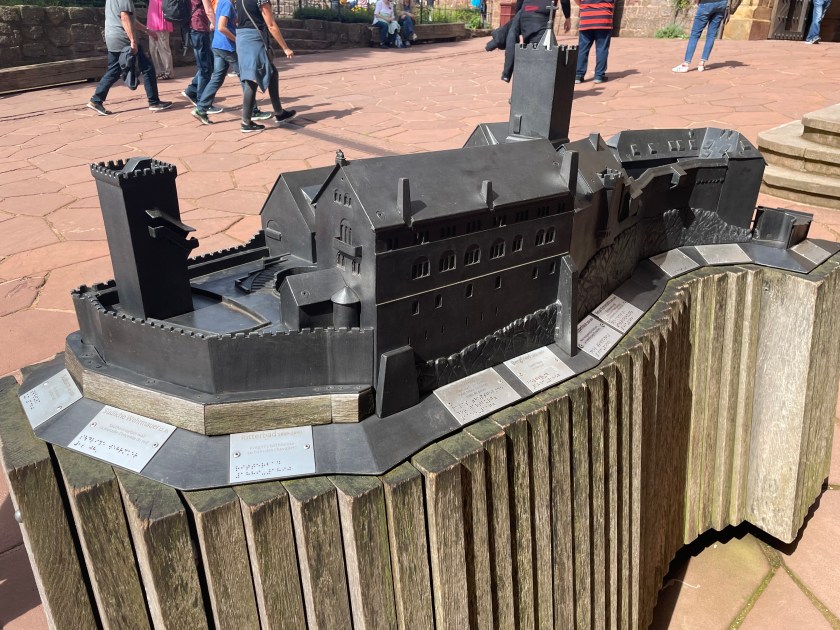
Here’s how the castle looked in the olden days:
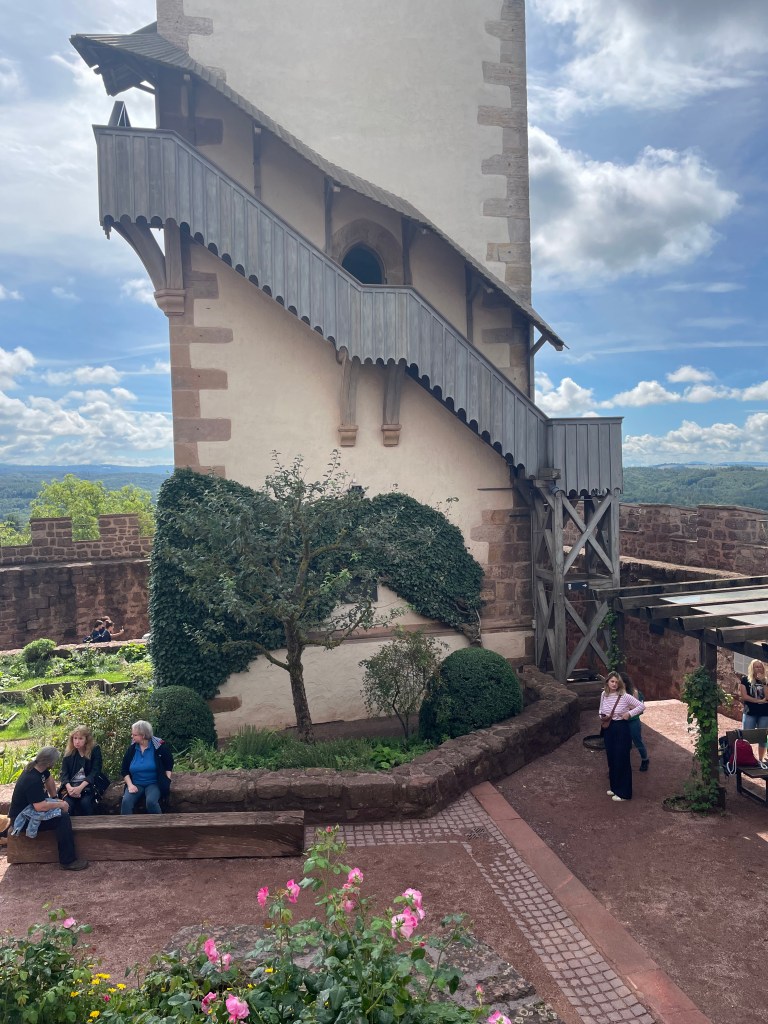
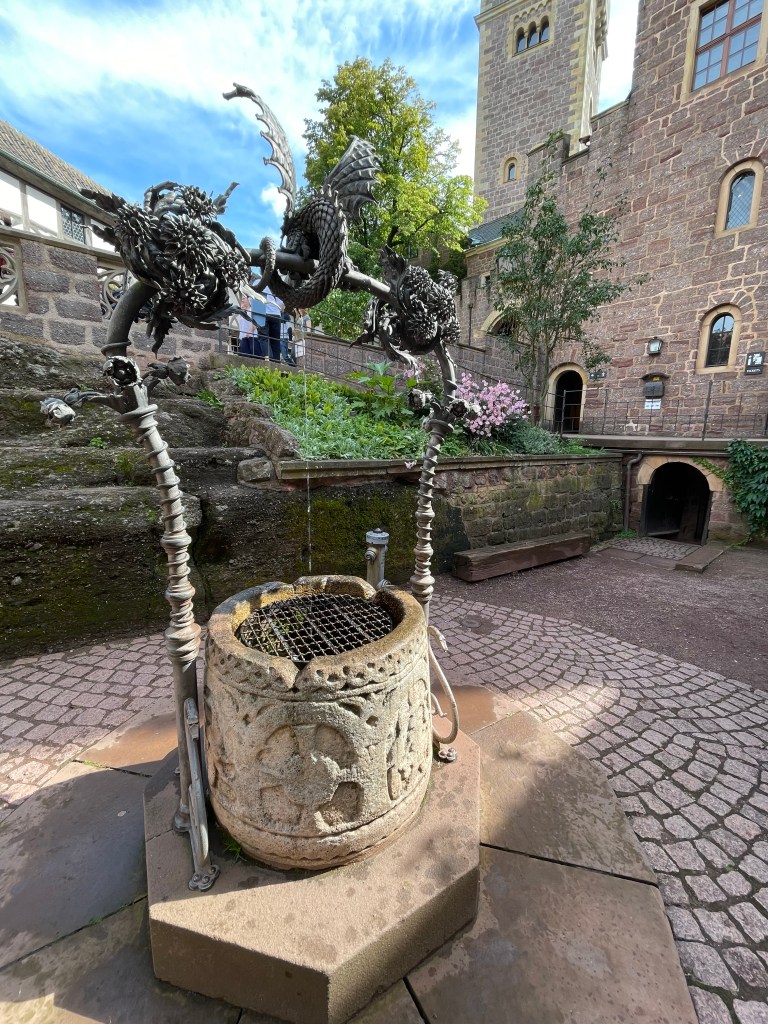
We, along with about 9 other missionary couples signed up for an English tour at 1:00, meeting here by the cistern at the base of the castle. We entered into this oldest part of the castle, dating back to Medieval times.
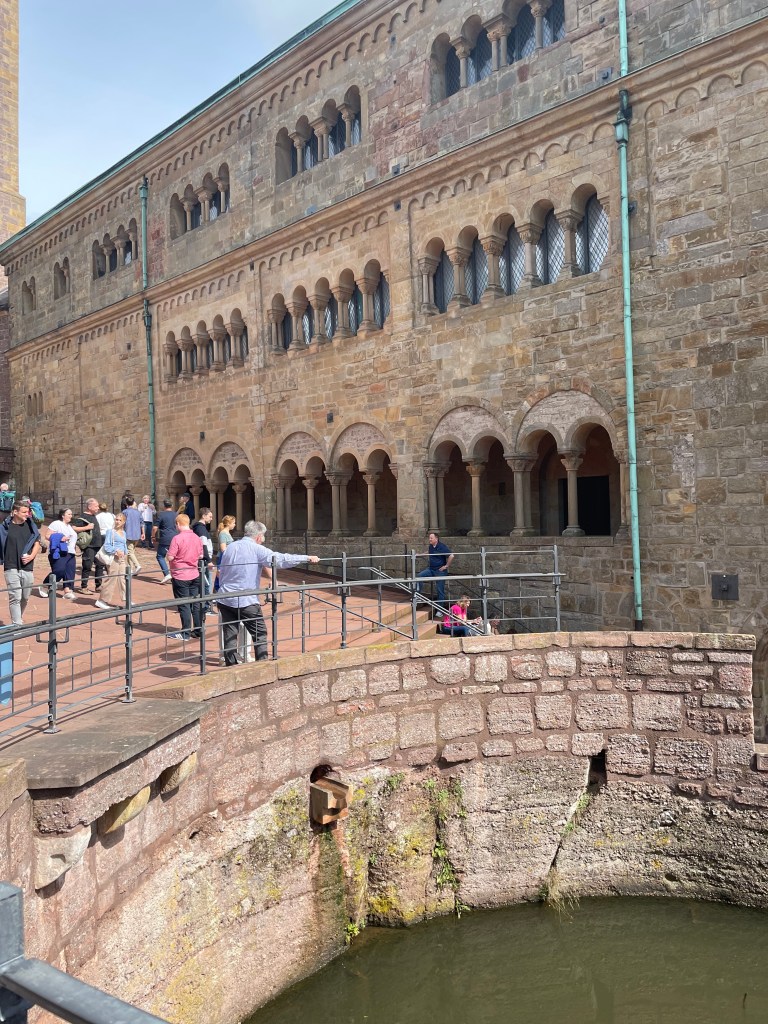
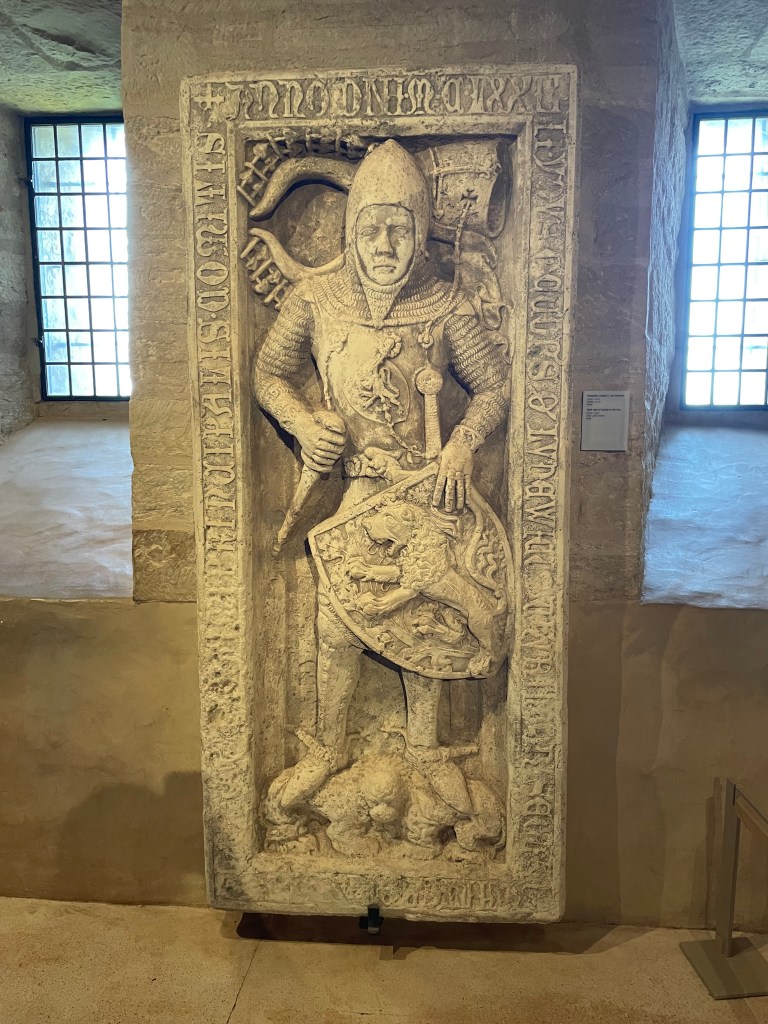
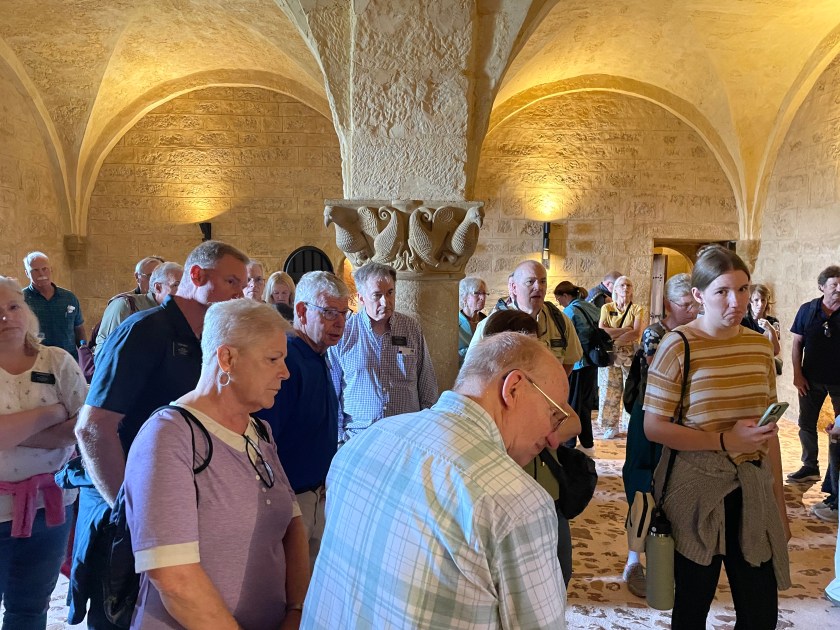
These part of the castle are from the 1100s. We learned the stories about the people who lived here and what their lives were like.
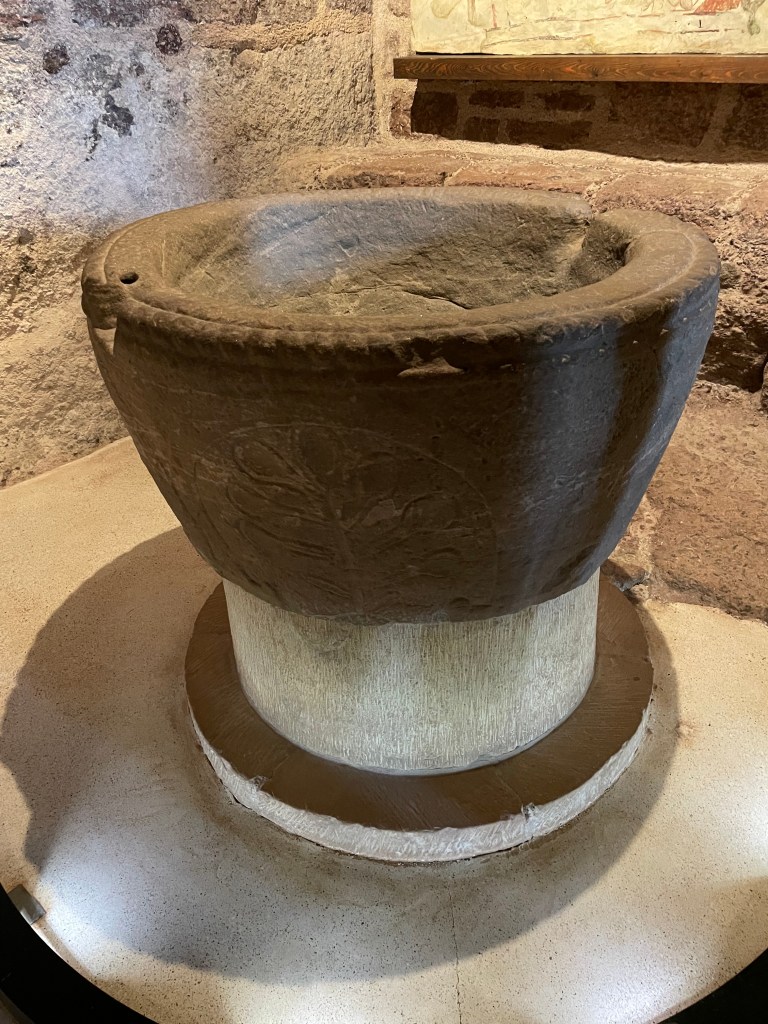
A baptismal font:

The rooms had fireplaces in them like the one below in the corner of the room.

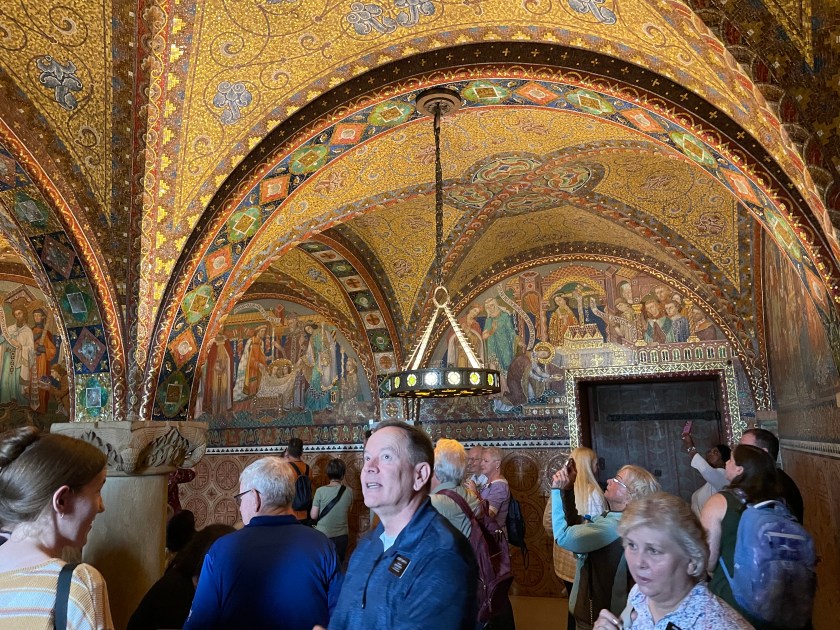
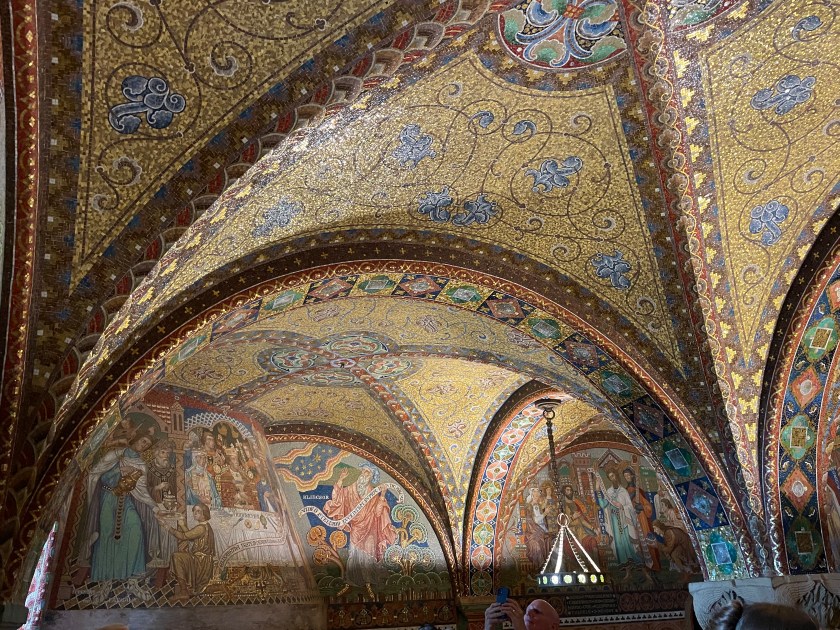
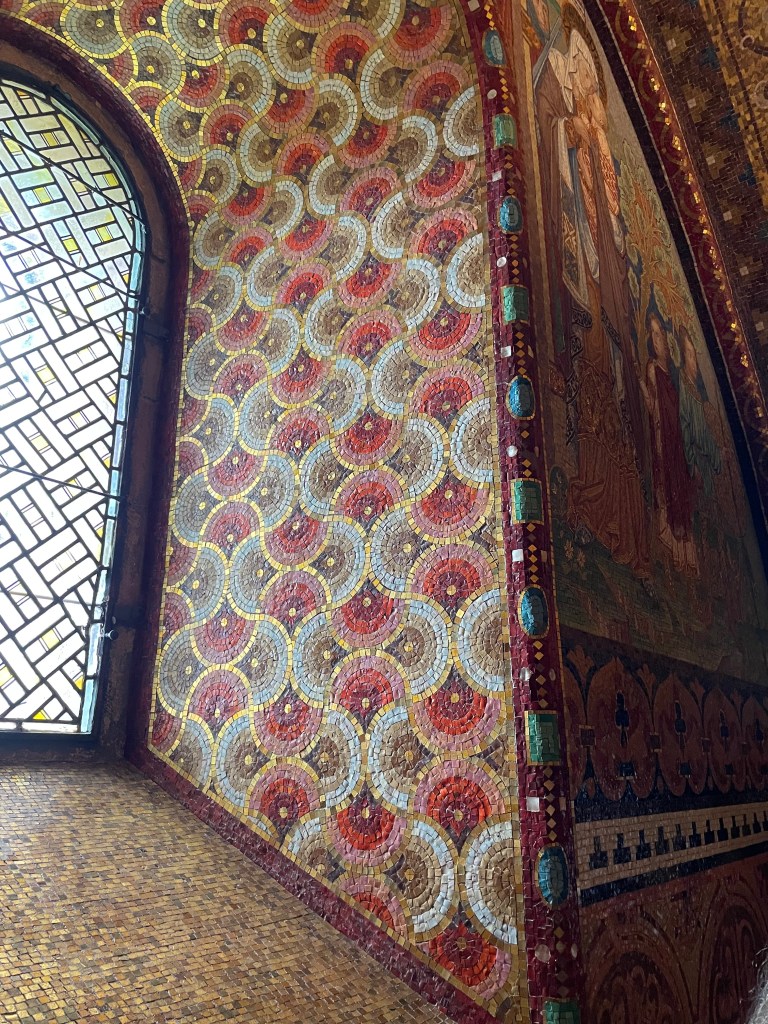
This room was re-decorated with beautiful mosaics in the earlh 1900s.
There is a chapel in the castle with another very old baptismal font:
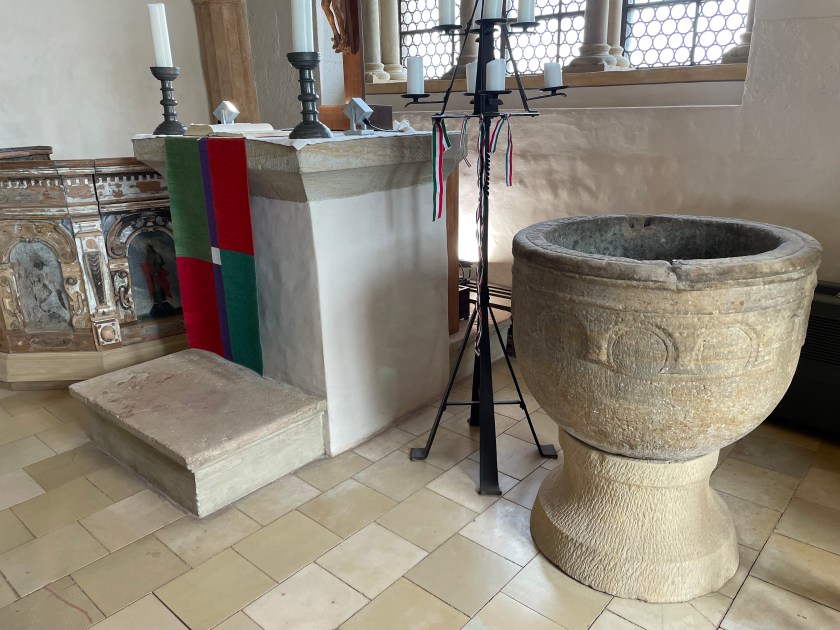
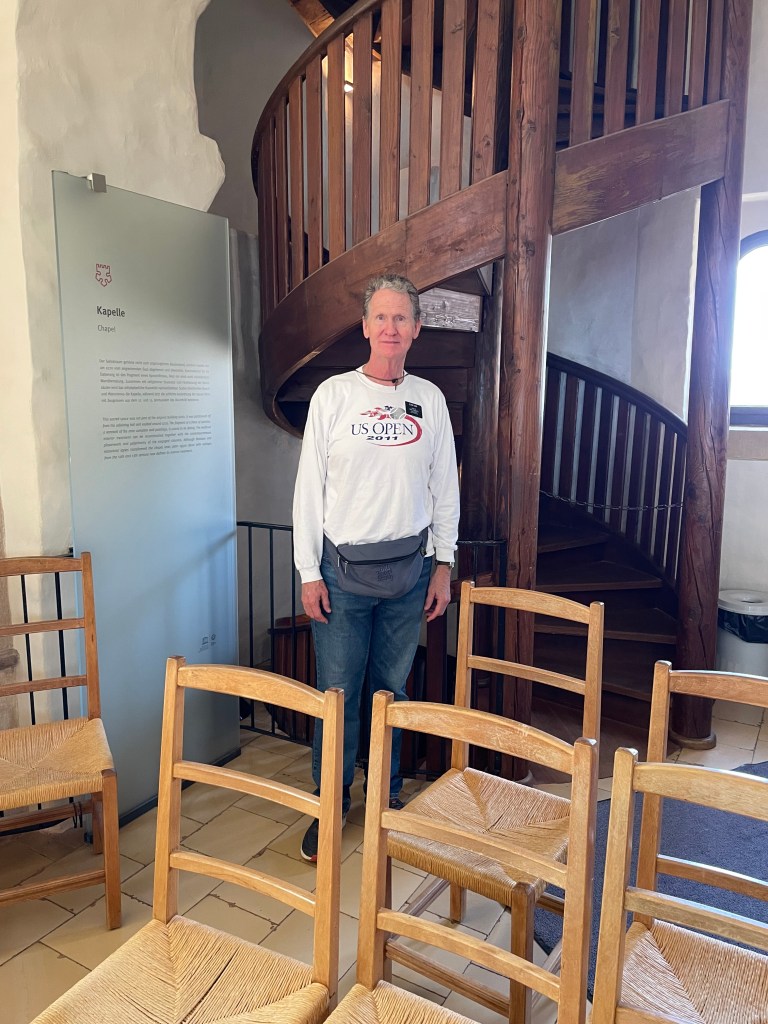
And a stair up to the upper floor where today concerts are held.
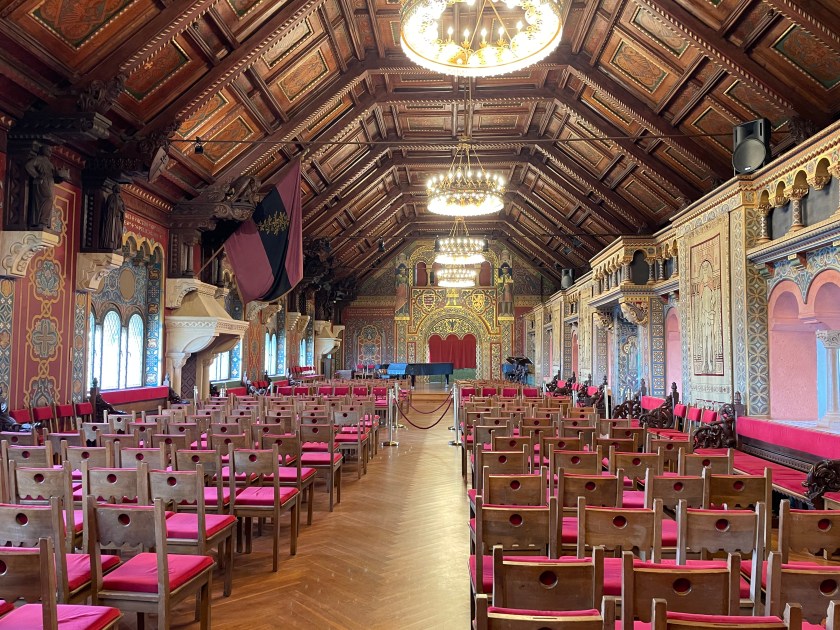
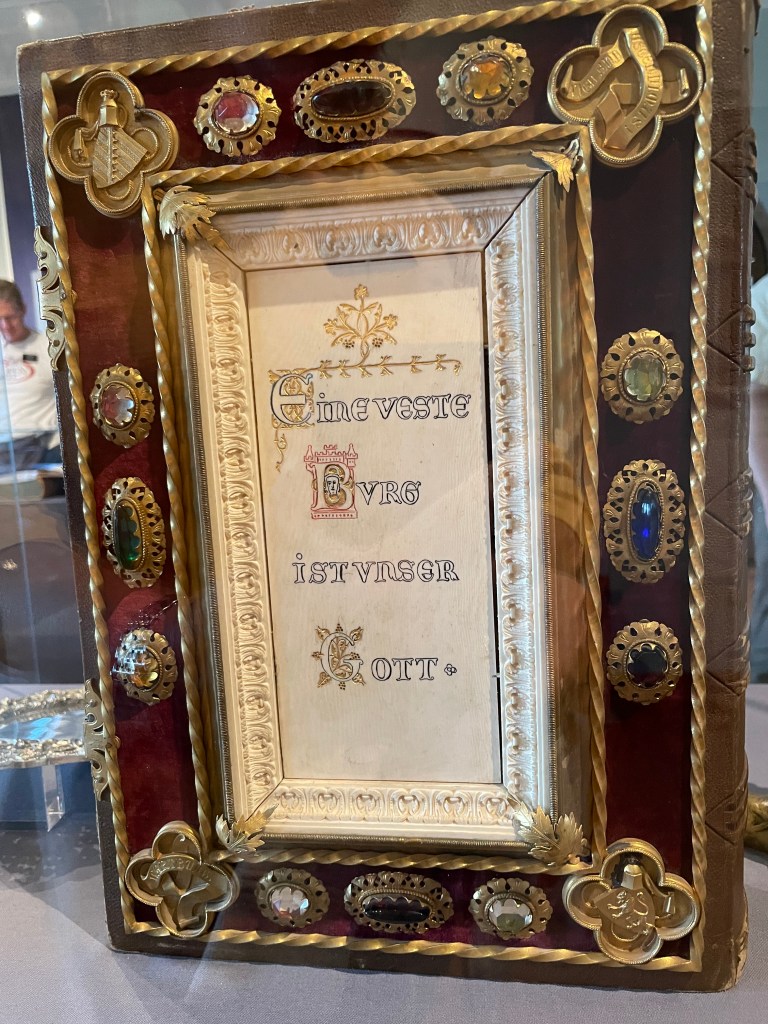
The tour ended in this upper room. Next we went through several rooms of museum artifacts from the castle before seeing the room where Martin Luther translated the Bible from Greek to German while in hiding here. He did it in 3 months. Here’s a Luther translation of the Bible displayed here. On the cover it says, “Eine veste Burg ist unser Gott,” or “A Mighty Fortress is our God,” a hymn written by Martin Luther, perhaps with this fortress in mind.
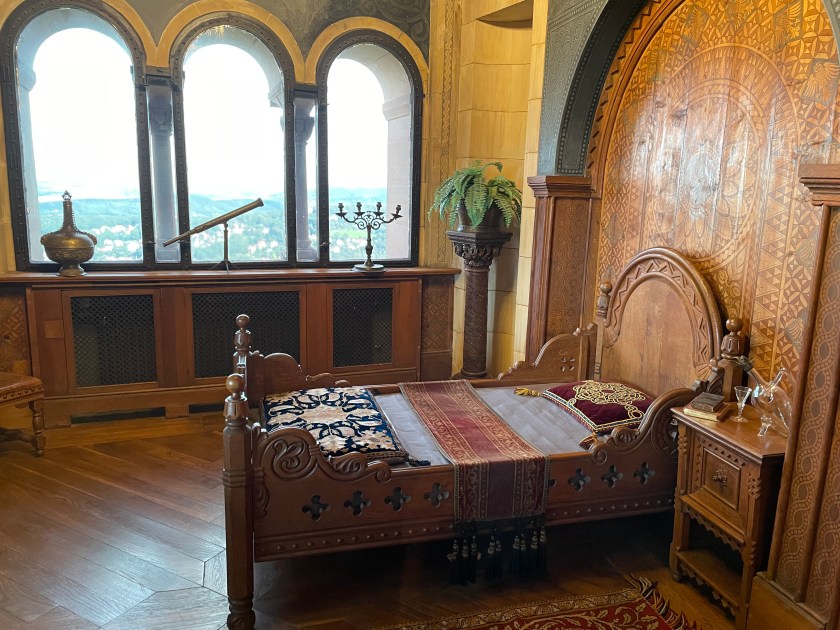
Here is an example of a “typical bedroom” of someone who would have lived in the castle:

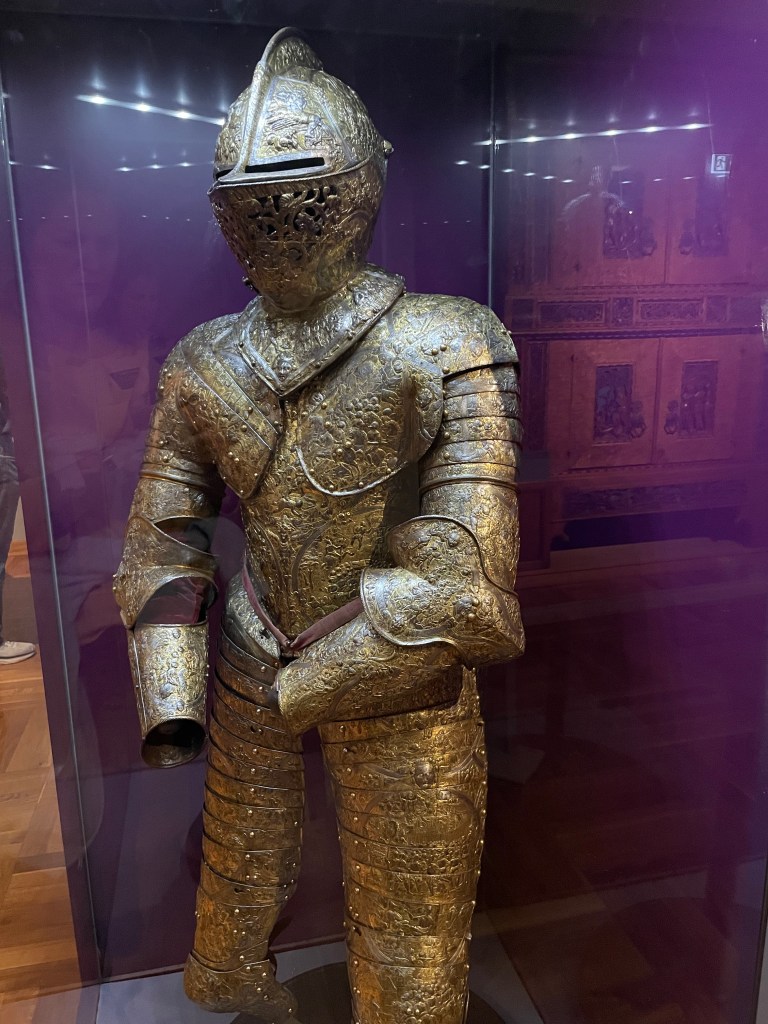
The castle at one time had a collection of more than 400 pieces of armour. After the end of World War II, Soviet occupation forces took the renowned collection of weapons and armour. Its whereabouts is still unknown. Only a few pieces remain.

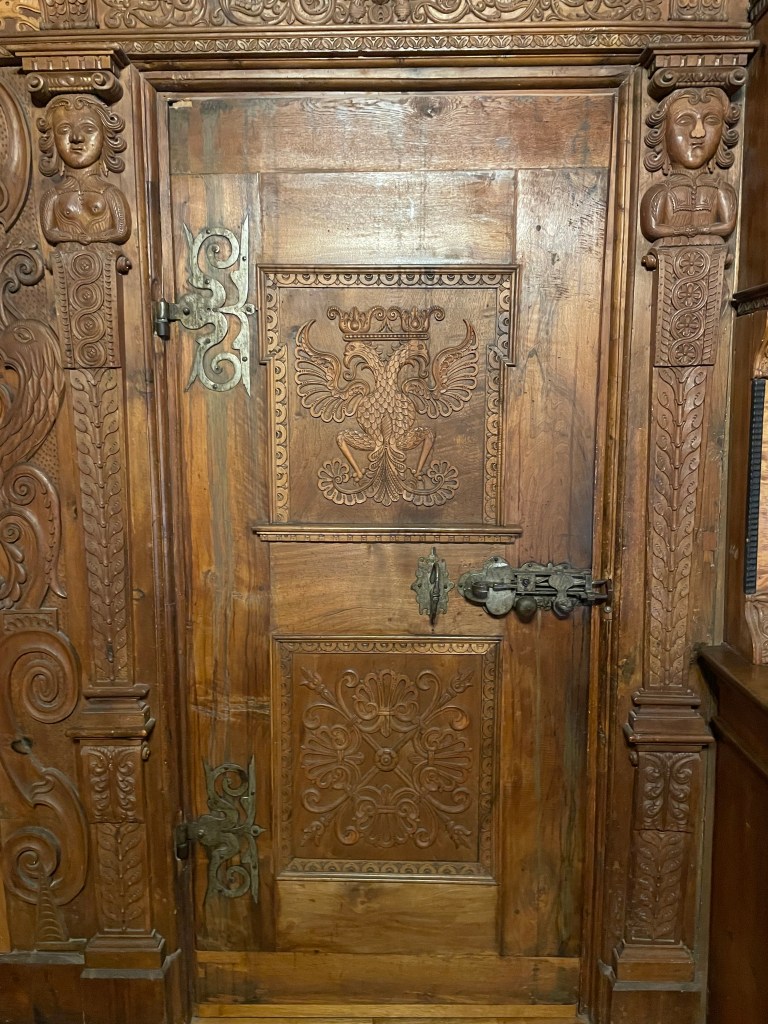

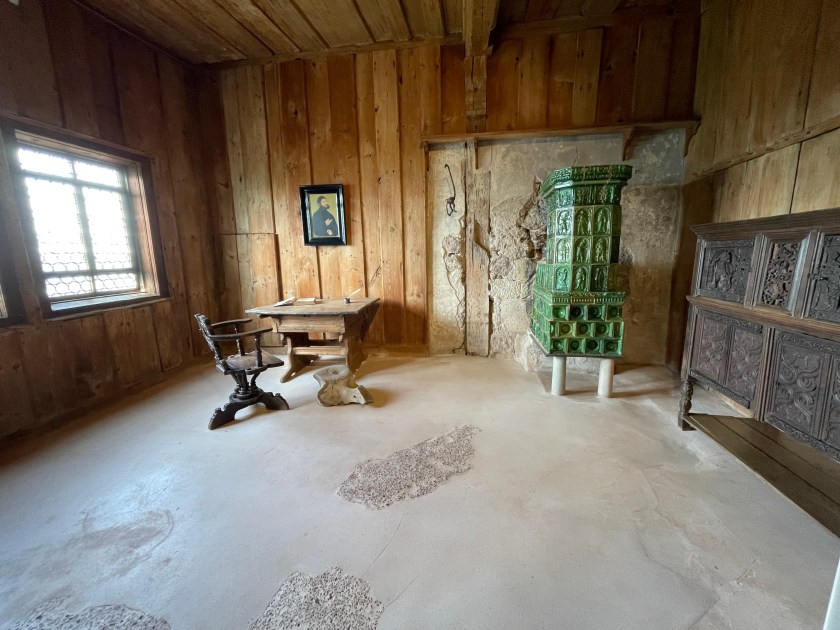
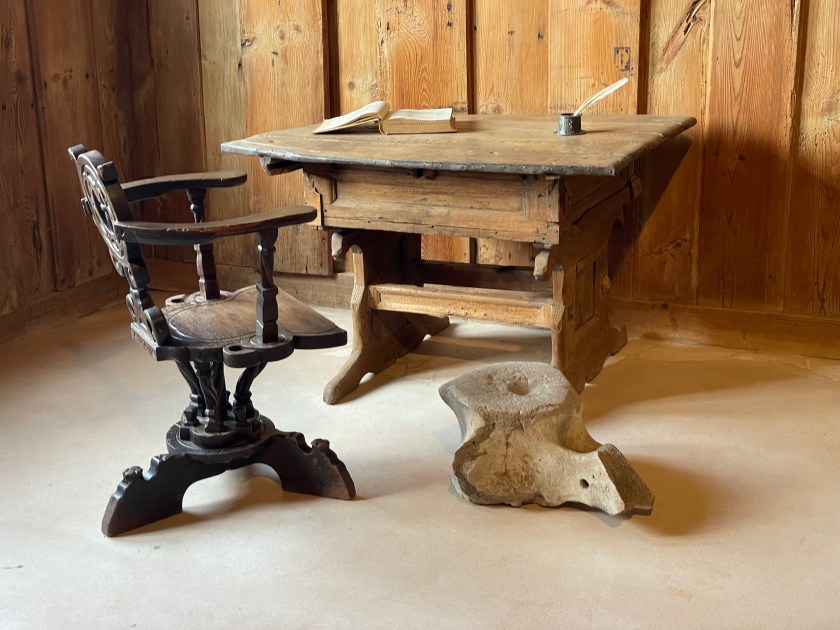
After leaving the museum rooms, we got to see the Stube, or room, where Martin Luther translated the Bible from Greek into German so everyone could read and understand it. Here is the room where this happened:

There is a story told that while Luther was translating the Bible, he was visited by the Devil who discouraged him as he worked. The Brothers Grimm recorded the following:
Doctor Luther At The Wartburg
Doctor Luther sat at the Wartburg translating the Bible. The Devil did not like this and wanted to disturb the sacred work, but when he tried to tempt him, Luther grabbed the ink pot from which he was writing, and threw it at the Evil One’s head. Still today they show the room and the chair where Luther was sitting.
You can see the wall on the right, picked away by visitors to the castle who wanted a piece of the place where the ink stain was said to be.

The devil sought to discourage [Luther], by making him feel guilty, through rehearsing a list of his sins. When the devil had finished, Luther purportedly said, “Think harder: you must have forgotten some.” And the devil did think, and he listed more sins. When he was done enumerating the sins, Luther said, “Now, with a red pen write over that list, “The blood of Jesus Christ, God’s Son, cleanses us from all sin.” “The devil had nothing to say.
Christ, when tempted by the Devil, responded by throwing the words of sacred Scripture at him. His defense was an offensive proclamation of truth. The best response of any disciple of Jesus is to take the offensive and speak the words of eternal life into the darkness.
Therefore take the whole armor of God, that you may be able to withstand in the evil day, and having done all, to stand. Stand therefore, having girded your loins with truth, and having put on the breastplate of righteousness, and having shod your feet with the equipment of the gospel of peace; beside all these, taking the shield of faith, with which you can quench all the faming darts of the evil one. And take the helmet of salvation, and the sword of the Spirit, which is the [W]ord of God. (Ephesians 6:13-17 RSV)
In the hymn of the Reformation, A Mighty Fortress, Luther seems to hide a great comfort of the 46th Psalm for all Christians in the words of the third stanza:
Though devils all the world should fill,
All eager to devour us,
We tremble not, we fear no ill,
They shall not over-pow’r us.
This world’s prince may still
Scowl fierce as his will,
He can harm us none,
He’s judged; the deed is done.
One little Word can fell him. (Lutheran Service Book 656)
What is that one little word that overturns and defeats the temptations and attacks of Satan and his hoard of fallen angels? What “ink” from Scripture is the one great promise we have to throw at all doubts and fears that we have been saved and our salvation is secure in Christ and his sacrifice? My suggestion? Take a look at the one little Word revealed in John 1:14 and then 19:30.
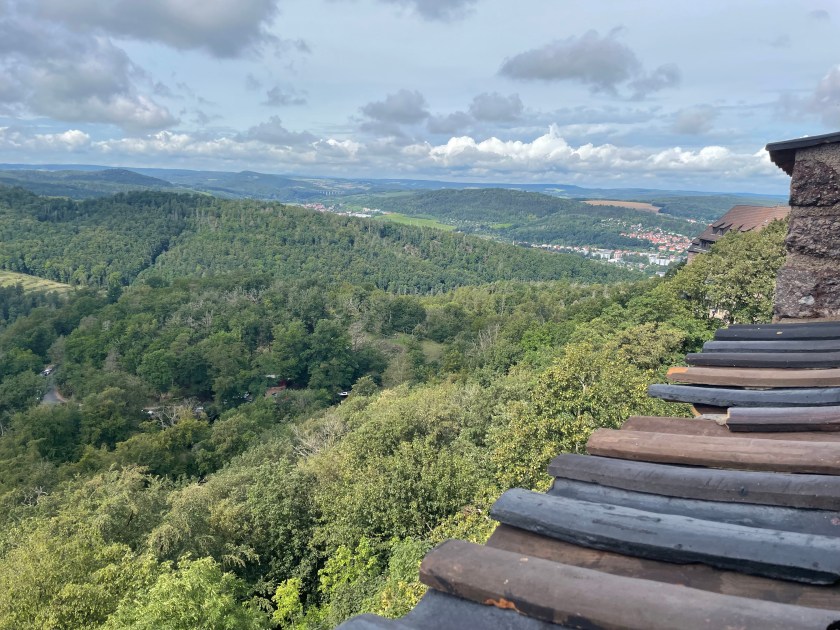
After looking in on this sacred spot, we left the castle and enjoyed wandering on the grounds, around the cistern, into the tower on the south end, and we enjoyed the beautiful views of the surrounding countryside.
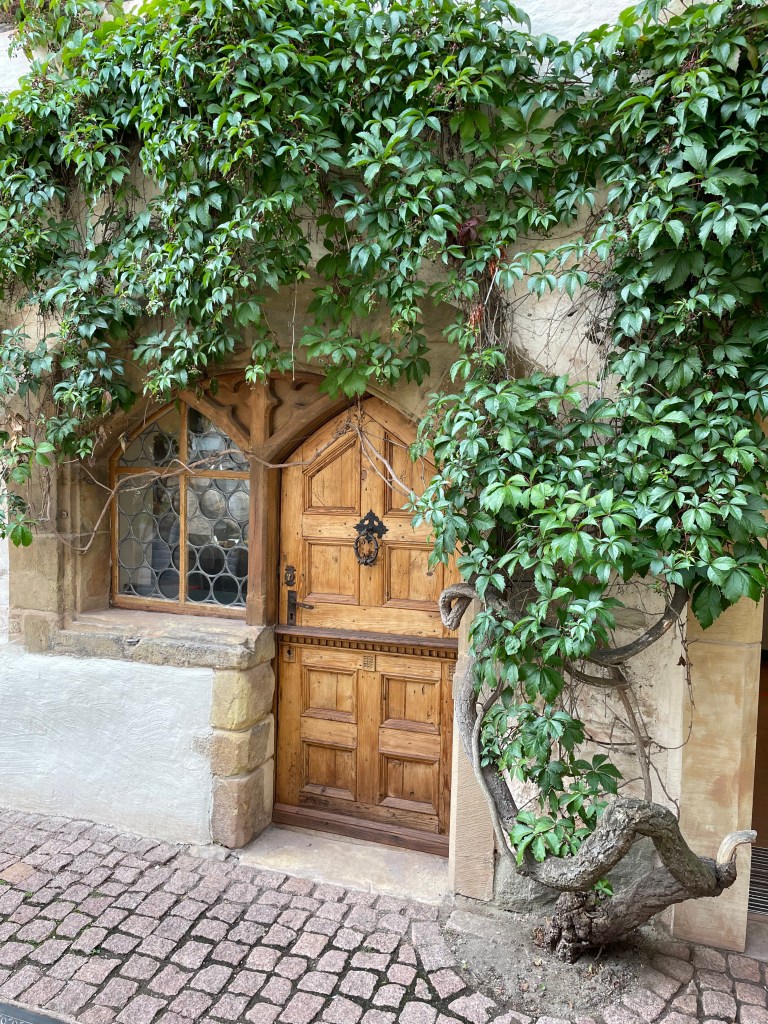
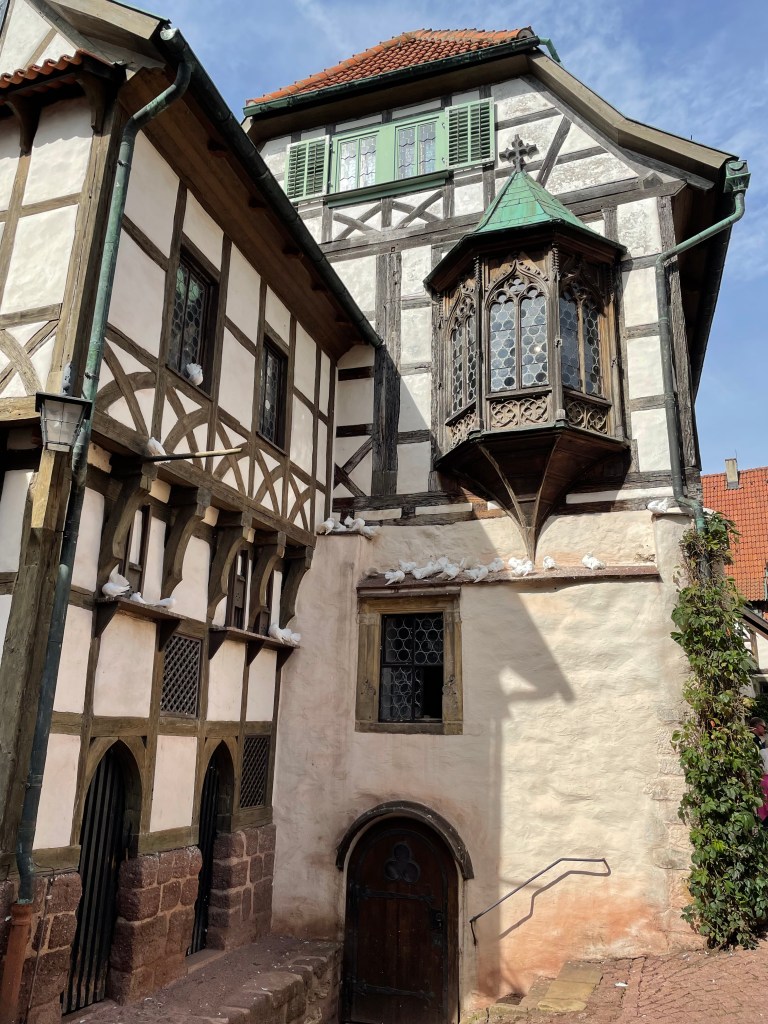
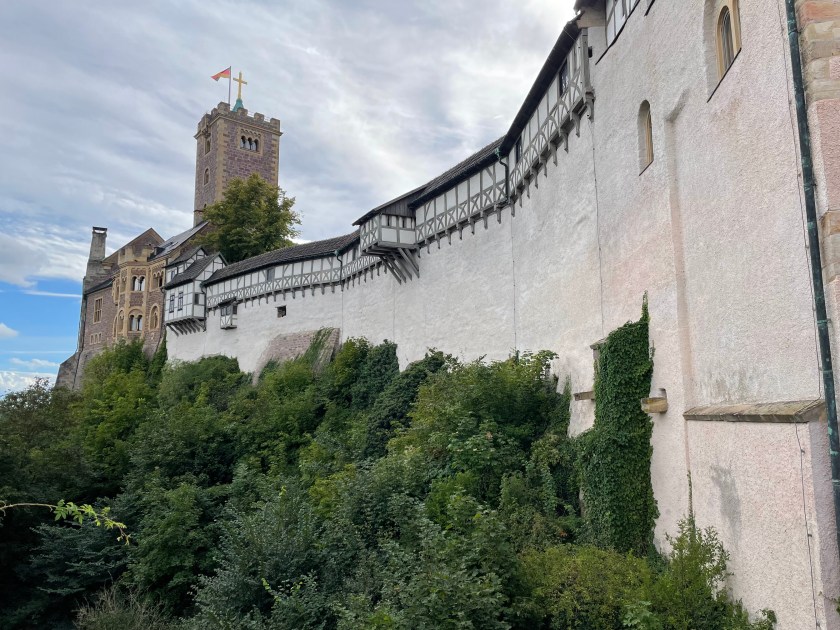
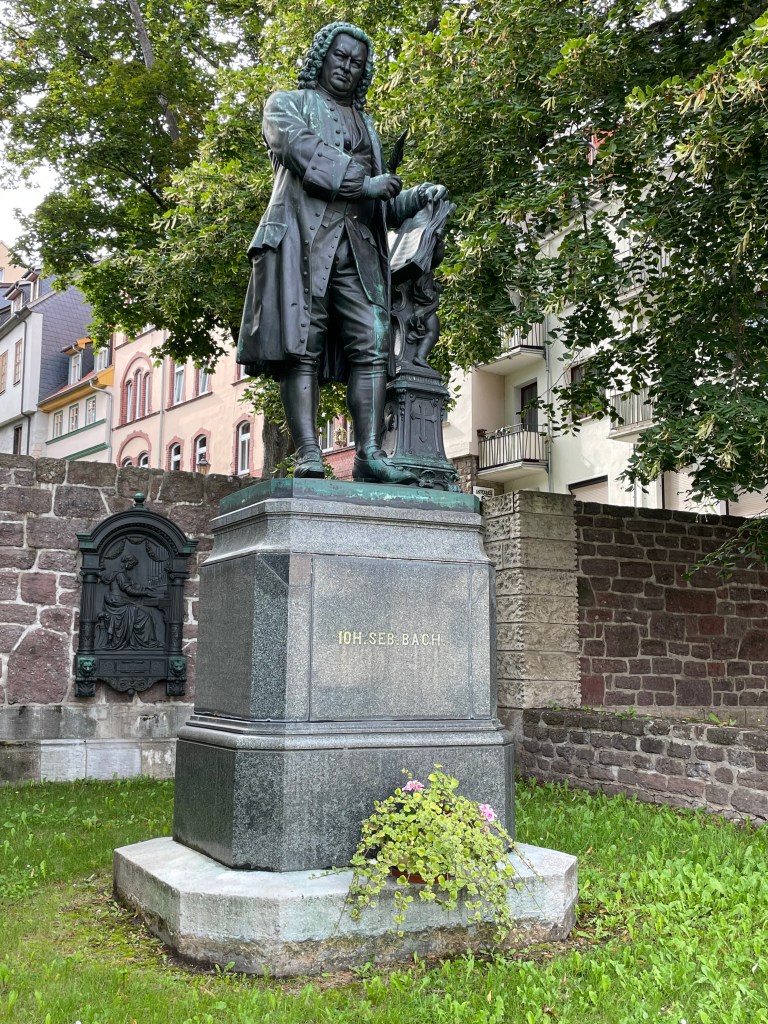
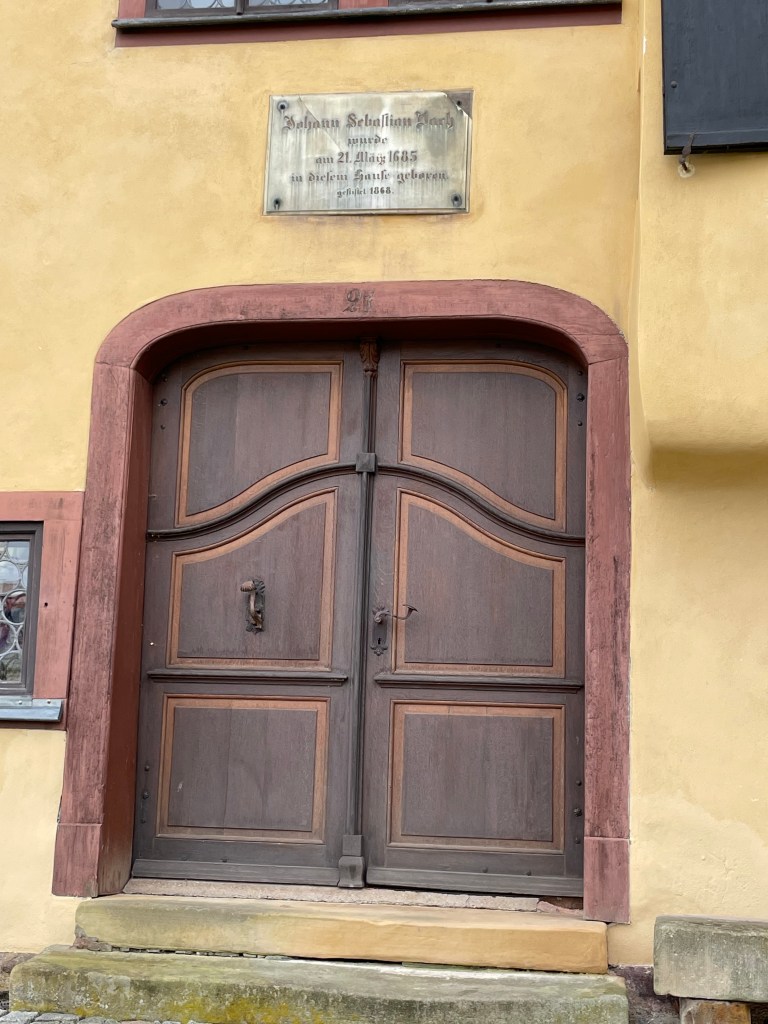
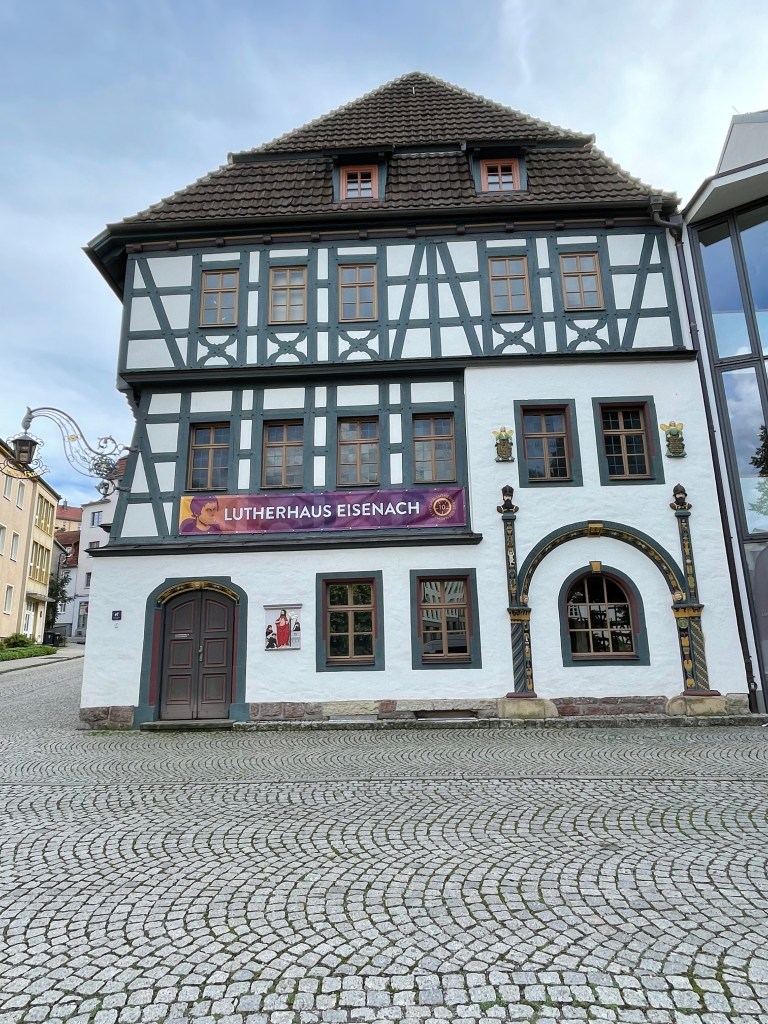
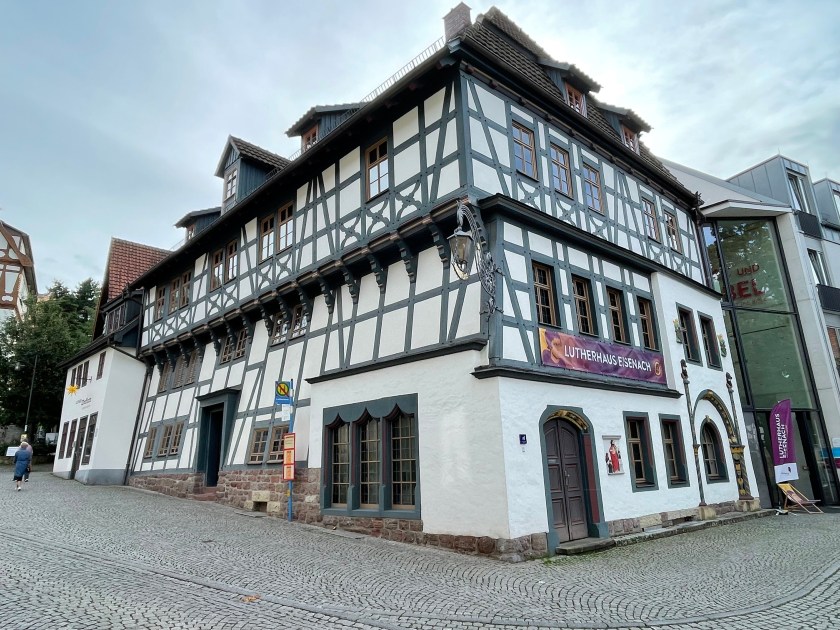
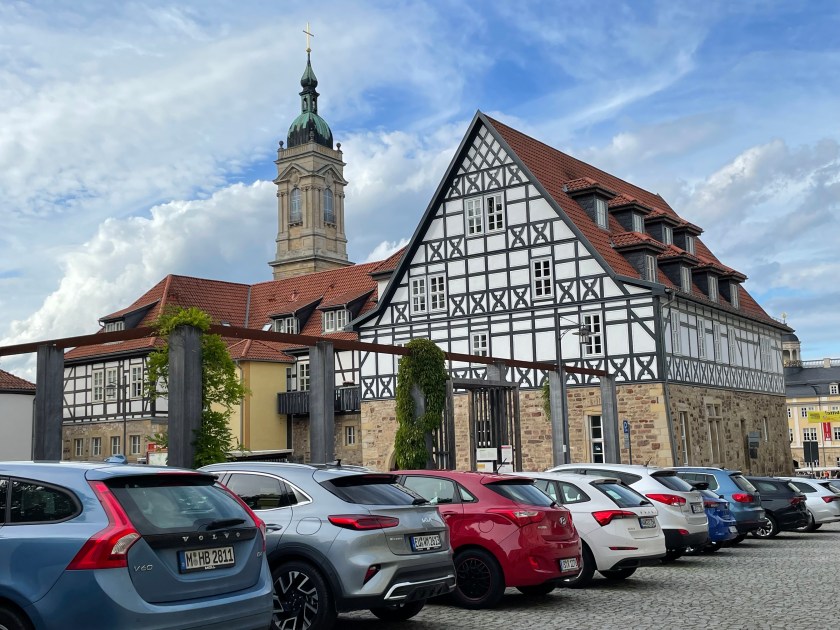
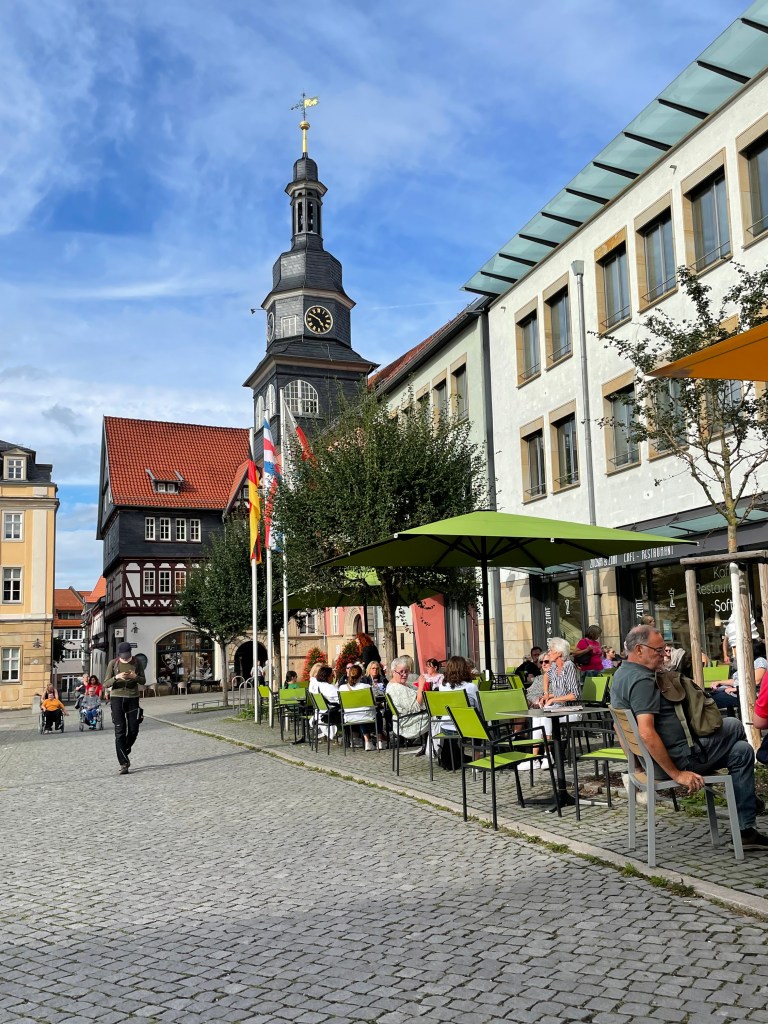
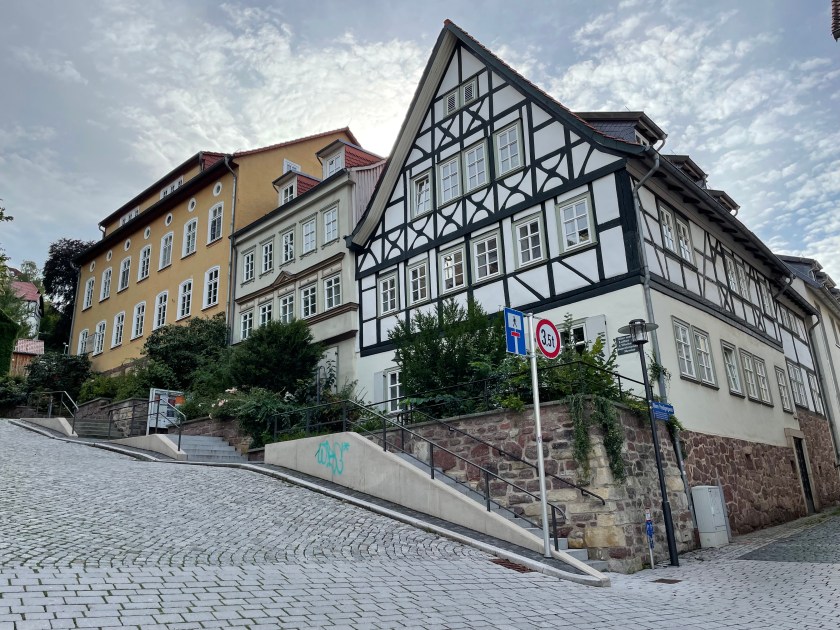
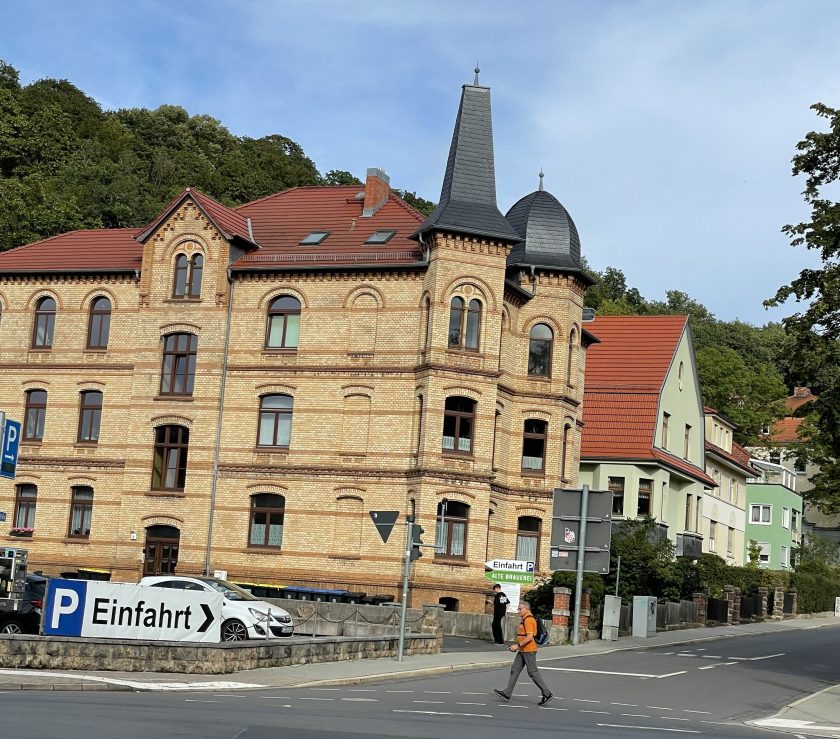
After leaving the fortress castle, we drove down into Eisenach to see 2 points of interest–the home where Johann Sebastian Bach was born and lived the first 10 years of his life, and another home where Martin Luther later lived for a short time. Both have attached museums you can visit. We loved driving around in this village.


 Our Frankfurt Germany Mission